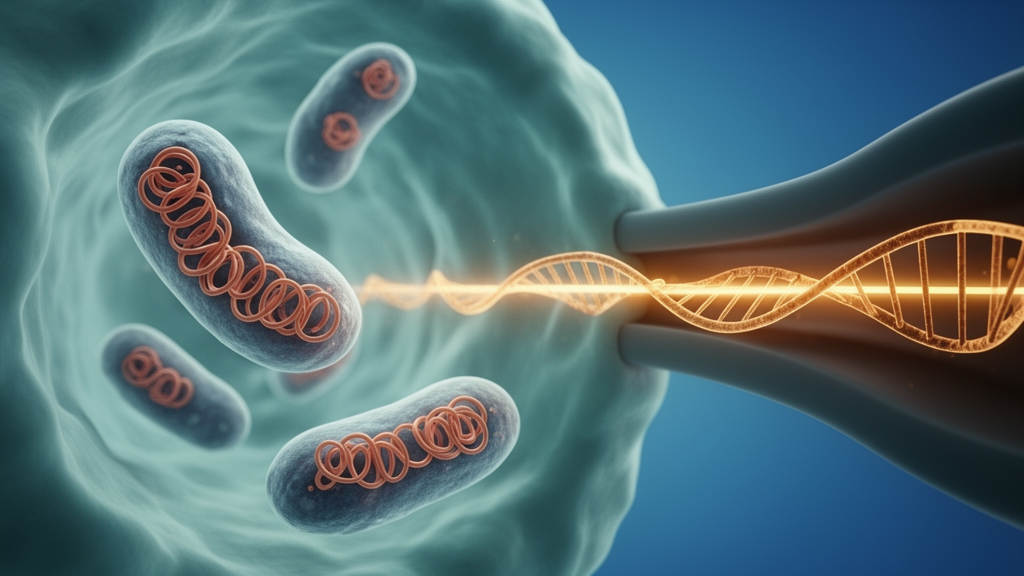
Deep inside every human cell, hundreds to thousands of mitochondria churn out the energy that keeps us alive, and each of these organelles carries its own circular genome, a relic of ancient bacterial ancestry. Unlike the DNA in the cell nucleus, mitochondrial DNA mutates roughly ten times faster, and because damage repair in this tiny genome is less efficient, not all mitochondrial copies within a cell are identical. This coexistence of multiple mitochondrial genotypes, known as heteroplasmy, has been implicated in aging and in a range of neurological diseases, including Parkinson’s disease. The trouble has always been measurement: catching a variant that exists in only a small fraction of mitochondrial genomes is like listening for a single off-key violin in an enormous orchestra. A new study published in BMC Genomics now shows that PacBio HiFi long-read sequencing, combined with a single full-length amplification strategy, can detect these low-frequency variants with unprecedented accuracy, opening a sharper window onto the mitochondrial dynamics of Parkinson’s disease.
The research team, led by Theresa Lüth and colleagues at the Institute of Neurogenetics at the University of Lübeck, together with collaborators at the University of Luxembourg and the Medical University of Innsbruck, set out to solve a persistent technical problem. Short-read sequencing, the current gold standard for mitochondrial variant detection, relies on reads of only about 50 to 300 base pairs. That brevity creates uneven coverage, mapping biases, and vulnerability to contamination from NUMTs, fragments of mitochondrial DNA that have been pasted into the nuclear genome over evolutionary time. Short reads also cannot directly reconstruct a complete mitochondrial haplotype, the full sequence of a single mitochondrial genome, because each read captures only a tiny slice. Previous long-read approaches using Oxford Nanopore sequencing had achieved reliable detection only for variants above roughly 5 percent, and many full-length mitochondrial sequencing protocols relied on multiple overlapping PCR amplicons, which introduce their own amplification biases.
The Lübeck team’s solution was elegantly simple: amplify the entire roughly 16,600-base-pair mitochondrial genome in one single long-range PCR reaction, and then read each complete molecule end to end on the PacBio Vega platform. PacBio HiFi sequencing generates circular consensus reads with Phred quality scores of at least 30, corresponding to 99.9 percent per-base accuracy, which is precisely the fidelity needed to distinguish genuine low-frequency variants from sequencing noise. In their runs, more than 95 percent of all sequenced reads met this HiFi standard, and after filtering, the majority of reads spanned the full-length mitochondrial amplicon at approximately 16.6 kilobases. Average sequencing depth across the 24 samples reached a staggering 83,180-fold coverage, with uniform coverage across every position of the mitochondrial genome, evidence that the single-amplicon approach avoided the amplification bias that plagues overlapping PCR strategies.
Validation was the crux of the study, and the researchers designed a rigorous benchmarking experiment. They prepared predefined mixtures of two mitochondrial haplotypes, one from haplogroup D4e1’3 as the major component and one from haplogroup J1c2 as the minor component, at ratios of 5, 2, 1, and 0.1 percent. Because both samples had previously been characterized with Illumina NextSeq short-read sequencing, the expected variant profile of each mixture was known in advance, allowing the team to calculate sensitivity, precision, and the F1 score, the harmonic mean of the two. The results were striking. For mixtures between 5 and 1 percent, the F1 score was a perfect 1.0, meaning every expected variant was detected and no spurious variants appeared. Detected minor-variant levels closely matched the expected values, averaging 0.057 for the 5 percent mixture, 0.022 for 2 percent, 0.011 for 1 percent, and 0.001 for the 0.1 percent mixture.
Even at the extreme 0.1 percent level, where the researchers deliberately lowered the variant-calling threshold to 0.0005, all expected minor-haplotype variants were recovered, and sensitivity remained at 1.00. Ten additional variants discordant with the Illumina reference did pass the lowered threshold, dropping the F1 score to 0.91, but follow-up analysis suggested these were threshold-dependent noise rather than true signals. Two of them sat in the notoriously ambiguous homopolymeric D-loop region, and read-level assessment showed the discordant alleles were also present at low levels in the 5 percent mixture, simply below its higher calling threshold. Notably, all discordant variants occurred on molecules assigned to the major haplotype, not the minor component, and a graph-based tool called Himito found no evidence of NUMTs contamination anywhere in the dataset. The authors are careful to stress that these exploratory results should not be interpreted as establishing a general analytical detection limit of 0.1 percent.
The depth of sequencing also proved to be a resource that could be traded for throughput. By systematically downsampling the data from roughly 70,000-fold coverage down to 300-fold, the team showed that accuracy and sensitivity remained very high at depths above 1,500-fold for mixtures of 1 percent or more, and the F1 score stayed at 1.00 across all tested depths for the 5 percent mixture. The practical implication is considerable: with the 230 barcodes available on a single PacBio Vega SMRT Cell, each sample would still receive approximately 13,000-fold mitochondrial coverage, ample for accurate detection of heteroplasmy at the 1 percent level. In other words, large cohorts could be multiplexed without sacrificing the low-frequency sensitivity that makes this technique valuable.
Beyond counting individual variants, the long reads allowed something short reads fundamentally cannot: direct reconstruction of complete mitochondrial haplotypes at the single-molecule level. When the researchers classified individual full-length reads according to haplotype-specific marker variants, the observed proportions of minor-haplotype reads closely matched the expected mixture ratios, and visualization of representative reads from the 1 percent mixture showed that informative variants consistently co-occurred on the same sequencing molecule. This phasing capability matters because it confirms that variants arising from the same mitochondrial genome can be linked together, a prerequisite for understanding how mitochondrial populations evolve within cells and tissues.
With the workflow validated, the team applied it as a proof of principle to a biological question at the heart of Parkinson’s disease research. They studied fibroblast cell lines from five carriers of the LRRK2 p.Gly2019Ser variant, the most common genetic cause of familial Parkinson’s disease: three affected by the disease and two unaffected. The cells were cultured in parallel and sampled at passages 1, 4, 8, and 12 over 84 days, and mitochondrial DNA was extracted and sequenced at each time point. Restricting their analysis to variants above 1 percent heteroplasmy, based on the mixture validation, the researchers observed a decrease in the number of detected heteroplasmic variants across passages, confirmed by a linear mixed-effects model showing significantly fewer variants at passage 12 compared with passage 1. In exploratory analyses, the heteroplasmic variant load was higher in fibroblasts from affected carriers than unaffected carriers, and it was associated with older age at sample collection, though the authors caution that the small number of cell lines demands careful interpretation.
Perhaps most intriguing were the variant-specific trajectories the long-read data revealed. In one fibroblast line from an affected carrier, a synonymous variant in MT-CO2 fell from 20.5 to 7.7 percent heteroplasmy across passages, and a synonymous variant in MT-ND5 dropped from 23.3 to 8.3 percent, while a missense variant in MT-ND2 rose steadily from 8.4 to 57.5 percent. These opposing patterns, with some variants declining and others expanding, suggest that selective pressures or clonal expansion processes actively shape mitochondrial heteroplasmy during cell culture, consistent with recent single-cell work showing that selection, rather than random drift, governs heteroplasmy levels in dividing cells. No structural variants such as deletions were detected above the 1 percent threshold in the analyzed samples, and no consistent pattern distinguished affected from unaffected carriers, underscoring the substantial inter-individual variability in heteroplasmy dynamics.
The study is not without limitations, which the authors lay out candidly. Long-range PCR risks primer dropout when polymorphisms fall within primer-binding sites, variants in those regions cannot be reliably assessed, PCR amplification can introduce low-level polymerase errors that the benchmarking design does not fully capture, and the PCR-based enrichment erases native DNA methylation, precluding epigenetic analysis. The validation also focused on single-nucleotide variants rather than structural variants. Still, the achievement stands: this is the first demonstration that PacBio HiFi sequencing can detect mitochondrial heteroplasmy with high accuracy down to 1 percent using a haplotype mixture benchmarking framework, a substantial advance over the roughly 5 percent limit previously reported for Oxford Nanopore sequencing under comparable conditions. As the cost of long-read sequencing continues to fall, this workflow offers researchers a powerful new lens for studying mitochondrial variation in aging, cancer, mosaic somatic disease, and neurodegeneration, and future studies in larger cohorts will determine whether the elevated variant load seen in affected LRRK2 carriers holds up as a genuine molecular signature of Parkinson’s disease.
Subject of Research: High-accuracy detection of mitochondrial DNA heteroplasmy using PacBio HiFi long-read sequencing in Parkinson's disease
Article Title: Long-read sequencing enables high-accuracy mitochondrial heteroplasmy detection in Parkinson’s disease
Article References: Lüth, T., Schaake, S., Much, C., Belyea, M. M., Seibler, P., Grünewald, A., May, P., Klein, C., Weissensteiner, H., & Trinh, J. (2026). Long-read sequencing enables high-accuracy mitochondrial heteroplasmy detection in Parkinson’s disease. BMC Genomics, 27(1), Article 831. https://doi.org/10.1186/s12864-026-13426-y
Image Credits: AI Generated
DOI: 10.1186/s12864-026-13426-y
Keywords: mitochondrial DNA, heteroplasmy, PacBio HiFi, long-read sequencing, Parkinson's disease, LRRK2, variant calling, fibroblasts, haplotype phasing, BMC Genomics, NUMTs, benchmarking
News Source: Diana Fleming. (October 8, 2026). Long-Read Sequencing Achieves Near-Perfect Detection of Mitochondrial DNA Variants Linked to Parkinson’s Disease. Scienmag.