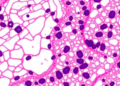
For decades, surgeons have removed the thymus gland to treat myasthenia gravis, an autoimmune disorder that leaves patients with drooping eyelids, slurred speech, and muscles that weaken with every effort. Yet one stubborn question has divided neurologists: does the operation help older patients at all? A new retrospective study from the Cleveland Clinic, published in the Journal of Neurology, suggests that the answer is yes, and that age alone should not disqualify someone from a procedure long considered the preserve of the young.
Myasthenia gravis arises when the immune system produces antibodies that attack the neuromuscular junction, the microscopic relay where nerves hand signals to muscles. In many patients, the thymus, a gland tucked behind the breastbone that trains immune cells in early life, appears to drive this misguided attack. Surgical removal of the gland, known as thymectomy, has been practiced since the mid-twentieth century, but the evidence base was transformed in 2017 by the MGTX trial, a randomized study published in the New England Journal of Medicine. That trial showed convincingly that thymectomy improved outcomes and reduced the need for immunosuppressive drugs in patients aged fifty and under.
The catch was that MGTX included only seventeen patients aged fifty or older, far too few to say anything definitive about older adults. This matters because late-onset myasthenia gravis is increasingly common as populations age, and the biology of the disease appears to shift with time. In younger patients, the thymus is often enlarged and studded with ectopic germinal centers, structures where antibody-producing cells are actively generated. In older patients, the gland is typically atrophied and replaced by fat, raising the possibility that removing it accomplishes less. Several recent studies, including a 2021 meta-analysis and a 2026 multi-center longitudinal study, have produced conflicting results about whether older patients benefit.
To resolve the uncertainty, a team led by neurologist Morgan E. Heber and Yuebing Li combed the electronic medical records of their institution for patients who underwent thymectomy without thymoma, a tumor of the thymus, between 1999 and 2022. They divided the cohort into a young group of forty-five patients under fifty and an older group of thirty-four patients aged fifty or above. Because the study was retrospective, the researchers relied on data already collected during routine care, including the Myasthenia Gravis Foundation of America classification, the MG-Activities of Daily Living score, surgical approach, postoperative complications, and rates of medication reduction and disease flare.
The results were striking in their uniformity. When the two groups were compared after surgery, the researchers found no statistically significant difference in the proportion of patients whose MGFA classification improved, with a p-value of 0.48. Corticosteroid reduction, a key practical measure of whether patients can safely taper the drugs that carry long-term side effects, was likewise indistinguishable between groups, at p equal to 0.75. Postoperative complications, cancer diagnoses, and new autoimmune diagnoses showed no differences either, with p-values of 0.87, 0.57, and 0.13 respectively.
Functional outcomes told the same story. Rates of myasthenic exacerbation, the frightening episodes in which weakness escalates to threaten breathing, were similar across age groups at p equal to 0.22. The need for rescue therapy during follow-up, the MG-ADL score at final assessment, and the percentage of patients achieving minimal symptom expression, the closest thing the field has to a remission benchmark, were all statistically equivalent, with p-values of 0.29, 0.84, and 0.31. In plain terms, older patients who had their thymus removed fared about as well as younger ones, both in safety and in benefit.
The authors conclude that thymectomy in patients aged fifty or older with non-thymomatous myasthenia gravis appears comparable in safety and efficacy to the same operation in younger patients, providing support for its use in the management of older patients. For clinicians, this is a meaningful data point. Current international consensus guidance for myasthenia gravis, updated in 2020, has had to navigate thin evidence for late-onset disease, and the new findings add to a growing body of work suggesting that age-based exclusion from surgery is not justified by outcomes alone.
The biology behind these results remains an open question. If the atrophic thymus of an older patient is less immunologically active, why would removing it help as much? One possibility is that even involuted thymic tissue continues to harbor autoreactive cells or antibody-secreting populations; laboratory work has shown that cells from atrophic thymus can secrete acetylcholine receptor antibodies. Genetic studies have also linked late-onset disease to a CTLA4-low genotype and reduced output of naive T cells, hinting that the aging thymus is not merely dormant but subtly deranged in ways that surgery might still interrupt. Pathological studies showing that ectopic germinal centers predict better post-surgical prognosis add a further layer, suggesting that the relevant question may be what the thymus is doing, not simply how old the patient is.
There are also broader considerations that any patient weighing the operation should discuss with their doctors. A 2023 study in the New England Journal of Medicine found that thymus removal in adults was associated with measurable long-term health consequences, including altered immune profiles, underscoring that the gland is not dispensable even in adulthood. The Cleveland Clinic study did not set out to measure those risks, and its retrospective design means that patients were not randomized to surgery, leaving open the possibility of selection effects. The cohort of seventy-nine patients, while respectable for a single institution, is modest, and the study spanned more than two decades, during which surgical techniques evolved from open transsternal approaches to video-assisted and robotic methods.
Even with those caveats, the study lands at a moment of genuine momentum in the field. Standardization efforts by a Myasthenia Gravis Foundation of America task force are harmonizing how outcomes are measured in clinical practice, and new antibody-targeted therapies are reshaping the pharmacological landscape. Against that backdrop, the question is no longer whether thymectomy works, but for whom, and how best to combine it with modern immunotherapy. By showing that the calendar is a poor predictor of surgical benefit, the Cleveland Clinic team has widened the door for older patients who might otherwise have been told the operation was not for them. For a disease that so often strikes at the most visible moments of life, speaking, smiling, swallowing, that is news worth spreading.
Subject of Research: Outcomes of thymectomy in young versus older patients with non-thymomatous myasthenia gravis
Article Title: A comparison study of thymectomy outcomes in young and older patients with non-thymomatous myasthenia gravis
Article References: Heber, M. E., Li, Y., Raymond, D. P., & Li, Y. (2026). A comparison study of thymectomy outcomes in young and older patients with non-thymomatous myasthenia gravis. Journal of Neurology, 273(10), Article 566. https://doi.org/10.1007/s00415-026-14110-7
Image Credits: AI Generated
DOI: 10.1007/s00415-026-14110-7
Keywords: myasthenia gravis, thymectomy, non-thymomatous myasthenia gravis, late-onset myasthenia gravis, thymus, autoimmune disease, neuromuscular junction, MGTX trial, immunosuppression, Cleveland Clinic, Journal of Neurology, retrospective study
News Source: Ophelia Keating. (October 8, 2026). Thymectomy Works Just as Well in Older Myasthenia Gravis Patients, Study Finds. Scienmag.