For the millions of couples who undergo in vitro fertilization each year, one of the most agonizing uncertainties is deceptively simple: will the embryo implant? Fertility clinics can assess sperm quality, count eggs, and grade embryos with increasing precision, yet the receptive state of the endometrium—the lining of the uterus where an embryo must nestle—remains stubbornly difficult to evaluate. A new study published in PLOS Digital Health suggests that the answer may be hiding in plain sight, inside routine tissue biopsies that clinicians already collect, and that artificial intelligence can learn to read the endometrium in ways that predict whether an IVF cycle will ultimately end in a live birth.
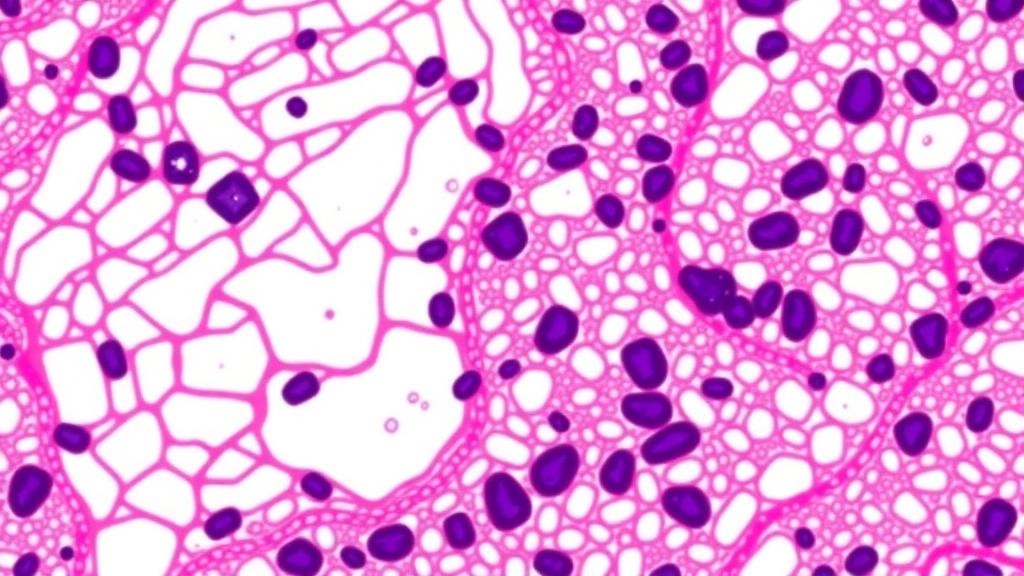
The research, led by Nianbo Xu, Andy Chun Hang Chen, and colleagues at the University of Hong Kong and collaborating institutions, tackles a long-standing problem in reproductive medicine. For decades, pathologists have assessed endometrial receptivity by examining hematoxylin and eosin–stained biopsy specimens under the microscope, dating the tissue according to morphological criteria that describe how the lining changes across the menstrual cycle. The approach, however, is notoriously subjective. Two experienced observers can assign different dates to the same slide, and even the same observer may disagree with themselves on different days. This observer variability has undermined confidence in histological dating precisely at a moment when objective, reproducible assessment of endometrial receptivity matters most—in deciding how to time embryo transfer and counsel patients about their chances of success.
The team’s strategy was to ask whether deep learning could extract predictive information from endometrial histology that human eyes cannot reliably quantify. They built and compared two fundamentally different computational pipelines. The first was an end-to-end ResNet-18, a convolutional neural network trained from scratch on whole-slide images of endometrial biopsies, learning its own visual features directly from the data. The second leveraged UNI2-h, a so-called foundation model for pathology—a massive neural network pretrained on enormous collections of histology images spanning many organs and diseases. Rather than retraining this heavyweight model, the researchers froze its weights and used it as a fixed feature extractor, converting each slide into a rich numerical representation that a smaller classifier could then interpret. This distinction proved to be the intellectual heart of the study: can a general-purpose vision model, trained on pathology writ large, be repurposed for the specialized task of fertility assessment?
To answer that question, the researchers assembled natural-cycle endometrial biopsies and developed ensembles of models through ten-fold cross-validation, a rigorous resampling scheme in which the data are repeatedly partitioned so that every case serves as both training material and test material across different iterations. The resulting ensembles were then evaluated in an internal held-out cohort of patients with known live birth outcomes, providing an outcome-based test of whether the models’ predictions translated into clinically meaningful endpoints. Crucially, the team also designed an external, phase-based evaluation that asked a different question: could the models distinguish tissue sampled at LH+7—the mid-luteal window of maximal receptivity, seven days after the luteinizing hormone surge—from tissue sampled at other phases of the cycle? This dual evaluation exposed a striking asymmetry in how the two architectures behaved.
The whole-slide ResNet-18, trained end to end, performed well on the internal outcome-based testing but collapsed to near-random performance when asked to identify the LH+7 window in external testing. In other words, the network had apparently learned features that correlated with pregnancy outcomes in its own dataset but did not correspond to genuine, transferable knowledge of endometrial physiology. The UNI2-h-based pipeline, by contrast, showed far less divergence between the two tasks. Using mean pooling to aggregate the foundation model’s per-patch features and a multilayer perceptron as the classifier, the ensembled UNI2-h models achieved an area under the receiver operating characteristic curve—a standard measure of discriminative ability—of 0.74 plus or minus 0.03 in internal outcome-based evaluation, and a remarkably strong 0.90 plus or minus 0.05 in external phase-based testing. The foundation model, it seemed, carried visual vocabulary broad enough to recognize biologically real patterns of endometrial maturation rather than dataset-specific shortcuts.
The researchers then introduced a biologically motivated refinement. Because implantation occurs at the luminal epithelium—the single layer of cells lining the uterine cavity that makes first contact with the embryo—they built luminal epithelium–focused models that concentrated the network’s attention on this maternal-embryo interface rather than on the entire slide. The intuition is elegant: if the molecular and morphological dialogue between mother and embryo is what determines receptivity, then a model forced to look at the interface might learn more relevant signals with less data. Despite training on a smaller set of images, the LE-focused models retained performance comparable to their whole-slide counterparts. In internal outcome-based testing, LE-focused ResNet-18 and UNI2-h models achieved AUROCs of 0.71 plus or minus 0.03 and 0.74 plus or minus 0.09, respectively, while external phase-based testing yielded AUROCs of 0.80 plus or minus 0.16 for ResNet-18 and 0.84 plus or minus 0.06 for UNI2-h. The modest widening of confidence intervals in some LE-focused results reflects the reduced training volume, yet the fact that performance held up at all argues that the interface itself carries substantial predictive information.
Interpretability analysis reinforced this biological reading. Using Grad-CAM, a technique that visualizes which image regions most influence a convolutional network’s output, the researchers reviewed the LE-focused ResNet-18 models and found that attention commonly fell on the luminal epithelium alone or on the epithelium mixed with adjacent stromal tissue. The networks were, in effect, independently rediscovering the anatomical site where implantation unfolds—a reassuring sign that the models were not latching onto artifacts such as staining gradients or slide edges, but on structures with genuine physiological relevance to fertility.
Perhaps the most clinically consequential experiments came from multimodal modeling. Endometrial histology does not exist in isolation; clinicians routinely weigh hormone measurements, maternal age, endometrial thickness measured by ultrasound, and body mass index when predicting IVF success. The team therefore built integrated models that combined histology-derived features with these clinical metadata and compared them against a metadata-only baseline. The results were unambiguous: models incorporating histology significantly outperformed the clinical metadata-only model, demonstrating that the tissue slide contains predictive signal beyond what conventional clinical variables capture. An examination of the integrated model’s feature weighting revealed a hierarchy of influence—histology outputs dominated, estradiol levels and maternal age contributed smaller but appreciable weights, while progesterone, endometrial thickness, and BMI contributed negligibly. That endometrial thickness, a mainstay of clinical assessment, added essentially nothing once histology was available is a provocative finding that will likely fuel debate about which measurements deserve their place in routine IVF workups.
The implications extend beyond the IVF clinic. The study offers a case study in how foundation models—large, general-purpose networks pretrained on broad data—are changing the economics of medical AI. Where a specialized task like endometrial assessment once demanded large annotated datasets that few centers possess, repurposing a frozen foundation model allowed the Hong Kong team to achieve robust performance with a comparatively modest collection of biopsies. The contrast between the end-to-end ResNet-18, which overfit to its training distribution, and the foundation-model pipeline, which generalized across evaluation tasks, suggests that transferable visual representations are now a practical asset rather than a theoretical promise. For reproductive medicine specifically, the findings support histology-based AI as a foundation for fertility-oriented endometrial assessment, potentially offering clinicians an objective, reproducible readout of receptivity to complement or eventually replace subjective dating.
Caution is still warranted before such models reach the bedside. The internal outcome-based AUROC of roughly 0.74 indicates meaningful but imperfect discrimination, and the external phase-based results, while impressive, test a different task than live birth prediction itself. Prospective validation in independent, multi-center cohorts—and demonstration that model-guided decisions actually improve outcomes—remains the necessary next step. Yet the direction of travel is clear. A routine biopsy, read by an algorithm that sees what pathologists cannot, may soon tell a patient more honestly whether her uterus is ready to receive an embryo. In a field where hope is measured in cycles and years, an objective window into endometrial receptivity would be nothing short of transformative.
Subject of Research: Deep learning of endometrial histology to predict cumulative live birth in IVF cycles
Article Title: Foundation model-powered deep learning of endometrial histology for predicting the cumulative live birth of an in vitro fertilization cycle
Article References: Xu, N., Chen, A. C. H., Ruan, H., Yang, D., Liao, R., Qi, X., Fong, S. W., Cao, D., Yu, L., Huang, Y., Yeung, W. S. B., Ng, E. H. Y., & Lee, Y. L. (2026). Foundation model-powered deep learning of endometrial histology for predicting the cumulative live birth of an in vitro fertilization cycle. PLOS Digital Health, 5(9), e0001744. https://doi.org/10.1371/journal.pdig.0001744
Image Credits: AI Generated
DOI: 10.1371/journal.pdig.0001744
Keywords: in vitro fertilization, endometrial receptivity, deep learning, foundation models, histopathology, cumulative live birth, luminal epithelium, Grad-CAM, multimodal prediction, reproductive medicine, PLOS Digital Health, ResNet-18
News Source: Blake Davidson. (October 8, 2026). AI Reads the Endometrium: Foundation Models Predict IVF Success from Tissue Slides. Scienmag.