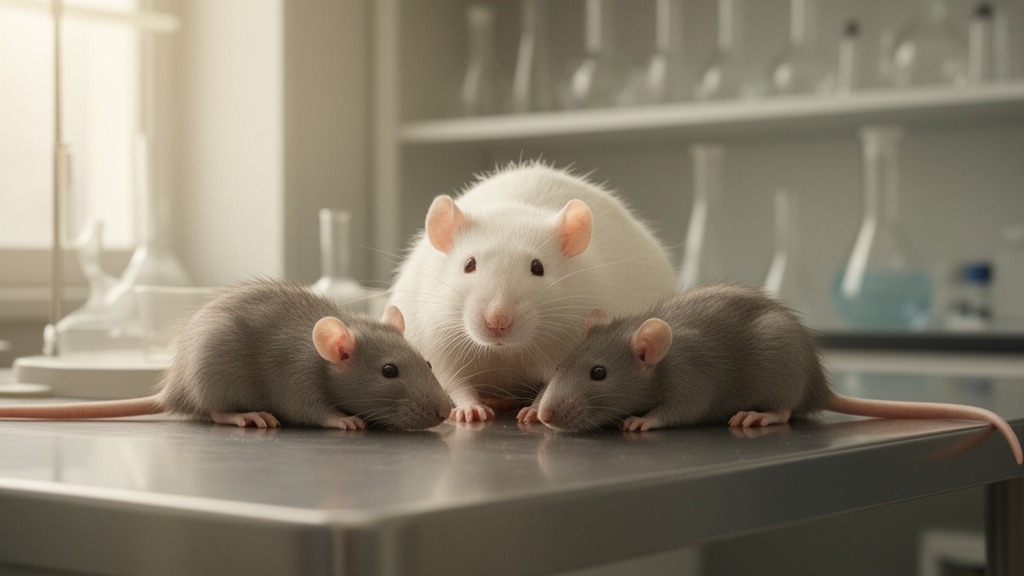
A pregnancy complication long associated with danger to the mother may quietly shape the mental health of her children decades later. New research in rats suggests that preeclampsia—a disorder of high blood pressure and organ stress affecting roughly one in twenty pregnancies—leaves measurable neurobehavioral fingerprints on adult offspring, including heightened anxiety, prolonged stress hormones, and, in males only, signs of depression-like behavior paired with chronic low-grade inflammation. The study, published in BMC Neuroscience by a team at Birjand University of Medical Sciences in Iran, adds to a growing body of evidence that the prenatal environment programs the brain in ways that persist long after birth.
Preeclampsia is one of the most feared complications of human pregnancy, characterized by newly developed hypertension and often protein in the urine after the twentieth week of gestation. While clinicians have made enormous strides in managing the maternal risks, the long-term consequences for babies exposed to the preeclamptic intrauterine environment have remained frustratingly opaque. Epidemiological studies have hinted at elevated rates of attention-deficit/hyperactivity disorder, autism spectrum traits, and mood disorders among children born after preeclamptic pregnancies, but disentangling the direct biological effects of the placental dysfunction from genetic, social, and postnatal confounders is extraordinarily difficult in human populations. Animal models offer a way to isolate the causal chain, and that is precisely what the Birjand team set out to do.
The researchers induced preeclampsia surgically in pregnant Wistar rats using a well-established technique known as reduced uterine perfusion pressure, or RUPP. In this model, the surgeon places constricting clips around the abdominal aorta and ovarian arteries at mid-gestation, mechanically restricting blood flow to the uterus and placenta. The result is a cascade of maternal physiological changes that closely mirror human preeclampsia, including elevated blood pressure, proteinuria, and the release of anti-angiogenic factors such as soluble Fms-like tyrosine kinase-1, or sFlt-1. Because the intervention is purely mechanical, any differences observed in the offspring can be attributed to the compromised placental environment rather than to genetic mutations or drug toxicity, making RUPP one of the most trusted tools in developmental programming research.
Once the offspring reached eight weeks of age—young adulthood in rat terms—the team put them through a battery of behavioral and biochemical tests. Anxiety-like behavior was assessed with the elevated plus maze, a classic apparatus in which rodents must choose between exploring elevated open arms, which they instinctively avoid, and hiding in enclosed arms. The more time an animal spends in the open arms, the lower its anxiety. Depressive-like behavior was measured with the tail suspension test, in which a mouse or rat is suspended by its tail and the duration of immobility is recorded; greater immobility is interpreted as behavioral despair, a proxy for depression-like states. These tests do not measure human emotions directly, but they are among the most widely validated behavioral readouts in translational neuroscience.
The behavioral results were striking in their pattern. Both male and female offspring of preeclamptic dams showed significantly elevated anxiety indices on the elevated plus maze, with the difference reaching a high level of statistical significance. In other words, prenatal exposure to placental insufficiency made the animals more cautious, more avoidant, and more stressed by novelty—regardless of sex. But when the researchers turned to the tail suspension test, a sharp sex divide emerged. Only the male offspring displayed increased depressive-like behavior, spending more time immobile than their control counterparts, while females showed no comparable deficit. This partially sex-dependent profile is the study’s central finding and its most intriguing clue.
The biochemical data helped explain why males might be more vulnerable. Male offspring of preeclamptic dams had significantly elevated serum levels of interleukin-6, a pro-inflammatory cytokine implicated in the neurobiology of depression, along with increased high-sensitivity C-reactive protein, a systemic marker of inflammation routinely used in cardiovascular and psychiatric research. At the same time, these males showed reduced testosterone, a hormone that has been linked in both animal and human studies to resilience against depressive phenotypes. The convergence of elevated inflammation and suppressed testosterone in the same animals that exhibited despair-like behavior suggests a plausible mechanistic pathway: prenatal adversity may prime the immune system toward a pro-inflammatory set point, which in turn interacts with the endocrine environment to shape mood-related behavior.
The stress hormone data added another layer. When the researchers subjected the adult offspring to acute restraint stress—a standard laboratory challenge that mimics a brief, inescapable stressor—and measured cortisol responses, rats of both sexes born to preeclamptic pregnancies showed prolonged cortisol elevation compared with controls. Cortisol is the hormonal endpoint of the hypothalamic-pituitary-adrenal axis, the body’s central stress-response circuit, and a failure to return cortisol to baseline promptly after a stressor is considered a hallmark of stress-system dysregulation. Prolonged cortisol responses have been documented in humans with anxiety disorders and depression, and their presence in prenatally exposed rats of both sexes aligns neatly with the anxiety phenotype shared by males and females.
Putting the pieces together, the authors propose that preeclampsia acts on the developing brain through at least two partially separable pathways. The first, shared by both sexes, involves programming of the HPA axis, producing lasting anxiety-like tendencies and exaggerated cortisol reactivity. The second, specific to males, involves inflammatory priming—elevated IL-6 and hs-CRP—combined with reduced testosterone, culminating in depression-like behavior. Sex differences in fetal immune development, placental function, and hormonal milieu are well documented, and this study adds concrete evidence that those differences translate into divergent psychiatric vulnerability following the same prenatal insult. The authors are careful to note that the underlying mechanisms remain to be clarified and that further studies are needed to trace exactly how placental insufficiency produces these long-lasting changes in the offspring’s brain and body.
The implications extend well beyond the laboratory. If the findings translate to humans, they would suggest that children born after preeclamptic pregnancies—particularly boys—may carry an elevated long-term risk for mood and anxiety disorders, and that this risk could be detectable through inflammatory and hormonal biomarkers long before symptoms appear. That, in turn, opens the door to early monitoring and, eventually, preventive interventions ranging from anti-inflammatory strategies to targeted psychological support. They also reinforce a broader lesson of the developmental origins of health and disease field: the nine months of gestation are not merely a prelude to life but an active sculptor of lifelong physical and mental health. For the millions of women who experience preeclampsia each year, the study underscores that the stakes of this pregnancy complication reach far beyond delivery day, into the emotional lives of the next generation.
As with any animal study, caution is warranted before extrapolating to clinical practice. Rat behavior in a maze or a tail suspension test is not human depression, and the RUPP model, while faithful in many respects, cannot capture every feature of the human preeclamptic syndrome. Yet the convergence of behavioral, inflammatory, and endocrine evidence in this work—published open access so that researchers worldwide can scrutinize and build upon it—provides a compelling experimental foundation for a question that epidemiology alone could never answer. The next steps will involve identifying the molecular signals released by the stressed placenta, determining how they cross into the fetal brain, and testing whether the sex-dependent vulnerabilities can be intercepted. For now, the message is clear: what happens in the placenta does not stay in the placenta.
Subject of Research: Long-term neurobehavioral and inflammatory effects of prenatal preeclampsia exposure in adult rat offspring
Article Title: Long-term effects of maternal preeclampsia on anxiety, depression-like behavior, and inflammatory markers in adult rat offspring: a partially sex-dependent profile
Article References: Hassanzadeh-Taheri, M., Vazifeshenas-Darmiyan, K., Saheli, M., & Hosseini, M. (2026). Long-term effects of maternal preeclampsia on anxiety, depression-like behavior, and inflammatory markers in adult rat offspring: a partially sex-dependent profile. BMC Neuroscience. https://doi.org/10.1186/s12868-026-01061-y
Image Credits: AI Generated
DOI: 10.1186/s12868-026-01061-y
Keywords: preeclampsia, fetal programming, anxiety, depression, inflammation, interleukin-6, hs-CRP, testosterone, cortisol, HPA axis, RUPP model, sex differences
News Source: Glenn Wilkins. (October 8, 2026). Preeclampsia in Pregnancy Leaves Lasting Anxiety and Depression Traces in Adult Offspring, Rat Study Finds. Scienmag.