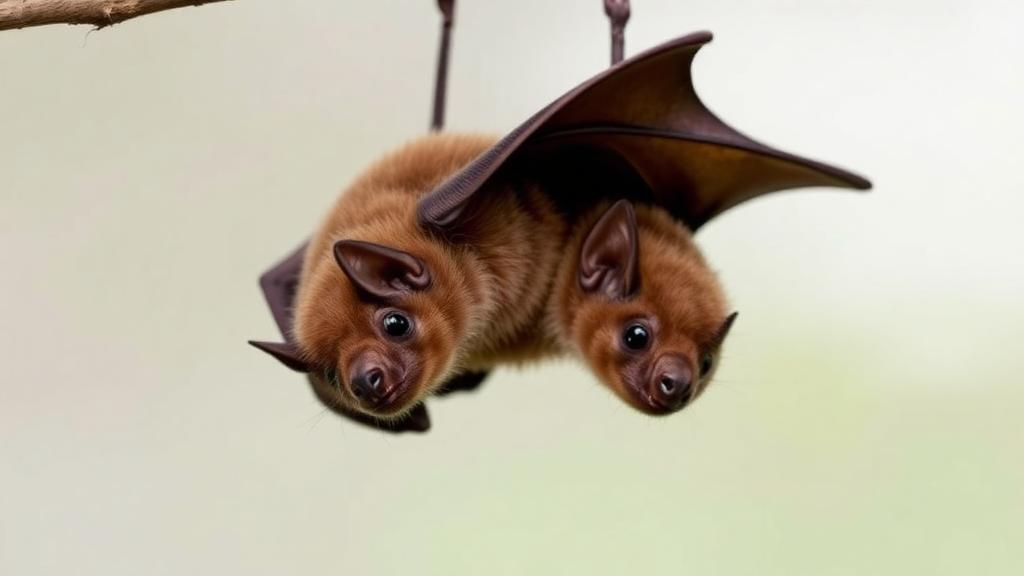
Deep in the savannas of northeastern Eswatini, one of Africa’s most adaptable bats is quietly carrying a microbial cargo that has caught the attention of disease ecologists. The little free-tailed bat, Mops pumilus, is a small, fast-flying insectivore that roosts in buildings, forages over sugarcane plantations, and thrives in landscapes transformed by human agriculture. A new study published in the journal Web Ecology has now provided the first detailed characterization of this species’ gut microbiome, and the results are striking: the bats harbor a remarkably diverse community of gut bacteria, including several genera that contain species pathogenic to humans and other animals, yet the composition of that microbial community appears largely indifferent to the dramatic land cover changes reshaping the region.
The research, led by Julie Teresa Shapiro of the University of Florida and the French Agency for Food, Environmental and Occupational Health and Safety, together with colleagues from the University of Copenhagen, Aarhus University, the University of Pretoria, and the University of Eswatini, analyzed fecal samples from 109 individual little free-tailed bats captured between November 2015 and July 2016 at 28 sites across the Lowveld region of eastern Eswatini. This area, part of the Maputaland-Pondoland-Albany biodiversity hotspot, is dominated by commercial sugarcane plantations, subsistence maize fields, grazing lands, rural villages, and protected parks, making it an ideal natural laboratory for asking how anthropogenic disturbance shapes the invisible ecosystems inside wildlife.
The team used a molecular technique called amplicon sequencing, targeting the V3–V4 region of the 16S ribosomal RNA gene, a genetic marker widely used to identify bacteria. After extracting DNA from fecal samples preserved with silica gel, the researchers amplified the bacterial marker, sequenced the products on an Illumina MiSeq platform, and processed the reads through the DADA2 pipeline, which identifies distinct amplicon sequence variants, or ASVs, the finest practical resolution of bacterial identity. Rigorous contamination controls, including extraction blanks, PCR blanks, and the requirement that a bacterial variant appear in at least two of three PCR replicates before being counted, ensured the results reflected genuine biology rather than laboratory artifacts.
The scale of bacterial diversity they uncovered was impressive. Across the 109 bats, the team identified 2,249 unique bacterial ASVs, and a statistical technique called rarefaction, which plots species accumulation against sampling effort, showed the curves reaching a clear asymptote. The Chao1 estimator, a method for extrapolating total richness from observed data, suggested the true diversity was between 2,250 and 2,253 species, meaning the researchers had captured essentially the complete bacterial inventory of this species’ gut in the region. Individual bats carried anywhere from 3 to 185 ASVs, with a mean of 47, and phylogenetic diversity, measured with Faith’s index, ranged from 0.6 to 24.1.
Perhaps the most striking pattern was the extraordinary individuality of each bat’s microbiome. Fully 72 percent of the identified bacterial variants, some 1,622 of them, were found in only a single bat, and fewer than 1 percent appeared in more than a quarter of the animals sampled. The most common single variant, an unknown species of Mycoplasma, was still detected in only 66 percent of bats. The dominant phyla across the population were Proteobacteria and Firmicutes, present in every individual, followed by Actinobacteria in 84 percent and Bacteroidota in just over half. The researchers suggest this high individual variability likely reflects the bat’s generalist insectivorous diet: previous molecular diet studies have shown that Mops pumilus feeds on a wide and individually variable array of insect prey, and since diet is a major driver of gut microbial composition, no two bats end up with quite the same internal community.
Then came the pathogen findings. Screening the ASV table against a list of bacterial genera known to be potentially zoonotic and frequently found in bats, the team detected five: Mycoplasma, Rickettsia, Salmonella, Bartonella, and Campylobacter. Four of these occurred at remarkably high prevalence. Mycoplasma topped the list at 88 percent of individuals, present at all but two of the 17 roosts surveyed in the landscape analysis. Rickettsia was found in 36 percent of bats, Salmonella in 34 percent, and Bartonella in 23 percent, while Campylobacter appeared in just 4 percent. Co-occurrence was common: 27 bats carried two of these genera simultaneously, 23 carried three, seven carried four, and one individual harbored all five.
Crucially, none of the bats showed signs of illness. The researchers found no correlation between bacterial richness or phylogenetic diversity and body condition, calculated as mass divided by forearm length, a standard health proxy in bats. This absence of disease, combined with the sheer prevalence of the bacteria, suggests the animals are likely asymptomatic carriers, or that the detected DNA originated in their insect prey rather than establishing infection in the bats themselves. Rickettsia in particular is a common insect endosymbiont, and its presence in feces could simply reflect a recent meal of infected insects or ticks groomed off the fur. Salmonella, by contrast, is usually reported in bats at prevalences below 12 percent, making the 34 percent figure here notably high, and raising questions about environmental reservoirs such as contaminated water, which has been implicated in other studies.
The central hypothesis of the study, however, was largely not borne out. Drawing on prior work showing that habitat degradation can reduce gut microbial diversity in primates, rodents, and other bats, the researchers expected that anthropogenic land covers and fragmentation would diminish bacterial richness and shift community composition. They classified the landscape from Landsat 8 satellite imagery into savanna, sugarcane, rural settlement, and water, then calculated composition metrics and configuration metrics such as savanna edge density and a fragmentation index at both a fine scale around roosts and a landscape scale matching the bats’ nightly foraging ranges, which can exceed four kilometers. Using generalized linear mixed models and distance-based redundancy analysis, they found no association between any land cover variable and bacterial richness, phylogenetic diversity, or the prevalence of potentially pathogenic genera. Land cover explained only a small fraction, about 6.7 percent, of the variation in community composition, with fine-scale rural and savanna cover and landscape-scale sugarcane cover and savanna splitting emerging as statistically significant but weak predictors.
The authors interpret this muted response as a reflection of the species’ ecological flexibility. Unlike bats that avoid disturbed habitats, Mops pumilus actively uses and even prefers agricultural landscapes, roosting in buildings and feeding over irrigated monocultures where water and insect prey remain available year-round. Because its activity and foraging are not negatively affected by human land use, its gut microbiome may be similarly buffered. The researchers also point to factors their sampling design could not fully disentangle, including social transmission of microbes within roosts, local environmental microbial communities, and roost characteristics, any of which might outweigh landscape composition in shaping these internal ecosystems. Seasonal effects, too, remain untested, although the species neither migrates nor hibernates, which may dampen the seasonal microbiome shifts documented in other bat species.
The findings carry real weight for the One Health framework, the principle that human, animal, and environmental health are interconnected. Bats are already recognized as reservoirs of numerous viruses, and bacterial genera such as Bartonella and Mycoplasma have documented links to human disease, including Bartonella mayotimonensis carried by Myotis bats in northern Europe and Mycoplasma haemohominis carried by flying foxes in New Caledonia. While there is currently no evidence that the bacteria detected in Eswatini cause illness in the bats or can infect people, Mycoplasma species are considered emerging pathogens that have caused mortality in other wildlife, and the authors argue that continued surveillance of this abundant, human-associated bat species is warranted. As savannas across southern Africa continue to convert to agriculture, understanding which species tolerate, and which are quietly transformed by, the changing landscape will be essential for conserving both the bats and the health of the systems they inhabit.
Subject of Research: Gut microbiome diversity and potentially pathogenic bacteria in the little free-tailed bat (Mops pumilus) in relation to land cover change in Eswatini
Article Title: Gut microbiomes of the little free-tailed bat (Mops pumilus) show high prevalence of potential bacterial pathogens but limited responses to land cover
Article References: Shapiro, J. T., Barnes, C., Nielsen, I. B., Rasmussen, L., Monadjem, A., McCleery, R. A., & Hansen, A. J. (2026). Gut microbiomes of the little free-tailed bat ( Mops pumilus ) show high prevalence of potential bacterial pathogens but limited responses to land cover. Web Ecology, 26(2), 223-242. https://doi.org/10.5194/we-26-223-2026
Image Credits: AI Generated
Keywords: gut microbiome, bats, Mops pumilus, 16S rRNA sequencing, bacterial pathogens, Mycoplasma, Salmonella, land cover change, Eswatini, One Health, wildlife disease, savanna
News Source: Morgan Morrow. (October 8, 2026). Bats in Farmed Savannas Carry a Surprising Load of Potential Pathogens in Their Guts. Scienmag.