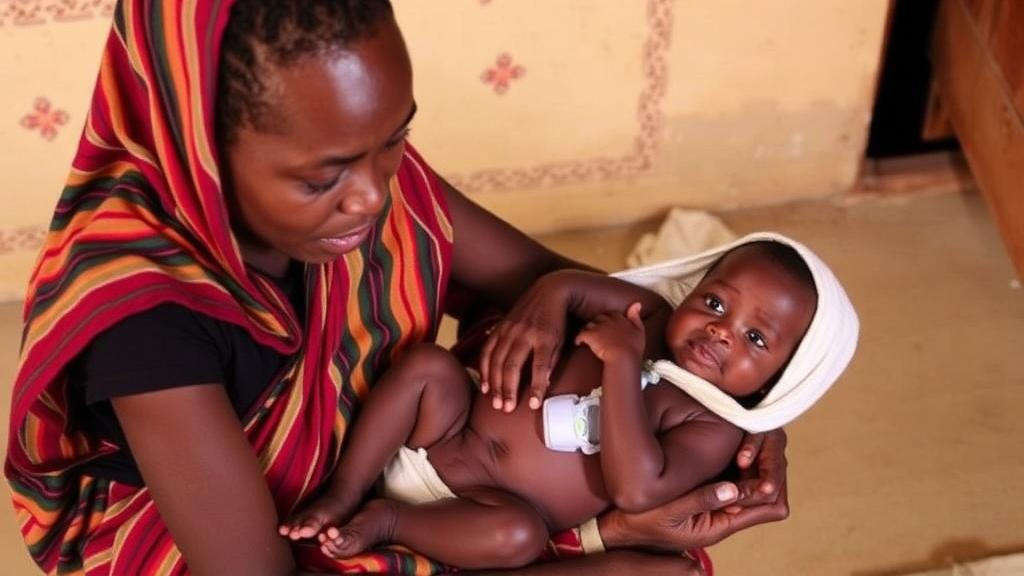
Roughly one in ten babies worldwide arrives before its body is ready for the outside world, and in eastern Ethiopia the consequences of that early arrival are stark. A new retrospective study from Jigjiga University Sheikh Hassan Yabare Comprehensive Specialized Hospital has found that nearly one in three preterm newborns admitted to its neonatal intensive care unit died during their hospital stay, a figure that underscores both the fragility of babies born too soon and the enormous potential of low-cost, well-known interventions to change that outcome. The research, published in BMC Pediatrics, offers one of the first detailed portraits of preterm survival in Ethiopia’s Somali region, a part of the country where data on newborn health has historically been scarce.
The research team, led by Aysheshim Fentu Yeshalem of Jigjiga University’s Department of Pediatrics and Child Health, combed through the medical records of every preterm neonate admitted to the hospital’s neonatal intensive care unit over a two-year window running from February 9, 2024 to February 7, 2026. In total, 440 preterm babies were included in the analysis, a complete enumeration of admissions during the study period rather than a sample. By reconstructing each infant’s clinical course from admission to discharge or death, the investigators were able to calculate the overall mortality rate and, crucially, to identify which characteristics and treatments were statistically linked to survival.
The headline number is sobering: 30.3 percent of the preterm neonates died, with a 95 percent confidence interval of 25.9 to 34.8 percent. In practical terms, for every hundred premature babies wheeled into the unit, roughly thirty did not leave. Preterm birth is defined as delivery before thirty-seven completed weeks of gestation, and babies born early face a cascade of physiological challenges: their lungs may lack sufficient surfactant to stay inflated, their immune systems are immature, their skin is thin and loses heat rapidly, and their digestive systems often cannot coordinate sucking and swallowing. In high-resource settings, incubators, mechanical ventilation, and surfactant therapy have driven preterm mortality down dramatically. In settings like Jigjiga, where such technologies may be limited or unavailable, survival depends far more heavily on basic supportive care.
To untangle which factors mattered most, the researchers used binary logistic regression, a statistical technique that estimates the odds of an outcome, in this case death, while adjusting for the influence of other variables. They screened the candidate variables for multicollinearity, the phenomenon in which predictors overlap so heavily that their individual effects become impossible to separate, using the variance inflation factor, and found all values below four, comfortably under conventional thresholds of concern. They then checked whether the final model fit the observed data using the Hosmer-Lemeshow test, which returned a p-value of 0.53, indicating no significant departure between predicted and actual outcomes. Associations were considered statistically significant at a p-value below 0.05.
Three risk factors stood out as powerful predictors of death. The first was birth weight below 1,500 grams, the threshold clinicians call very low birth weight. Babies in this category faced roughly three times the odds of dying compared with heavier preterm infants, an adjusted odds ratio of 3.23. This makes biological sense: weight at birth is a composite proxy for gestational age, organ maturity, and nutritional reserves in utero, and the lightest babies have the least physiological buffer against complications such as respiratory distress, infection, and feeding intolerance.
The second major risk factor was a low Apgar score at five minutes of life. The Apgar score is a rapid assessment performed at one and five minutes after birth that rates a newborn’s appearance, pulse, grimace, activity, and respiration, each on a scale of zero to two, for a maximum of ten. A score below seven at five minutes signals that the baby has not transitioned smoothly to life outside the womb, often reflecting birth asphyxia or depressed physiological function. In the Jigjiga cohort, a five-minute Apgar below seven nearly quadrupled the odds of death, with an adjusted odds ratio of 4.09, making it the strongest intrinsic risk factor identified in the study.
The third and most striking risk factor was hypothermia during the hospital stay, which more than quintupled the odds of mortality, with an adjusted odds ratio of 5.09. Newborns, and especially preterm newborns, lose heat quickly because of their high surface-area-to-weight ratio, thin skin, and limited subcutaneous fat. Hypothermia is insidious because it worsens nearly every other problem a fragile infant faces: it impairs the ability to breathe, slows metabolism, increases the risk of hypoglycemia, and weakens immune defenses. The World Health Organization has long championed the so-called warm chain, a sequence of simple measures from immediate drying and skin-to-skin contact to delayed bathing and appropriate covering, precisely because maintaining a normal body temperature is one of the cheapest and most effective lifesaving measures in neonatal care.
Just as important as the risk factors, however, were the protective ones, and here the study delivers a genuinely hopeful message. Preterm babies who received kangaroo mother care, the practice of continuous skin-to-skin contact between mother and infant combined with frequent breastfeeding, had 83 percent lower odds of death, with an adjusted odds ratio of 0.17. Kangaroo mother care was pioneered in resource-limited settings and has since been validated in trials worldwide; for stable low-birth-weight babies it can match or exceed the survival benefits of conventional incubator care while also promoting breastfeeding, weight gain, and maternal bonding. Its strong protective association in Jigjiga reinforces calls to make the practice universal in neonatal units across the region.
Two other interventions were also linked to dramatically better survival. Babies who were resuscitated at birth had 72 percent lower odds of dying, an adjusted odds ratio of 0.28, a finding that highlights the life-or-death importance of having trained personnel and functioning resuscitation equipment in every delivery room. And infants who began feeding within twenty-four hours of birth had 81 percent lower odds of death, with an adjusted odds ratio of 0.19. Early feeding, ideally with the mother’s own milk, stabilizes blood sugar, protects the immature gut, reduces the risk of sepsis, and prevents the catabolic weight loss that can spiral into further complications. The fact that resuscitation, kangaroo care, and early feeding all emerged as independent protective factors suggests that the pathway to lower mortality in this setting runs not through expensive technology but through the disciplined, consistent delivery of care that is already known to work.
The authors conclude that mortality among preterm neonates at the hospital was high, and they call for proper labor follow-up, resuscitation at birth, prevention and treatment of hypothermia, kangaroo mother care, and early initiation of feeding to be implemented as standard practice. They also recommend prospective, multicenter studies to build on their findings, noting that a retrospective, single-center design has inherent limits: it can identify associations but cannot fully establish causation, and it reflects the experience of one hospital’s catchment population. Even so, the study fills an important evidence gap for Ethiopia’s Somali region and adds to a growing body of research showing that the global burden of preterm death is concentrated precisely where the simplest interventions are least consistently available. For the roughly one in ten babies born too soon worldwide, the difference between life and death, this study suggests, may come down to warmth, milk, and a pair of trained hands in the first minutes and days of life.
Subject of Research: Neonatal mortality and associated risk and protective factors among preterm neonates in eastern Ethiopia
Article Title: Neonatal mortality and associated factors among preterm neonates admitted to Jigjiga University Sheikh Hassan Yabare Comprehensive Specialized Hospital, Ethiopia: a retrospective cross-sectional study
Article References: Yeshalem, A. F., Alemu, H. G., Roble, A. K., Ahmed, M., Muse, A. I., Eshetu, B. G., Ma,alin, M. S., & Abdulahi, A. A. (2026). Neonatal mortality and associated factors among preterm neonates admitted to Jigjiga University Sheikh Hassan Yabare Comprehensive Specialized Hospital, Ethiopia: a retrospective cross-sectional study. BMC Pediatrics. https://doi.org/10.1186/s12887-026-07781-8
Image Credits: AI Generated
DOI: 10.1186/s12887-026-07781-8
Keywords: preterm birth, neonatal mortality, Ethiopia, kangaroo mother care, hypothermia, APGAR score, low birth weight, neonatal intensive care, early feeding, birth asphyxia, resuscitation, BMC Pediatrics
News Source: Harold Sullivan. (October 8, 2026). Simple Interventions Could Save Preterm Babies in Eastern Ethiopia, Study Finds. Scienmag.