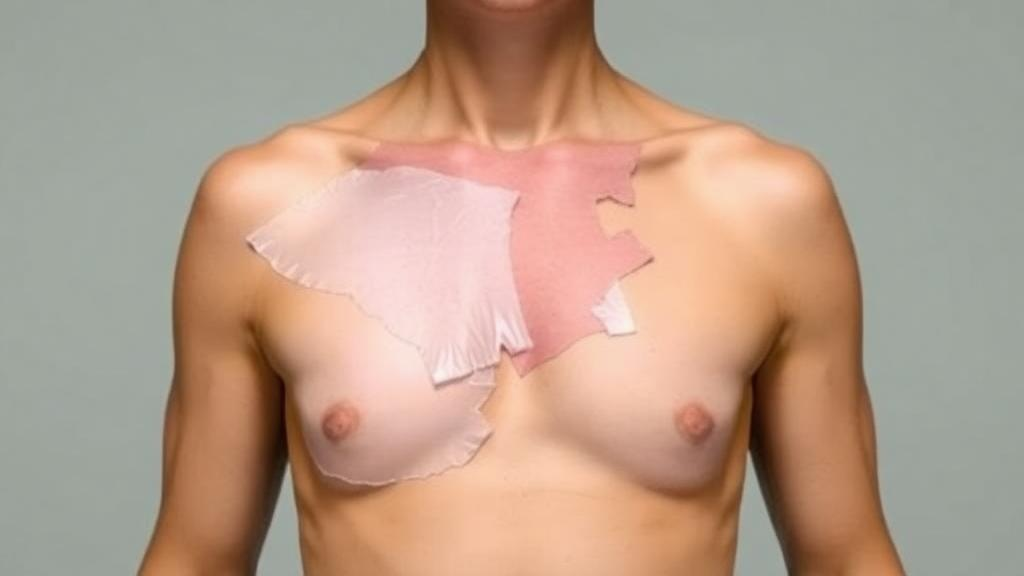
Reconstructive surgeons in Hanoi have shown how a single workhorse tissue flap can be reshaped, stretched, and slimmed to repair three very different kinds of devastating wounds, from a radiation-ravaged chest wall to a burned and frozen shoulder joint. The new report, published in BMC Plastic and Reconstructive Surgery, describes a defect-oriented strategy for customizing the pedicled thoracodorsal artery perforator flap, or TDAP flap, and offers a template that other surgical teams may follow when standard flap designs fall short.
The thoracodorsal artery perforator flap was first described in the 1990s as a way of harvesting skin and fat from the back without taking the underlying latissimus dorsi muscle, the powerful muscle that drives movements such as pulling and climbing. Traditional muscle-containing flaps from the same region provide robust tissue but leave patients with functional deficits, unsightly bulk, and higher rates of donor-site complications such as seroma and infection. Perforator flaps sidestep much of that problem by isolating the tiny blood vessels, the perforators, that pierce through the muscle to supply the overlying skin, allowing the muscle itself to be spared while the skin paddle remains reliably perfused.
What has been missing, the Vietnamese team argues, is a systematic way of adapting the flap to the specific anatomy and function of each wound rather than forcing every defect to fit a standard design. Their answer is a four-part customization framework built around individualized perforator selection, extended pedicle dissection, tailored flap geometry, and primary flap thinning. In a retrospective case series spanning 2009 to 2011 at Saint Paul Hospital, three women with complex soft-tissue defects of the anterior chest wall, breast, or proximal upper extremity were treated under this framework, and each case illustrates a different technical variation of the same underlying platform.
Preoperative planning began with handheld Doppler ultrasonography. Using an 8-MHz probe, the surgeons mapped perforators arising from the descending and transverse branches of the thoracodorsal artery, the two main vascular highways that feed the skin of the back. This simple bedside mapping step allowed the team to choose which perforator would serve as the vascular lifeline of each flap before a single incision was made. During surgery, performed with the patient in the lateral decubitus position, the flap was elevated in the suprafascial plane and the chosen perforator was then dissected free through the latissimus dorsi muscle, a technically demanding maneuver given the anatomical variability of these vessels.
The first patient, a 32-year-old woman, had lived for 19 years with an unstable, painful presternal scar that had broken down after radiotherapy and multiple surgeries for hypertrophic scars. The surgeons designed an elliptical 7 by 14 centimeter flap based on a perforator from the descending branch and extended the intramuscular dissection to create a 14-centimeter pedicle. Combined with an eccentric position of the perforator within the skin paddle, this produced an effective reach of roughly 24 centimeters from the pedicle origin to the distal tip of the flap, enough to tunnel the tissue under the skin of the chest and cover the farthest portion of the sternal defect without tension, using a rotation arc of nearly 100 degrees. At 35 months of follow-up the flap had survived completely, the chest contour was restored, the pain had resolved, and the scar had not broken down again.
The second case pushed the reach of the flap even further. A 62-year-old woman developed a chronic radiation-induced ulcer across the upper pole of her left breast seven years after breast-conserving cancer therapy, with a 6 by 17 centimeter wound set in a field of fibrotic, contracted, poorly vascularized tissue. Here the team departed from the conventional ellipse and designed a racket-shaped flap, in which the dissected descending branch formed the longitudinal axis of the handle while the eccentrically placed skin paddle supplied the distal tissue needed to resurface the entire superior breast defect. Extended intramuscular dissection yielded a 24-centimeter vascular pedicle with an arc of rotation of approximately 130 degrees, permitting tension-free transfer without any microsurgical anastomosis. Two years after surgery the ulcer had not recurred, and the upper breast contour had been satisfactorily restored.
The third case demonstrated the opposite design philosophy: instead of maximizing reach, the goal was maximum mobility for a joint. A 30-year-old woman had severe post-burn scar contracture spanning her left axilla and proximal upper arm, limiting shoulder abduction to just 60 degrees. The surgeons harvested a customized V-shaped flap incorporating perforators from both the transverse and descending branches, with a transverse component of 7 by 16 centimeters and a descending component of 8 by 18 centimeters. Because the axilla demands thin, pliable tissue that will not restrict movement, the flap was primarily thinned from approximately 25 millimeters down to about 5 millimeters, with fat carefully removed under direct vision while preserving the subdermal vascular plexus and a protective cuff around the perforator entry point. The result was a 17-centimeter pedicle with a 90-degree rotation arc, tunneled subcutaneously into the axilla. At six months, the contracture was fully released and active shoulder abduction had improved dramatically to 155 degrees.
The series was not without complications, and the authors are candid about the trade-offs. The third patient developed limited necrosis at the distal tip of her flap, which the team attributes to the combination of aggressive thinning to 5 millimeters, the extended reach of the flap, and the inherently reduced perfusion reserve at the far end of the vascular territory rather than to any single technical error. The problem was managed with simple debridement and direct closure and did not compromise the final outcome. From this experience the authors distill practical safeguards: preserve a soft-tissue cuff around the perforator to reduce vasospasm and venous complications, avoid over-thinning the distal portions of the flap where perfusion is weakest, and ensure the pedicle traverses its tunnel free of tension, kinking, or compression.
Beyond the individual cases, the report situates the TDAP flap within the broader landscape of regional reconstruction. Compared with the conventional latissimus dorsi musculocutaneous flap, the perforator version preserves shoulder strength and avoids the muscle-harvest complications documented in larger series. Compared with intercostal artery perforator flaps, which are often limited by shorter pedicles and restricted mobility, the thoracodorsal system offers pedicle lengths that, with extended intramuscular dissection, can exceed the 8 to 16 centimeters typically reported in anatomical studies. The choice of perforator, the authors emphasize, should be dictated by the reconstructive goal rather than by pedicle length alone: descending branch perforators maximize reach, while transverse branch or dual-perforator configurations better serve flaps that need wider geometry or enhanced perfusion. Notably, despite harvesting large skin paddles, all three donor sites were closed primarily, without skin grafts, thanks to the natural laxity of the lateral thoracic region.
The authors acknowledge the limits of their evidence. With only three retrospective cases, no comparative effectiveness can be assessed, validated patient-reported outcomes were not consistently collected, and intraoperative perfusion was judged by clinical inspection rather than indocyanine green angiography, which might have offered more objective guidance during thinning. The cases are presented as a demonstration of a defect-oriented technical strategy, not as definitive clinical recommendations, and larger cohorts with standardized outcome measures will be needed to validate the approach. Still, the central message is a compelling one: successful perforator flap reconstruction depends less on the flap itself than on how thoughtfully the surgeon customizes perforator selection, pedicle dissection, geometry, and thickness to the biological and mechanical demands of each wound. For patients facing radiation ulcers, burn contractures, and unstable chest scars, that philosophy may mean the difference between a flap that merely covers a defect and one that restores form, function, and freedom of movement.
Subject of Research: Customization of the pedicled thoracodorsal artery perforator flap for chest wall and upper-extremity reconstruction
Article Title: A defect-oriented approach to customizing the pedicled thoracodorsal artery perforator flap for chest wall and upper-extremity reconstruction: a case series
Article References: Nghĩa, P. T., Sơn, T. T., Nam, Đ. P., & Anh, H. T. (2026). A defect-oriented approach to customizing the pedicled thoracodorsal artery perforator flap for chest wall and upper-extremity reconstruction: a case series. BMC Plastic and Reconstructive Surgery, 2(1), Article 28. https://doi.org/10.1186/s44452-026-00041-9
Image Credits: AI Generated
DOI: 10.1186/s44452-026-00041-9
Keywords: thoracodorsal artery perforator flap, pedicled perforator flap, flap customization, chest wall reconstruction, breast reconstruction, upper-extremity reconstruction, flap thinning, perforator selection, radiation ulcer, burn scar contracture, plastic surgery, case series
News Source: Ophelia Keating. (October 8, 2026). One Flap, Many Shapes: Surgeons Tailor a Single Tissue Flap to Rebuild Chest and Arm Defects. Scienmag.