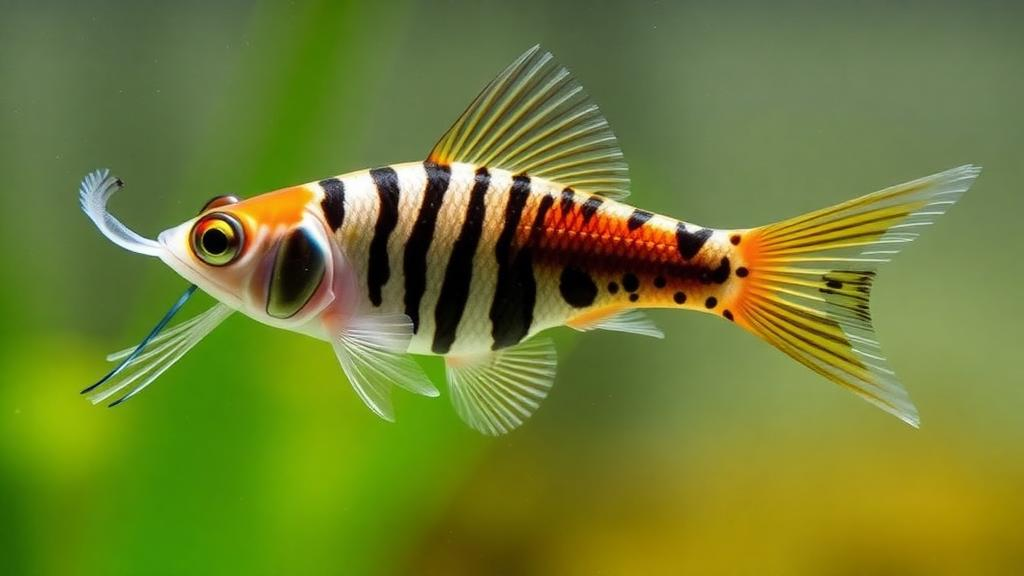
Sometimes the biggest breakthroughs in biology come from the most unexpected places. At Memorial Sloan Kettering Cancer Center (MSK), a team of scientists has cracked a puzzle that stood unsolved for more than three decades, and in doing so they have overturned a basic assumption about how the body manages inflammation. Their study, published October 7 in the journal Nature, reveals that a well-known inflammatory signaling molecule does far more than summon immune cells to the front lines of an infection. It also acts as a shield, protecting healthy tissue from the very immune response it provokes. The discovery, which required the researchers to abandon the standard laboratory mouse in favor of the humble zebrafish, opens fresh avenues for understanding diseases in which inflammation runs amok, including cancer, inflammatory bowel disease, and asthma.
The story begins in 1992, when scientists at McGill University were investigating a fatty signaling molecule with a name only a chemist could love: 5-oxoETE, short for 5-oxo-6,8,11,14-eicosatetraenoic acid. This lipid acts as a chemical alarm, calling specialized white blood cells to sites of infection. The McGill researchers could see that an enzyme was responsible for both assembling 5-oxoETE and breaking it back down again, but they could not determine which human gene carried the blueprint for making it. Without the gene in hand, they could not manipulate the enzyme in the laboratory, probe its role in disease, or understand what happens when it malfunctions. So they gave it a functional name based on the chemical reaction it performs, and that placeholder identity persisted for more than thirty years.
Enter Yanan Ma, PhD, a postdoctoral researcher in the lab of cell biologist Philipp Niethammer at MSK’s Sloan Kettering Institute. Building on initial work by her former lab mate King Lam Hui, PhD, Ma set out to unmask the mystery enzyme. Her strategy began with human cells grown in a dish, where she and Hui screened a shortlist of candidate genes, silencing them one by one to see whether the enzyme’s activity would stop. When Ma silenced a gene called DHRS7, the enzyme went dark. That was the telltale sign she had found the gene encoding it. When she then tested the rodent version of the same gene, it showed almost no activity, which was exactly what the team expected, because mice have lost the receptor needed to detect the 5-oxoETE signal that the enzyme produces. With that single experiment, the enzyme’s true identity was laid bare after more than three decades of anonymity.
The choice to look beyond mice was not accidental but decisive. Mice and rats dominate biomedical research for good reason: they are mammals, and roughly 80 percent of their genes overlap with ours. But in mice there is no known receptor on immune cells to which 5-oxoETE can bind, which makes the pathway effectively impossible to study in that species. In fish, by contrast, the pathway is fully intact. Ma, who received a prestigious Marie-Josée Kravis WISE Fellowship in 2023 for her work on the pathway, explains that picking the right alternative model organism was critical to advancing understanding of how the human body responds to infection. The zebrafish, with its transparent embryos and rapid development, allowed the Niethammer lab to watch the inflammatory response unfold step by step, mapping the chain of molecular interactions player by player in a way that would have been impossible in rodents.
Meanwhile, a second, seemingly unrelated project was unfolding in the same lab. Postdoctoral researcher Miklos Lengyel, MD, PhD, had been working with a zebrafish model of colitis, silencing different genes of interest to understand their effects on gut inflammation. When he knocked out a gene called hcar1-4, the zebrafish version of the human gene OXER1, something deeply unexpected happened: inflammation appeared where there should have been none. The result was baffling because hcar1-4 encodes the very receptor that detects the 5-oxoETE alarm signal. Without the receptor, the signal cannot be received or acted upon, so removing it should have dampened inflammation, not amplified it. Fish lacking the Hcar1-4 protein developed spontaneous gut inflammation even when no infection was present, and the culprit was not neutrophils, the immune cells that normally rush in when the alarm sounds, because depleting them did not solve the problem.
The two lines of inquiry converged when Lengyel silenced the DHRS7 gene in zebrafish, preventing them from making the enzyme that produces 5-oxoETE. By every conventional expectation, the fish should have shown less inflammation: no enzyme, no alarm signal, no immune cell recruitment. Instead, once again, the intervention led to more inflammation. Lengyel admits the result made no sense at first, and that he had to prove it using several different methods before the rest of the lab was convinced. These paradoxical findings ultimately led the team to the study’s central insight: the 5-oxoETE pathway does not merely summon immune cells to where they are needed, it also protects healthy cells from being damaged by the immune response. Scientists had observed increased inflammation when the pathway was silenced precisely because they had removed the protection it provided.
The protective mechanism the researchers traced is elegant in its biochemistry. Without the 5-oxoETE signal, or the Hcar1-4 receptor to receive it, the zebrafish’s intestinal cells lost critical protection from the low-level chemical stress caused by normal gut bacteria. The team ultimately traced this protection to a family of enzymes called NUDIX hydrolases, which function as a molecular cleanup crew, removing damaged DNA building blocks before they can accumulate and cause harm. Even in the absence of any outside invader, the loss of the pathway caused intestinal cells to die from chemical stress, triggering the inflammation the scientists observed. As Niethammer puts it, immune cells unleash chemical warfare against pathogens, and organisms have evolved an elegant way of protecting their own healthy cells at the same time. The signal, in other words, is not just an alarm but also a shield.
The clinical implications are potentially far-reaching, because this inflammation pathway is known to break down in several major diseases. In human cancers, mutations in DHRS7 and OXER1 have been found in gastrointestinal and uterine tumors, and mutations producing nonfunctional versions of OXER1 have been correlated with poorer patient outcomes in colorectal, pancreatic, and kidney cancers. In inflammatory bowel disease, lower levels of 5-oxoETE in intestinal tissue have been linked to worse outcomes. And in an independent study of asthma in primates, blocking OXER1 reduced the immune cells’ response but also led to the disappearance of protective mucus-producing cells that line the airway, a result that now looks far less puzzling in light of the pathway’s newly discovered protective role. Lengyel notes that more research is needed, but there is a possibility that activating the pathway could increase the resilience of the gut to oxidative stress, which might help counteract damage caused by radiation therapy or chemotherapy.
The study also captures only one side of the lab’s broader investigation into this remarkable system. The same inflammatory machinery is triggered when tissues suffer physical damage, and doctoral student Zaza Gelashvili, MS, has been studying that mechanical dimension in a separate study published earlier this year in Nature Communications, work recognized with the 2026 Chairman’s Prize from the Gerstner Sloan Kettering Graduate School of Biomedical Sciences. Mechanical stress on cell membranes releases a fatty molecule called arachidonic acid, which becomes the raw material from which 5-oxoETE is ultimately built. Gelashvili describes it as the first step in a chain reaction: physical stress unlocks the raw material, oxidative stress drives the conversion, and DHRS7 amplifies the signal. What the lab is really studying, Niethammer says, is a pathway that integrates two completely different kinds of stress, mechanical and metabolic, and converts them into a single, coordinated, protective response. From a decades-old anonymous enzyme to a unified model of how the body senses and survives injury, the work stands as a testament to the power of choosing the right organism, following surprising results wherever they lead, and recognizing when two separate stories are in fact one.
Subject of Research: Identification of the enzyme DHRS7 in the 5-oxoETE inflammatory signaling pathway and its protective role in epithelial tissue
Article Title: Of mice and zebrafish: how MSK scientists solved a decades-old mystery and uncovered new insights about inflammation
Article References: Of mice and zebrafish: how MSK scientists solved a decades-old mystery and uncovered new insights about inflammation. (n.d.). Original publication
Image Credits: AI Generated
DOI: Not provided
Keywords: inflammation, 5-oxoETE, DHRS7, OXER1, zebrafish, innate immunity, NUDIX hydrolases, inflammatory bowel disease, cancer, asthma, oxidative stress, Memorial Sloan Kettering
News Source: Nathaniel Bowman. (October 7, 2026). Zebrafish Help Scientists Solve a 30-Year Mystery of an Inflammation Signal That Both Alarms and Shields. Scienmag.