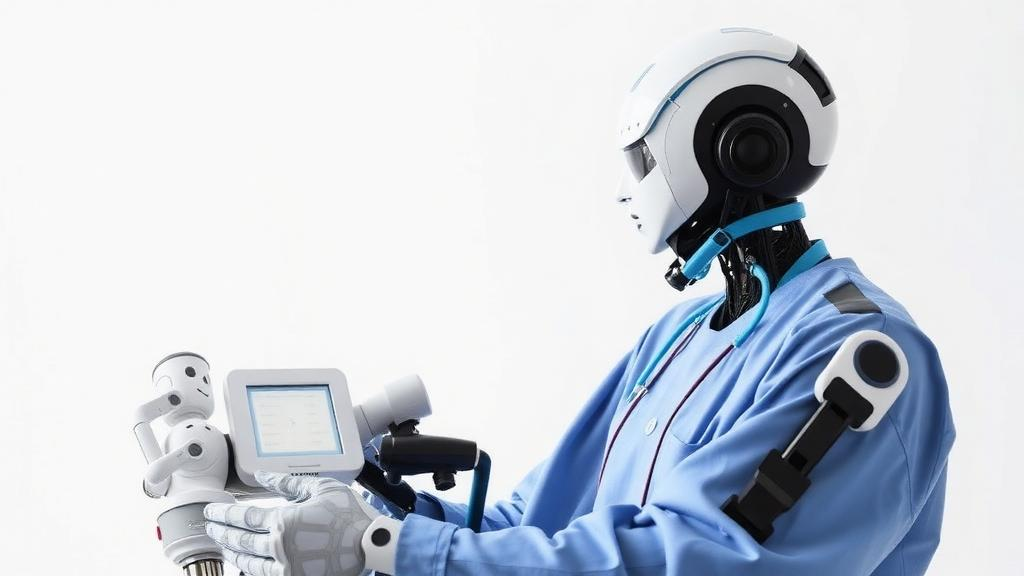
For more than a decade, the ethics of artificial intelligence in caregiving has been dominated by a single, anxious question: can a machine ever replace the authentic human touch? Philosophers have warned that handing older adults, disabled people, and the dying over to robots would strip care of its moral core, commodify intimacy, and erode dignity on both sides of the relationship. A new open forum article published in the journal AI & Society by independent researcher T. G. Elan argues that this entire debate rests on a hidden and, for millions of people, false assumption: that enough human caregivers actually exist. Once that assumption is removed, the moral calculus changes dramatically, and AI care stops looking like a degraded substitute and starts looking like a genuine advantage over the human care that is really on offer.
Elan’s central move is to shift the analytical frame from people who have adequate care to what the paper calls care-marginalized populations: those who are structurally excluded from sufficient human care. This group is far larger than public debate usually acknowledges. The World Health Organization projects a widening global shortfall of health workers, and OECD analyses of the coming demographic crunch describe care systems stretched to breaking by aging populations. In China alone, national statistics record hundreds of millions of older adults alongside shrinking family sizes, and surveys of internet use document vast numbers of elderly people living alone in empty-nest households. For family caregivers, longitudinal studies of end-of-life care show exhaustion, depressive symptoms, and the collapse of working lives under the weight of unpaid labor. When the premise of abundant human care fails, Elan argues, the best the traditional critique can offer is to frame AI as harm reduction, a second-best option for people with no better choice. The paper contends that even that framing concedes too much ground.
To rebuild the ethical analysis from the ground up, Elan introduces a Care Priority Hierarchy, borrowing structural logic from classic motivation theories such as Maslow’s hierarchy of needs and Alderfer’s empirical work on human needs. The idea is that ethical evaluation should begin at the most fundamental levels of care rather than at the most philosophically glamorous ones. At the base sits functional care: the actual physical and medical work of keeping a person alive and healthy. Above it come non-burdensomeness, meaning the relief of crushing strain on both caregivers and care recipients, and then dignity, the preservation of self-respect and personhood. Only at the top of the hierarchy does relational authenticity, the quality that has absorbed so much of the academic debate, appear. The argument is not that authenticity does not matter, but that it is incoherent to litigate the authenticity of a relationship when the lower floors of the building are missing.
At the level of functional care, the technical case for AI is increasingly concrete. Large language models have now been tested in randomized, preregistered trials as medical assistants for the general public, with results published in Nature Medicine in 2026, and comparative studies in The Lancet Digital Health and the Journal of Medical Internet Research have evaluated the diagnostic and triage accuracy of frontier models against physician performance. Family caregivers, who frequently lack professional medical training and whose health literacy strongly predicts how well they perform clinical tasks at home, could draw on this knowledge base for medication management, wound care, and symptom monitoring. Sensor-equipped remote monitoring systems, reviewed systematically for patients with Alzheimer’s disease and related dementias, can detect deterioration that exhausted human observers miss. One striking piece of hard-outcome evidence comes from a pragmatic randomized clinical trial published in the International Journal of Nursing Studies, in which a wearable patient sensor on hospital wards significantly reduced pressure injuries. Elan is careful to note that this effect has not yet been directly tested in home settings, but the trajectory is clear: machines can supply medical competence that non-professional caregivers lack, and, as embodied care robots mature, perform the physical body-work that care requires.
The second and third levels of the hierarchy, burden and dignity, are where the paper makes its most provocative claims. A key concept here is self-perceived burden, defined in a qualitative systematic review by Saji and colleagues as the patient’s experience of feeling useless, a failure, or out of control. People who feel like a burden sacrifice their own needs to spare their caregivers, a sacrifice that paradoxically increases total suffering. Meta-analyses link subjective caregiver burden to depressive symptoms in carers of older relatives, and research on disabled patients shows that self-perceived burden mediates the relationship between meaning in life and dignity. Elan’s insight is that AI care can dissolve this psychological mechanism at its root: a care recipient who knows that a machine does not tire, does not sacrifice its career, and does not pay a personal cost for every glass of water delivered no longer needs to ration its own needs. The burden disappears not by being hidden but by being structurally dissolved.
Dignity, long the trump card of the anti-robot argument, is similarly re-examined. Classic papers by Sharkey and by Sparrow and Sparrow warned that delegating intimate care to machines would humiliate older people, and Felber and colleagues have used social dignity as a yardstick for robotic assistance. But Elan points to the opposite side of the ledger: intimate body-work, such as bathing, toileting, and lifting, can compromise dignity on both sides, embarrassing the recipient and dehumanizing the caregiver who performs it. The concept of beneficent dehumanization, developed by Palmer and Schwan in the journal Bioethics, captures the idea that shame-induced barriers to medical care can actually be lowered when a machine rather than a human performs intimate tasks. Empirical attitude research supports the reframing: a study in the International Journal of Social Robotics found that care-dependent people are less averse to care robots than the general population, suggesting that the strongest objections come from those who will never need the technology. Non-randomized interventional work on care robots has also documented reductions in physical burden and pain for caregivers, and meta-analytic evidence on mechanical lifting devices shows substantial reductions in musculoskeletal injuries among health personnel.
In the relational domain, Elan argues that AI supports human care both indirectly and directly. Indirectly, it restores the caregiver capacity that scarcity exhausts: a conversational AI that answers an Alzheimer’s caregiver’s questions at three in the morning, or a monitoring system that watches a sleeping parent, returns to the human caregiver the time and emotional reserves needed for genuinely human connection. Studies of conversational AI for dementia caregivers and qualitative work mapping caregiver needs to chatbot design document exactly this kind of relief. Directly, AI can offer attention free of imposition anxiety. Research published in the Journal of Consumer Research found that AI companions reduce loneliness, and a qualitative study of empty-nest elderly users of AI chatbots published in BMC Public Health in 2026 describes users who find it easier to talk to a system that they know has no feelings to hurt and no schedule to disrupt. For someone who has spent years feeling like a burden, an interlocutor who cannot be burdened changes the emotional physics of every interaction.
None of this means the risks vanish, and Elan does not pretend otherwise. The paper acknowledges documented failure modes of conversational systems, including the sycophancy incident OpenAI disclosed for GPT-4o, psychiatric warnings about chatbot-generated delusions in people prone to psychosis, and the sharp critique by Muldoon and Parke that commercial AI companions exploit loneliness and commodify intimacy. These dangers are real, but Elan treats them as design and governance problems rather than reasons to withhold care from people who currently have none. The paper proposes a deployment framework ordered by technological maturity, rolling out systems as their reliability is demonstrated, with two foundational constraints: non-extractive design, so that systems do not monetize the vulnerability of lonely users, and economic accessibility, so that AI care does not become a luxury good for the wealthy while the care-marginalized remain excluded.
The deepest contribution of the paper may be methodological rather than technological. Elan insists that ethical evaluation must be grounded in the human care actually available, not in idealized assumptions of sufficiency. Judged against an imaginary world of attentive human caregivers, AI care will always look like a loss. Judged against the real world of overworked nurses, exhausted daughters, absent services, and isolated elders, it can look like a structural uplift: across every actual care configuration, adding AI expands rather than contracts the total pool of caregiving capacity. The replacement worry, on this reading, rests on a misleading binary. The choice is not between a human hand and a robotic one; it is between a robotic hand and no hand at all, and for a growing share of the world’s population, that is the choice actually on the table.
Subject of Research: Ethical evaluation of AI caregiving for care-marginalized populations
Article Title: Beyond harm reduction: dignity, burden, and the genuine advantage of AI caregiving
Article References: Elan, T. G. (2026). Beyond harm reduction: dignity, burden, and the genuine advantage of AI caregiving. AI & SOCIETY. https://doi.org/10.1007/s00146-026-03319-9
Image Credits: AI Generated
DOI: 10.1007/s00146-026-03319-9
Keywords: AI caregiving, care ethics, care robots, self-perceived burden, dignity, care-marginalized populations, harm reduction, large language models, remote monitoring, caregiver burden, loneliness, AI & Society
News Source: Denise Maddox. (October 7, 2026). AI Caregiving May Beat Human Care for Those Who Have No One Else. Scienmag.