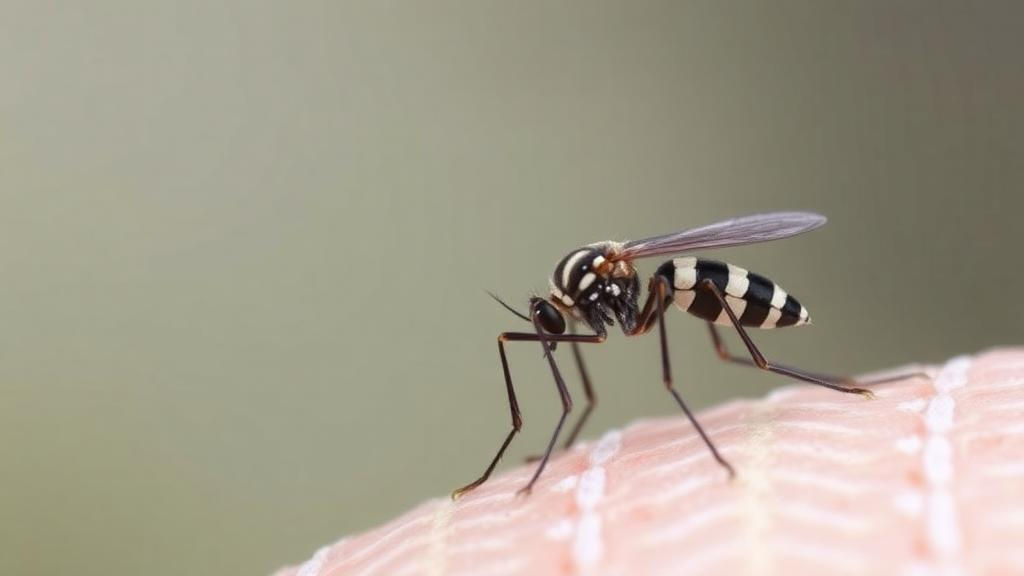
In the marshes, wetlands, and residential fringes of Andalusia in southern Spain, a team of Spanish researchers has quietly rewritten a small but meaningful chapter in the ecology of avian malaria. By screening thousands of biting midges from a genus that has long flown under the radar of disease ecologists, they have produced the first molecular evidence anywhere in the world that midges of the genus Leptoconops can carry the DNA of haemosporidian parasites, the single-celled agents responsible for avian malaria and related blood infections in birds. The finding, published in the open-access journal Parasites & Vectors, does not yet prove that these midges transmit the parasites, but it opens an entirely new avenue of inquiry into which insects might be moving malaria-like pathogens among wild bird populations.
Avian haemosporidians are a group of apicomplexan parasites belonging chiefly to three genera: Plasmodium, Haemoproteus, and Leucocytozoon. In birds, these organisms can behave much like the malaria parasites that afflict humans, invading blood cells and internal organs, sapping host condition, and in severe cases reducing survival and reproductive success. Their effects ripple outward into population dynamics, migration behavior, and even the structure of whole bird communities. For decades, ecologists have worked to map which insect vectors carry which parasite lineages, because transmission is the hinge on which the entire host-parasite system turns. Mosquitoes, Culicoides biting midges, louse flies, and black flies are the recognized vectors, each genus of parasite showing affinities for particular insect groups and particular bird hosts.
Leptoconops is a genus of haematophagous biting midges in the family Ceratopogonidae, closely related to the better-known Culicoides midges that are established vectors of avian Haemoproteus. Despite this kinship, Leptoconops midges have never been systematically implicated in avian malaria transmission, and no previous study had molecularly screened them for haemosporidian infections. That gap is precisely what motivated the research team, led by Javier Carbonero and Martina Ferraguti of the Estación Biológica de Doñana, a research institute of the Spanish National Research Council (CSIC) in Seville, together with colleagues affiliated with the Centro de Investigación Biomédica en Red de Epidemiología y Salud Pública.
The scale of the fieldwork reflects the difficulty of the question. During 2024, the researchers collected a total of 5,417 female Leptoconops midges across sites in Andalusia, taking advantage of the fact that only female midges take blood meals and can therefore plausibly acquire and transmit blood parasites. Each specimen was morphologically identified to species, a labor-intensive step that matters because vector competence and host preferences can differ sharply even between close relatives. The midges were then grouped into 203 pools for molecular analysis, a pooling strategy that balances laboratory workload against the sensitivity needed to detect low-level infections in wild-caught insects.
The molecular heart of the study is a nested polymerase chain reaction (PCR) protocol targeting the cytochrome b gene, the standard DNA barcode region for avian haemosporidians. Nested PCR uses two successive rounds of amplification with two pairs of primers, dramatically increasing sensitivity and allowing researchers to detect the minute quantities of parasite DNA that may persist in an insect after a blood meal has been digested. Positive amplicons were then sequenced, and the resulting DNA barcodes were compared against reference databases to assign each parasite to a genus and, where possible, to a known lineage with a documented host range. This lineage-level resolution is what gives the study its ecological punch: many haemosporidian lineages have been catalogued from specific bird species, so finding a lineage inside a midge hints at which birds the midge may have bitten.
Eight of the 203 pools tested positive for haemosporidian DNA. The positive pools corresponded to two of the Leptoconops species examined, Leptoconops communis and Leptoconops nigrithorax, indicating that more than one member of the genus encounters these parasites in the wild. The identified parasites spanned all three target genera. Among the Haemoproteus detections were Haemoproteus noctuae, corresponding to the lineage CIRCUM01, and an unidentified Haemoproteus species of the lineage COLPAL01. The Plasmodium findings included Plasmodium matutinum, the well-characterized lineage LINN1, while Leucocytozoon was represented by the lineages COLIV04 and AEMO02. In addition to these known barcodes, the team uncovered two lineages that had never been recorded before, which they designated Plasmodium P_LEPTO01 and Haemoproteus H_LEPTO01, expanding the global catalogue of avian haemosporidian genetic diversity.
The known host associations of the detected lineages are where the story becomes genuinely suggestive. Haemoproteus noctuae, for example, is a parasite associated with owls and other birds, and lineages such as LINN1 and COLIV04 have been documented from particular avian hosts in previous surveys. By matching the lineages found in the midges to their known bird hosts, the researchers can infer, indirectly, which avian species Leptoconops midges may have fed upon. This approach, sometimes framed within the broader use of insect-derived DNA as a sampling tool, effectively turns each infected midge into a tiny record of both a bird-parasite interaction and a midge feeding choice. It is an indirect inference rather than a direct blood-meal identification, but it provides testable hypotheses about the feeding ecology of a genus whose biting habits remain poorly documented in many regions.
The authors are careful, and appropriately so, about what the results do and do not demonstrate. Detecting parasite DNA in an insect does not establish vector competence, the ability of a vector to support the parasite’s full developmental cycle and transmit it to a new host. Haemosporidian parasites undergo a complex development within a competent vector, including sexual reproduction, invasion of the insect’s gut wall, production of infective sporozoites, and migration to the salivary glands. Parasite DNA could, in principle, simply reflect the digestion of an infected blood meal without any subsequent parasite development. The researchers explicitly state that vector competence has not been demonstrated and that the potential role of Leptoconops in transmission is unknown and merits further investigation. Disentangling genuine biological transmission from mere mechanical carriage of DNA will require experimental infection studies, dissection of midge tissues, and detection of parasite developmental stages rather than DNA alone.
Even with those caveats, the study carries weight for several reasons. First, it establishes a previously unrecorded interaction between a widespread genus of biting midges and avian haemosporidian parasites, adding Leptoconops to the short list of insect groups in which these parasites have been molecularly detected. Second, the diversity of parasites found, spanning Plasmodium, Haemoproteus, and Leucocytozoon, suggests that the encounters are not a rare accident of a single parasite species but a broader pattern involving multiple parasite lineages and at least two midge species. Third, the discovery of two novel lineages underscores how much undocumented parasite diversity circulates in wild bird communities and their vectors, and how vector-focused sampling can surface it. Fourth, the work has practical implications: if Leptoconops midges prove to be competent vectors, current models of avian malaria transmission, which lean heavily on mosquitoes and Culicoides, would need revision, with consequences for understanding disease dynamics in bird populations, the risks faced by vulnerable species, and even the epidemiology of zoonotic or wildlife pathogens in shared landscapes.
The research was conducted by a team based at the Estación Biológica de Doñana in Seville, with funding from projects including ARBOPREVENT, supported by Fundación La Caixa, a national research project financed by Spain’s Ministry of Science and European regional funds, and the Severo Ochoa excellence program. The work formed part of a broader research effort on vector ecology in southern Spain, where wetland habitats concentrate both bird diversity and biting insects. As the authors conclude, the findings suggest real interactions between Leptoconops midges and infected avian hosts, and they call for further studies to determine whether these midges are incidental carriers or genuine players in the transmission of avian malaria. For now, a genus of tiny midges, long noted mainly for the irritating bites of its females, has earned a place on the watch list of avian disease ecology, and the search for its true role in the parasite’s life cycle is only beginning.
Subject of Research: Molecular detection of avian haemosporidian parasites in Leptoconops biting midges
Article Title: First molecular detection of avian haemosporidian parasites in Leptoconops (Diptera: Ceratopogonidae) biting midges
Article References: Carbonero, J., González, M. A., Magallanes, S., Paun-Tanase, D. I., Martínez-de la Puente, J., Figuerola, J., & Ferraguti, M. (2026). First molecular detection of avian haemosporidian parasites in Leptoconops (Diptera: Ceratopogonidae) biting midges. Parasites & Vectors. https://doi.org/10.1186/s13071-026-07713-6
Image Credits: AI Generated
DOI: 10.1186/s13071-026-07713-6
Keywords: avian malaria, haemosporidian parasites, Leptoconops, biting midges, Ceratopogonidae, Plasmodium, Haemoproteus, Leucocytozoon, vector ecology, cytochrome b, nested PCR, Andalusia
News Source: Gavin Prescott. (October 7, 2026). Biting Midges in Spain Reveal First Molecular Trace of Avian Malaria Parasites in Leptoconops. Scienmag.