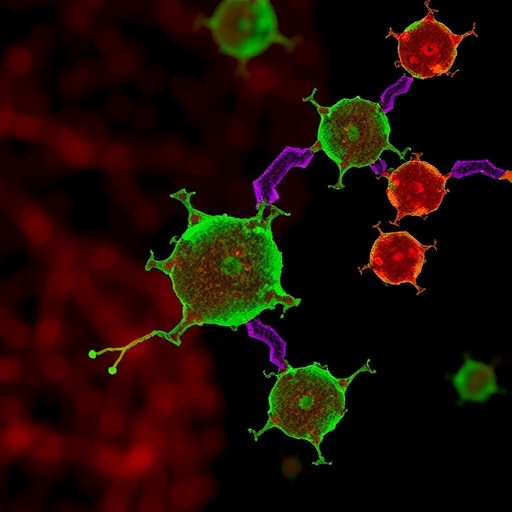
WASHINGTON (July 17, 2017) — Researchers at the George Washington University (GW) Cancer Center have discovered a new role for the enzyme, histone deacetylase 11 (HDAC11), in the regulation of T-cell function.
T-cells can infiltrate tumors with the purpose of attacking the cancer cells. However, prior studies have found that the T-cells group around the tumor, but do not perform the job that they are meant to.
"The goal of the T-cell is to destroy the cancer tumor cells," Eduardo M. Sotomayor, MD, director of the GW Cancer Center and senior author of the study, explained. "We wanted to look at and understand the mechanisms that allowed crosstalk between the tumor and the T-cells that stopped the T-cells from doing their job."
The recent research, published in the journal Blood, centered on the discovery of "epigenetic checkpoints" in T-cell function in an effort to explain how and why these cells are modified to behave differently. The study found that when HDAC11 was removed the T-cells, they were more primed to attack the tumor.
More importantly, this research highlights that HDAC11, which was the last of 11 HDAC to be discovered, should be treated as an immunotherapeutic target.
While the study focused on the T-cells around a lymphoma tumor, this research is pertinent to all types of cancer. The goal for the team was to find a way to activate the T-cells so that they could destroy the tumor. However, the process of cell activation does need to be refined and handled carefully.
"We don't want T-cells to be easily activated, as they can cause harm to the host — the patient. So we want to look at possible methods and therapies to activate the T-cells when they need to work," said Sotomayor.
"The next step is to perform preclinical studies with specific inhibitors of HDAC11 alone and in tandem with other existing immunotherapies, such as anti-PD1/anti-PDL1 antibodies, in order to find the most potent combination. Our goal is to make the T-cells better at destroying cancer tumors."
This study represents a step forward in understanding the underlying mechanisms of T-cell function and epigenetic regulation of the HDAC11 enzyme.
###
"T-cells Lacking HDAC11 Have Increased Effector Functions and Mediate Enhanced Alloreactivity in a Murine Model" published in Blood, the Journal of the American Society of Hematology, is available at http://www.bloodjournal.org/content/early/2017/05/26/blood-2016-08-731505.
Media: To interview Dr. Sotomayor, please contact Ashley Rizzardo at [email protected] or 202-994-8679.
About the GW Cancer Center
The George Washington University (GW) Cancer Center is a collaboration between the GW Hospital, the GW Medical Faculty Associates, the GW School of Medicine and Health Sciences, and the Milken Institute School of Public Health at GW to expand GW's efforts in the fight against cancer. The GW Cancer Center also incorporates all existing cancer-related activities at GW, serving as a platform for future cancer services and research development. Learn more about the GW Cancer Center at gwcancercenter.org.
Media Contact
Ashley Rizzardo
[email protected]
202-994-8679
@GWtweets
http://www.gwu.edu
https://smhs.gwu.edu/news/t-cells-lacking-hdac11-enzyme-perform-more-effectively-destroying-cancer-cells
Related Journal Article
http://dx.doi.org/10.1182/blood-2016-08-731505