For the millions of people living with HIV who depend on regular viral load testing to confirm that their antiretroviral therapy is working, the humble blood draw has become an unexpected bottleneck. In high-burden settings across sub-Saharan Africa, viral load monitoring still relies overwhelmingly on venepuncture, the conventional procedure in which a phlebotomist inserts a needle into a vein, usually at the elbow, and draws several millilitres of blood into evacuated tubes. The technique is safe and well characterised, but it demands trained staff, clinic infrastructure, cold-chain logistics and, crucially, a second visit by the patient to receive results. Each of these requirements introduces delay, and delay in viral load monitoring can mean months of undetected treatment failure, ongoing viral replication and the risk of drug-resistance mutations being passed on. A new randomized crossover trial conducted in Lusaka, Zambia, and published in BMC Infectious Diseases, suggests that a simple change in how blood is collected, moving the task from the clinic to the patient’s own fingertip or arm, could dramatically reshape that workflow.
The study, led by Mohammed Limbada of the research organisation Zambart together with colleagues at the London School of Hygiene and Tropical Medicine, the Institute of Tropical Medicine in Antwerp and the University of Oxford, set out to answer a deceptively simple question: can adults living with HIV, without any medical training, successfully collect enough capillary blood on their own using commercially available self-collection devices, and would they find the experience acceptable compared with a standard needle draw? The researchers enrolled 70 adults who were already taking antiretroviral therapy and attending routine monitoring visits at a clinic in Lusaka, running the trial between October and December 2024. The work formed part of the AMPHEUS project, funded by the Gates Foundation, an initiative exploring decentralised approaches to viral load monitoring.
The trial’s design was a randomized crossover, one of the most statistically efficient ways to compare two interventions when the outcome of interest is a binary success or failure. Each participant used both devices, Tasso+ manufactured by Tasso, Inc. of Seattle, and Collect2Know version 1.0, or C2K, supplied by the Institute of Tropical Medicine in Antwerp, but in an order determined by random allocation. This crossover structure matters because each participant serves as their own control: differences in dexterity, pain tolerance, anxiety about needles or familiarity with medical procedures are distributed evenly across both devices rather than confounding the comparison. The first use of each device took place under supervision at the clinic, and a week later each participant performed a second, entirely unsupervised collection at home, replicating the real-world conditions under which such devices would actually be deployed.
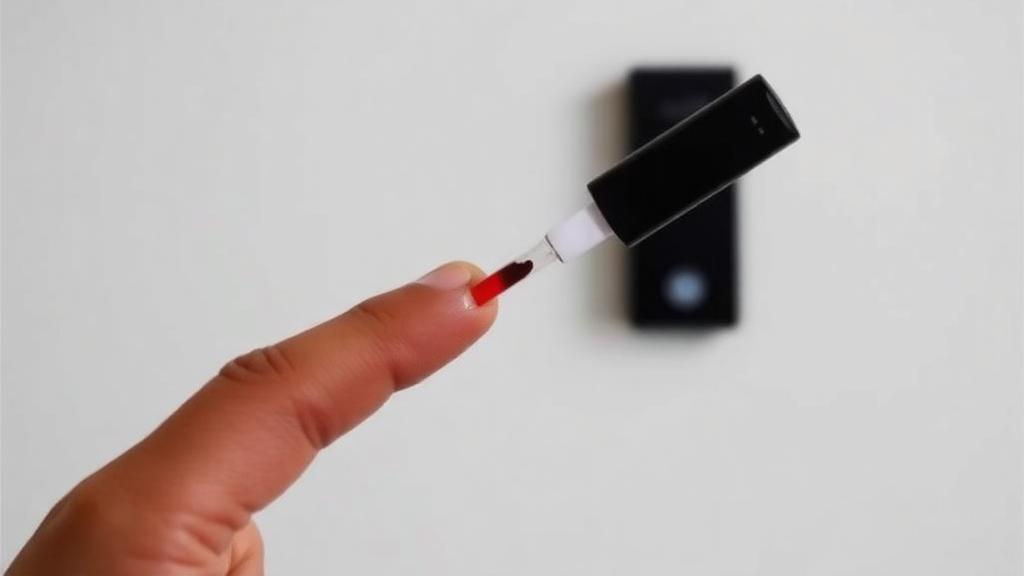
The technical bar for success was deliberately pragmatic. A collection was counted as successful only if the participant, working alone and unsupervised, managed to obtain at least 0.5 millilitres of capillary blood, the volume the investigators prespecified as necessary for downstream viral load processing. Half a millilitre is a small quantity by clinical standards, roughly ten drops, but collecting it reliably from capillary vessels rather than a vein is far from trivial. Capillary blood devices typically work either by lancing the fingertip and wicking droplets into an absorbent tip, as C2K does, or by pressing a small cartridge against the upper arm, where a vacuum and a shallow blade combination draw blood into a sealed tube, as the Tasso+ device does. Each approach carries its own engineering challenges: sufficient blood flow, user-applied pressure, clotting, and the geometry of the collection chamber all influence whether the target volume is reached.
The results were strikingly one-sided. Of the 63 participants who completed the study, 85.7 percent, or 54 of 63, successfully collected at least 0.5 millilitres with Tasso+ during unsupervised use, compared with just 38.1 percent, or 24 of 63, with C2K v1.0. The difference was highly statistically significant, with a McNemar test yielding a p-value below 0.001 and an odds ratio of 10.99 with a 95 percent confidence interval spanning 3.45 to 56.06. In practical terms, a participant who succeeded with Tasso+ had roughly an elevenfold higher odds of success than with C2K. The paired nature of the data makes the failure pattern even more telling: among the 54 participants who achieved a successful collection with Tasso+, 33, or 61.1 percent, nonetheless failed to collect a usable sample with C2K. The participants, who ranged in age from 18 to over 50 and were 64.5 percent female, thus demonstrated that the gap was not a matter of user capability but of device design.
Usability questionnaires administered after each collection added a layer of subjective evidence that aligned with the objective success rates. Participants rated the Tasso+ device as easier to use, and their experiences relative to standard venepuncture were revealing. Where the conventional needle draw was associated with pain, fear and the discomfort of exposing a limb in a busy clinic, the self-collection devices were reported to hurt less, provoke less anxiety and offer greater privacy. These are not trivial considerations in the context of HIV care. Stigma remains a powerful deterrent to engagement with health services in many settings, and anything that reduces the visibility and invasiveness of routine monitoring has the potential to improve retention in care, which is itself one of the strongest predictors of long-term treatment success.
The perspectives of healthcare workers, gathered through the qualitative component of the study and its formative phase, pointed to a different but complementary benefit. Nurses and clinicians highlighted reduced clinic congestion as a key advantage of self-sampling. In facilities where a single phlebotomist may process dozens of patients each morning, decoupling the collection of blood from the clinic visit would free staff time, shorten queues and potentially allow viral load samples to be collected before appointments even begin. Combined with the possibility of returning samples by courier or postal systems, pre-appointment collection could compress the turnaround time between a scheduled monitoring visit and a actionable result, giving clinicians the information they need while the patient is still in front of them.
The investigators are careful, and rightly so, about the limits of what their trial demonstrates. Success in this study was defined by volume alone. The researchers explicitly note that their findings do not establish whether the capillary specimens collected by these devices are suitable for HIV viral load testing. Capillary blood differs from venous blood in several analytically relevant ways: it is generally more prone to haemolysis, its collection into dried or stabilised matrices can affect RNA integrity, and the plasma volume recoverable from half a millilitre of whole blood is small. Viral load assays are validated against venous plasma, and any deviation in sample type must be shown to produce equivalent results across clinically relevant viral load ranges, from fully suppressed samples below the detection threshold to high-level viraemia above 100,000 copies per millilitre. The authors call for further studies directly comparing device-collected capillary blood with standard venous plasma to establish this analytical performance, and that work will be the true gatekeeper determining whether self-collection can enter routine care.
Even with that caveat, the trial carries considerable weight for the field. It was prospectively registered with the Pan African Clinical Trial Registry, approved by ethics committees in Zambia, Belgium and the United Kingdom, and conducted under Good Clinical Practice guidelines, giving its findings a methodological rigour that many usability studies lack. The crossover design, the prespecified volume threshold and the inclusion of both supervised and unsupervised use together provide a realistic picture of how the devices would perform outside a research setting. The magnitude of the difference between the two devices also carries a practical message for programme implementers: device choice is not a detail but a determinant of success, and a device that fails in nearly two out of three paired attempts would impose unacceptable retesting burdens at scale.
The broader context makes the Zambian findings timely. Global health authorities have set ambitious targets for viral load monitoring coverage, and the laboratory networks that process millions of samples annually across eastern and southern Africa are under constant pressure to expand. Decentralising the first step of the testing cascade, the collection itself, would not eliminate the need for laboratories, but it would remove one of the most labour-intensive and visit-dependent links in the chain. If subsequent analytical validation confirms that capillary samples from devices such as Tasso+ can yield viral load results equivalent to venous plasma, the model tested in Lusaka, a patient collecting a few drops of blood at home a week before a routine appointment, could become a standard component of HIV care, not only in Zambia but across the many settings where the burden of disease and the scarcity of phlebotomy services intersect.
Subject of Research: Usability and acceptability of capillary blood self-collection devices for HIV viral load monitoring in Zambia
Article Title: Usability and acceptability of capillary blood self-collection devices among adults living with HIV in Zambia: a randomized crossover trial
Article References: Limbada, M., Phiri, C., Schaap, A., Simuyamba, M., Hensen, B., Baetselier, I. D., den Bossche, D. V., Maluzi, K., Kawambwa, B., Chiyanta, B., Ruperez, M., Platteau, T., Kosloff, B., Simwinga, M., Fraser, C., Bonsall, D., & Ayles, H. M. (2026). Usability and acceptability of capillary blood self-collection devices among adults living with HIV in Zambia: a randomized crossover trial. BMC Infectious Diseases. https://doi.org/10.1186/s12879-026-14530-w
Image Credits: AI Generated
DOI: 10.1186/s12879-026-14530-w
Keywords: HIV, viral load monitoring, capillary blood self-collection, Tasso+, Collect2Know, Zambia, randomized crossover trial, antiretroviral therapy, medical devices, decentralised testing, usability, patient acceptability
News Source: Ophelia Keating. (October 6, 2026). Fingertip Blood Sampling Device Outperforms Rival in HIV Monitoring Trial in Zambia. Scienmag.