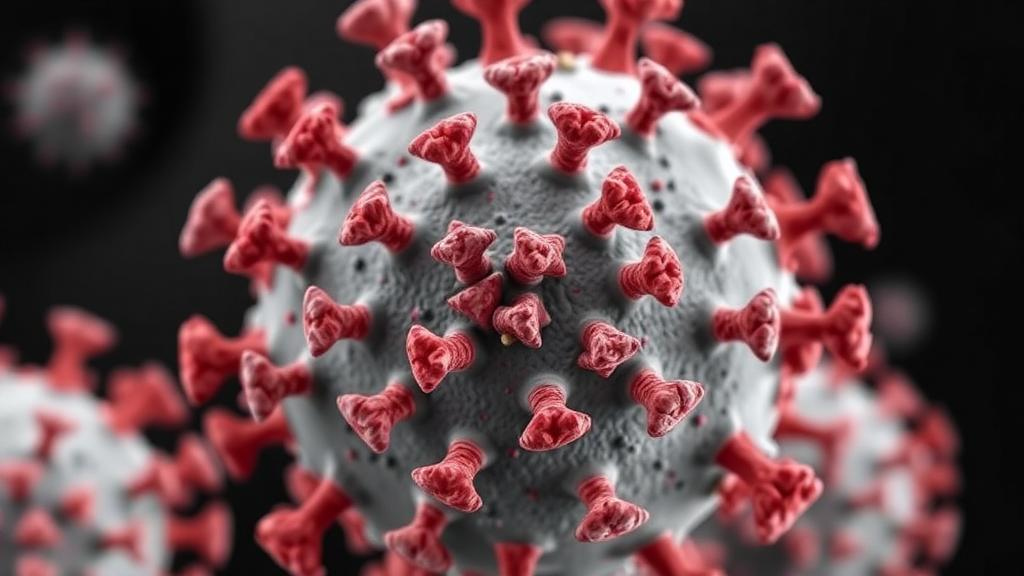
Routine genomic surveillance of SARS-CoV-2 continues to reveal genetic surprises even as the acute phase of the COVID-19 pandemic recedes from public attention. In a case report published in the open-access journal Heliyon, researchers at the Sonoma County Public Health Laboratory in California describe the detection of an exceptionally rare in-frame deletion in the ORF1a gene of the virus, specifically within the region encoding non-structural protein 3, or nsp3. The finding, made during baseline monitoring of circulating strains, prompted a wider search of global sequence databases and ultimately uncovered a small international cluster of genomes carrying the same 69-nucleotide deletion. The study illustrates how public health laboratories equipped with next-generation sequencing can serve as an early warning system for unusual viral genetic events that might otherwise go unnoticed.
The case began in December 2022, when a 40-year-old male patient presented with symptomatic COVID-19 at the Sonoma County Public Health Laboratory. The patient, who had received a bivalent booster vaccination on October 24, 2022, following earlier doses in 2021, reported symptom onset on December 4, including fever above 38 degrees Celsius, chills, cough, and headache consistent with a mild influenza-like illness. He had been in close contact with a confirmed COVID-19 case and had a prior history of testicular teratoma, but no hospitalization or complications were reported. A nasal specimen collected on December 13, 2022 tested positive for SARS-CoV-2 RNA by an FDA-authorized reverse transcription real-time PCR assay targeting the ORF1ab and nucleocapsid genes, yielding a cycle threshold value of 22, indicative of a substantial viral load in the sample.
To characterize the virus genetically, the laboratory extracted RNA from 300 microliters of the nasal specimen using an automated Chemagic 360 Extractor and prepared a sequencing library with the Clear Dx SARS-CoV-2 Kit from Clear Labs. This automated workflow begins with complementary DNA synthesis from the extracted RNA, followed by multiplex tiling PCR using a panel of barcoded target capture primers to amplify the complete viral genome. After purification with Ampure XP beads to remove excess primers and short amplification products, the amplicons underwent a second round of PCR to incorporate a second set of barcodes using rapid library primers from Oxford Nanopore Technologies. Sequencing adapters were then ligated to the dual-barcoded amplicons, and the finished library was loaded onto a MinION flow cell and sequenced on a GridION instrument for 12 hours.
Bioinformatic processing was carried out with the TheiaCoV_ClearLabs workflow version 2.3.0 on the Terra platform, which employs a reference-based assembly approach using the Wuhan-Hu-1 reference genome. Raw reads were subjected to quality control and adapter trimming, human-derived reads were removed with the NCBI SRA Human Scrubber tool, and the remaining de-hosted reads were aligned to the reference with minimap2. After primer trimming, variant calling and consensus generation were performed with Medaka based on allele frequency thresholds. The sequencing run produced 75,041 raw reads, of which 42,135 were classified as SARS-CoV-2 reads. The resulting consensus genome, designated CA-SCPHL-22-02592, spanned 29,574 nucleotides with 100 percent coding-complete coverage and a mean read depth of 1,112-fold, providing an exceptionally high-quality assembly for downstream analysis.
Lineage assignment placed the virus in Pango lineage BQ.1.1.5 within Nextstrain clade 22E, an Omicron sublineage known to be circulating locally at the time of infection. However, during genome annotation the analysts identified something far less ordinary: a 69-nucleotide in-frame deletion at genomic positions 3272 to 3340 within nsp3 of the ORF1a gene. Because Nanopore sequencing can be prone to insertion-deletion errors, the team rigorously assessed read-level support for the deletion using a custom Python script that parsed CIGAR strings from the alignment file. After quality filtering, 707 of 718 informative reads spanning the deletion breakpoints supported the deletion, corresponding to 98.47 percent read support, with only 11 reads supporting the wild-type sequence. Applying a more stringent filter requiring a mean read quality score of at least 20 yielded consistent results, with 98.30 percent support, providing strong evidence that the deletion is biological rather than an artifact of the sequencing platform.
A search of the GISAID database revealed just how rare this event is. Among 17,624,674 SARS-CoV-2 genomes available at the time, only 23 contained the ORF1a delta-69 deletion at these positions. The earliest sequence carrying the deletion was collected in December 2021 in Brazil and the most recent in March 2023 in the Brazilian Amazon. Strikingly, the deletion appeared across multiple Pango lineages and Nextstrain clades, including both Delta and Omicron variants: four sequences belonged to AY.99.2, one each to BA.1 and BA.1.1, four to BA.2, one to BQ.1, ten to BQ.1.1.5, and two to XBB.1.5.102. This distribution suggests the deletion is not lineage-specific and may arise independently in different viral genetic backgrounds. Notably, nearly all of the BQ.1.1.5 sequences harboring the deletion, with the exception of one from Sweden, were detected in California and exhibited nucleotide sequence identity between 99.96 and 100 percent, hinting at a localized cluster of related viruses.
To place the finding in evolutionary context, the team performed phylogenetic and cluster analysis using the TheiaCoV_Augur_Run workflow, which executes subcommands from the Nextstrain Augur toolkit to generate maximum-likelihood and time-resolved phylogenetic trees visualized in the Auspice web application. The analysis grouped the deletion-containing genomes with representatives of 207 distinct deletion patterns identified within ORF1a positions 3250 to 3350. Broader mining of GISAID identified 2,817 high-coverage sequences carrying deletions of varying lengths in this region, observed across Alpha, Beta, Delta, Epsilon, Iota, Gamma, Kappa, Mu, and Omicron clades as well as recombinant lineages, with the majority belonging to the Delta clade. These deletions of varying lengths within the 3250 to 3350 window had not been previously described in this systematic form, underscoring how a single unusual case can open a window onto a broader landscape of viral genetic diversity.
The functional implications of the deletion remain speculative but are grounded in what is known about nsp3 biology. ORF1a encodes a large polyprotein that is proteolytically processed into multiple non-structural proteins essential for viral replication and host interaction, and nsp3 is the largest and most functionally diverse of these, containing domains involved in proteolytic processing, replication complex organization, and interactions with host factors. The ORF1a delta-69 deletion lies predominantly within the N-terminal hypervariable region of nsp3, with a small portion extending into the ADP-ribose-1-phosphatase domain, also known as the macrodomain or Mac1. This region sits outside the well-characterized catalytic papain-like protease domain and is associated with protein-protein interactions and structural organization. Structural and evolutionary analyses of SARS-CoV-2 proteins indicate that insertions and deletions tend to occur in flexible, surface-exposed regions that tolerate localized sequence variation without disrupting overall protein architecture, consistent with the deletion’s placement in the hypervariable region.
Nevertheless, the partial overlap with the Mac1 domain is noteworthy because this domain counteracts host ADP-ribosylation-mediated antiviral responses, thereby facilitating viral replication and immune evasion. Although the deletion does not encompass the full domain, its partial overlap with a functional region raises the possibility of effects on domain stability or host interaction, and alterations within nsp3 could influence host-virus interactions and contribute to functional differences between SARS-CoV-2 and related coronaviruses such as SARS-CoV. The authors caution that, given the limited functional data available for this specific deletion and its rarity, these potential effects remain speculative. Confirmation using orthogonal approaches such as RT-PCR with flanking primers or Sanger sequencing would further strengthen confidence in the finding, and future studies using reverse genetics systems, protein structural modeling, and in vitro replication assays will be needed to assess any effects on viral replication, host interaction, and immune modulation.
The study also carries practical implications for diagnostics and surveillance. Deletions in viral genomes can affect the performance of molecular assays, particularly those relying on RT-PCR, where primer or probe binding sites could be disrupted, and they are equally relevant for amplicon-based enrichment approaches used prior to sequencing. A limitation of the work is the lack of clinical metadata for the other genomes harboring the ORF1a delta-69 deletion in public databases, which made it impossible to assess whether the deletion is associated with specific clinical outcomes or disease severity. The consensus genome from this case has been deposited in GISAID under accession number EPI_ISL_16171374, and the custom Python code used to quantify read-level deletion support is publicly available on GitHub. As SARS-CoV-2 continues to evolve, the integration of next-generation sequencing into routine surveillance frameworks remains essential for detecting emerging mutations, characterizing their functional consequences, and informing public health response and diagnostic strategies.
Subject of Research: A rare in-frame deletion in the SARS-CoV-2 ORF1a nsp3 gene detected through genomic surveillance
Article Title: Genomic monitoring of SARS-CoV-2 uncovers rare in-frame deletion in ORF1a (nsp3) gene: A case report
Article References: Goraichuk, I. V., Critchett, L., Gonzalez, C., Rubin, J., & Rees, R. (2026). Genomic monitoring of SARS-CoV-2 uncovers rare in-frame deletion in ORF1a (nsp3) gene: A case report. Heliyon, 12(15), Article e45522. https://doi.org/10.1016/j.heliyon.2026.e45522
Image Credits: AI Generated
DOI: 10.1016/j.heliyon.2026.e45522
Keywords: SARS-CoV-2, genomic surveillance, ORF1a, nsp3, in-frame deletion, next-generation sequencing, Oxford Nanopore, GISAID, BQ.1.1.5, Omicron, macrodomain, public health laboratory
News Source: Juliet Wilcox. (October 5, 2026). Rare SARS-CoV-2 Deletion in nsp3 Emerges From Routine Genomic Surveillance. Scienmag.