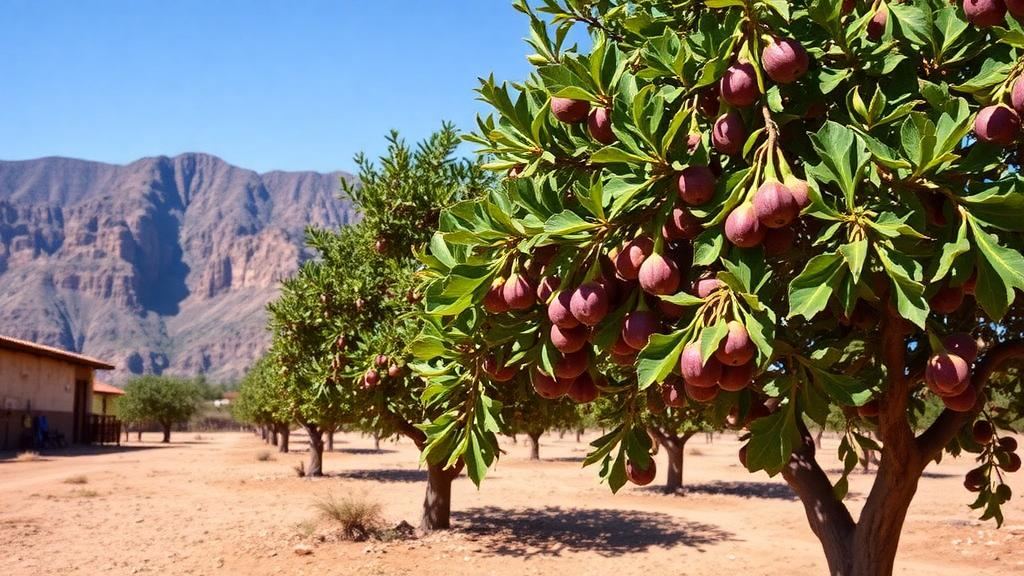
Deep in the oases of southern Morocco and across the rugged slopes of the Atlas Mountains, farmers have tended fig trees for generations without ever thinking of themselves as guardians of a genetic treasure. A new study now confirms that these traditional agroecosystems are doing exactly that. Researchers led by Ibtissam Mardoume of Sultan Moulay Slimane University in Beni Mellal analyzed 93 fig cultivars collected from the Atlas regions and the southern and south-eastern oases of Morocco, and found a level of genetic diversity that surprised even the team behind the work. The findings, published in Plant Biosystems, offer one of the most detailed molecular portraits to date of the fig tree, Ficus carica, in a country that sits at the heart of the species’ historical range.
The team used inter-simple sequence repeat markers, known as ISSR markers, to probe the genomes of the collected trees. ISSR markers target short repeated DNA sequences scattered throughout the genome, amplifying the stretches between them to produce a fingerprint of bands that can be compared across individuals. Because these microsatellite-flanking regions mutate relatively quickly, ISSR markers are sensitive tools for detecting variation even among closely related cultivars of the same crop. In this study, 14 ISSR primers generated 214 scorable bands across the 93 cultivars, and a striking 184 of those bands, or 85.98 percent, were polymorphic, meaning they differed among at least some of the trees sampled.
Those numbers translate into exceptionally high genetic diversity for a cultivated fruit tree. The researchers calculated a resolving power of 8.00 for their marker set, a Nei’s gene diversity index of 0.34, a polymorphism information content of 0.52, and a Shannon information index of 0.34. Each of these metrics describes a different facet of variation, from how well the markers distinguish individual genotypes to how much uncertainty remains when guessing the genetic makeup of a randomly chosen tree. A PIC value above 0.5 is generally considered highly informative, indicating that the ISSR system captured substantial discriminating power across the Moroccan fig collection.
Perhaps the most consequential finding came from the analysis of molecular variance, or AMOVA, a statistical framework that partitions genetic variation into components within and between groups. The results showed that 89 percent of the total genetic variation resided within groups of cultivars, while only 11 percent was found between groups. In practical terms, this means that a farmer’s orchard in one valley may contain nearly as much hidden genetic variation as an entire region hundreds of kilometers away. Traditional agroecosystems, where multiple varieties are grown side by side and exchanged informally among neighbors, appear to be incubators of diversity rather than mere repositories of it.
Cluster analysis reinforced this picture of diffuse, locally rich diversity. Using UPGMA, a hierarchical clustering method that groups genotypes according to overall band-sharing similarity, the researchers organized the 93 cultivars into five main groups. The edible female figs from the Beni Mellal-Khenifra region showed particularly high genetic dispersion, scattering across the clustering diagram rather than gathering into a tight regional cluster. That dispersion suggests extensive exchange of planting material, seedling selection by farmers, and possibly multiple historical introductions of fig germplasm into the region, which historically served as a crossroads for trans-Saharan trade routes.
The caprifigs told a very different story. Caprifigs are the male, inedible figs that produce pollen and host the tiny fig wasp, Blastophaga psenes, which pollinates female fig flowers in a symbiosis so ancient and so intimate that neither partner can reproduce without the other. In the study, caprifigs formed a distinct and homogeneous cluster regardless of where they had been collected, separating cleanly from the edible female cultivars. This clear genetic split mirrors the gynodioecious breeding system of Ficus carica, in which male and female functional forms are genetically differentiated, and it validates the use of molecular markers to distinguish caprifig germplasm for breeding and pollination management.
The significance of this work extends well beyond Morocco’s borders. The fig is one of the oldest domesticated fruit trees in the world, and its center of diversity lies in the Middle East and Mediterranean basin, with Morocco recognized as a rich secondary reservoir. Earlier studies using microsatellite and other marker systems have documented diversity in Turkish, Tunisian, Algerian, and Jordanian fig germplasm, and Moroccan collections have been characterized morphologically and with SSR markers in previous work. What this new study adds is a broad, marker-based survey that explicitly spans both the mountain agroecosystems of the Atlas and the desert oases of the south, two environments that impose very different pressures on the trees growing in them.
That environmental breadth matters for conservation planning. Oases are fragile systems threatened by water scarcity, salinization, and rural depopulation, while mountain terraces face their own pressures from land abandonment and climate shifts. When genetic variation is distributed mostly within rather than between sites, losing any single site erodes a meaningful slice of the species’ total diversity. The authors argue that their results underline the value of ISSR markers for conservation and breeding programs, providing a cost-effective way to identify unique genotypes, avoid duplicating accessions in germplasm collections, and select parents for crosses that maximize genetic gain in fruit quality, drought tolerance, or disease resistance.
The study also fits into a growing body of work by the same research group at Sultan Moulay Slimane University, which has applied ISSR markers to Moroccan walnuts, plums, apples, and the endemic resin spurge Euphorbia resinifera. Together with companion studies by Mardoume and colleagues on the sugar profiles, organic acids, antioxidant activity, and phenotypic variability of Moroccan figs, the molecular data sketch a crop that is not only genetically rich but also chemically and morphologically diverse. For breeders seeking climate-resilient cultivars, such multidimensional diversity is raw material that cannot be recreated once lost.
For now, the message from the oases and mountains of Morocco is a hopeful one: centuries of traditional farming have quietly assembled one of the most genetically diverse fig populations ever surveyed with molecular markers. The challenge ahead is to document and conserve that diversity before the agroecosystems that sustain it disappear. With 85.98 percent of their marker bands polymorphic and nearly nine-tenths of the variation locked within local groups, Moroccan figs demonstrate that the future of food security under global change may depend as much on the smallholdings of traditional farmers as on any high-tech gene bank.
Subject of Research: Genetic diversity of fig tree (Ficus carica) cultivars and caprifigs in Moroccan oases and Atlas regions assessed with ISSR molecular markers
Article Title: Genetic diversity of Caprifigs and female fig (Ficus carica) from Moroccan oases and Atlas Regions revealed by ISSR markers
Article References: Mardoume, I., Bouda, S., Khachtib, Y., Zaggoumi, H., Neg, I., Ait Bella, Y., & Haddioui, A. (2026). Genetic diversity of Caprifigs and female fig (Ficus carica) from Moroccan oases and Atlas Regions revealed by ISSR markers. Plant Biosystems, 160(4), Article 216. https://doi.org/10.1007/s44473-026-00221-6
Image Credits: AI Generated
DOI: 10.1007/s44473-026-00221-6
Keywords: Ficus carica, genetic diversity, ISSR markers, Morocco, caprifigs, oases, Atlas Mountains, AMOVA, agroecosystems, germplasm conservation, plant breeding, molecular markers
News Source: Juliet Wilcox. (October 5, 2026). Moroccan Oases and Atlas Mountains Hide a Surprising Wealth of Fig Tree Genetic Diversity. Scienmag.