A striking new experiment from the University of Limerick suggests that one of the most persistent inequalities of the human workplace may be quietly migrating into the digital one. Researchers found that when workers collaborated with artificial intelligence assistants in a virtual reality office, they paid a female-presenting AI agent significantly less than an identically capable male-presenting one — a gap of 10.25 percent for completing exactly the same work. The study, co-authored by Dr Mary Hausfeld of UL’s Kemmy Business School together with colleagues at the University of Zurich and SKEMA Business School, will be presented at the 14th Nordic Conference on Human-Computer Interaction, NordiCHI ’26, in Vaasa, Finland, and published in the conference proceedings of the Association for Computing Machinery.
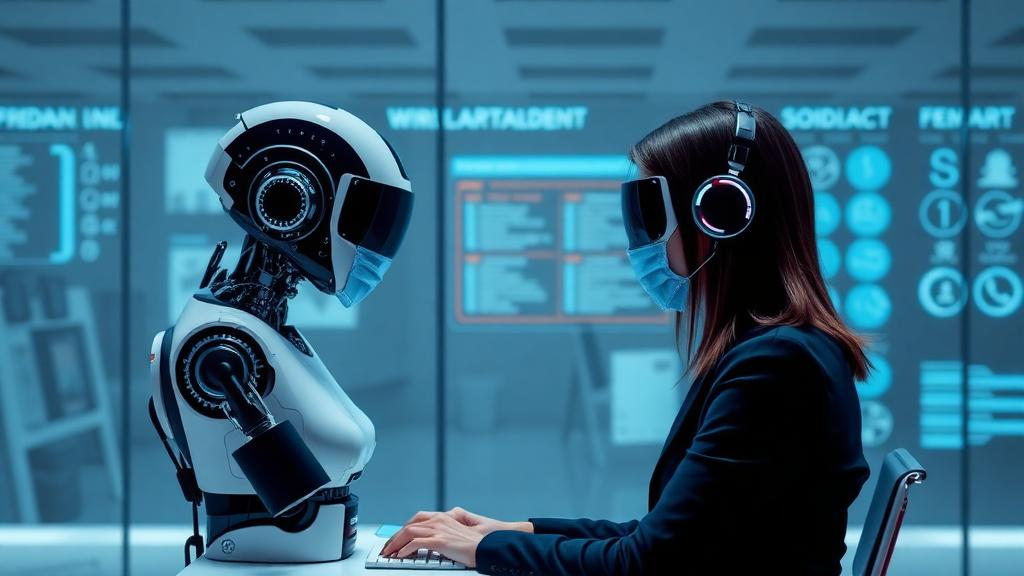
The experimental design was unusually direct. Rather than asking participants hypothetical questions about how they might treat AI colleagues, the team placed 189 workers inside a virtual reality office and asked them to complete work-related tasks alongside a series of AI assistants. Some participants worked with a plain text-based chatbot, others with a desk robot, and others with human-like virtual agents rendered with either a male or a female appearance. Crucially, every one of these systems ran on the same underlying AI technology, meaning that any difference in how people responded could be traced to presentation rather than performance.
The decisive moment came at the end of each session. Participants were given real money and asked to divide it between themselves and the AI assistant that had helped them, effectively recreating a genuine economic transaction inside the laboratory. This payout mechanism transformed an abstract question about bias into a measurable behaviour: how much was a person actually willing to hand over to a machine for the work it had done? The answer depended, unsettlingly, on what the machine looked like.
The male-presenting agent, named Johan, consistently received higher monetary rewards than the female-presenting agent, Johanna, despite the two being functionally indistinguishable. Johanna was paid 10.25 percent less than Johan for completing the same tasks with the same underlying system. The disparity did not stop at money. Participants also rated Johan as more human-like than Johanna, suggesting that gendered presentation shaped not only economic decisions but also perceptions of the agent’s very humanity. Because the technology behind both agents was identical, the researchers conclude that gender biases familiar from human workplaces can be reproduced in interactions with artificial intelligence even when there is no difference whatsoever in capability.
Dr Hausfeld described the result as remarkable precisely because of that equivalence. What is striking, she noted, is that the technology behind these AI agents was exactly the same, yet people did not treat them in the same way. She observed that people often think of AI as neutral, but the way systems are designed and presented can activate the same assumptions and biases that govern interactions with other people. As AI agents become more common in the workplace, she argued, organisations need to think carefully about the characteristics they give these systems and the behaviours those choices may encourage, because existing inequalities could be inadvertently reproduced in a new technological setting.
The gender finding emerged from a broader investigation into how the human-like appearance of AI shapes workplace interactions. Across the study, participants worked with the text-based chatbot, the desk robot, and the human-like agents, all powered by the same underlying AI. The pattern was consistent: the more human-like the assistant appeared, the more participants trusted it and the more credit they gave it for its contribution to the joint work. The robot, despite performing identically, was trusted less and rewarded less generously than its anthropomorphic counterparts. The result adds to a growing body of evidence that people reflexively apply social heuristics — evolved for judging other humans — to machines that display even minimal human cues.
Perhaps the most revealing discovery, however, was the gap between what participants said and what they did. Many participants stated that they preferred AI that was clearly non-human, and most indicated that the gender of an AI assistant did not matter to them at all. Yet their subsequent evaluations and reward decisions told a different story. Design characteristics that participants explicitly dismissed as irrelevant still measurably influenced how they judged and paid the assistants. Participants claimed to have no preference for an AI with female or male attributes, but their behaviour contradicted them. This dissociation between stated attitudes and actual conduct mirrors a well-documented phenomenon in social psychology, where implicit biases operate beneath conscious awareness and evade self-report.
The findings arrive at a pivotal moment for workplace technology. AI is evolving from a tool that employees operate into increasingly human-like agents that can act as coworkers and collaborators, complete with names, voices, and rendered appearances. That transition means design decisions once considered cosmetic are acquiring real economic and social weight. Dr Hausfeld argues that choices around the appearance and presentation of AI agents should not be regarded simply as aesthetic decisions, because such choices may affect how much people trust AI, how they judge its contribution, and even how they financially reward it. A developer choosing a gendered avatar, in other words, may be quietly programming a pay gap.
The technical implications extend beyond individual interactions. If reward, trust, and perceived competence are systematically shaped by gendered presentation, then organisations deploying fleets of AI agents could see these effects compound across hiring-like decisions, task allocation, and evaluation processes that increasingly involve human-AI collaboration. The virtual reality methodology itself is notable: by embedding participants in an immersive office and using real monetary stakes, the researchers created conditions far closer to genuine workplace dynamics than conventional surveys can achieve, strengthening the case that the observed bias reflects behaviour rather than mere opinion.
The study, titled Human-Like and Male? How AI Assistant Design Relates to Trust and Monetary Reward at Work in VR, was conducted by Isabelle Cuber, Tarek Alakmeh, Moritz Jenny, Jochen Menges, and Thomas Fritz of the University of Zurich, together with Mary Hausfeld of the University of Limerick and Anand van Zelderen of SKEMA Business School, and appears in the Proceedings of the ACM on Human-Computer Interaction. Its central message is likely to resonate far beyond the conference hall in Vaasa. As artificial agents take on ever more human faces in offices around the world, the research warns that society’s oldest workplace prejudices are ready and waiting to meet them — unless designers, employers, and policymakers deliberately choose otherwise.
Subject of Research: Gender bias in monetary rewards for human-like AI assistants in virtual reality workplaces
Article Title: Does the gender pay gap extend to AI? New University of Limerick research finds female AI agents ‘paid’ less
Article References: Does the gender pay gap extend to AI? New University of Limerick research finds female AI agents ‘paid’ less. (n.d.). Original publication
Image Credits: AI Generated
DOI: Not provided
Keywords: artificial intelligence, gender pay gap, AI agents, virtual reality, workplace bias, human-computer interaction, University of Limerick, trust in AI, AI design, NordiCHI, behavioral experiment, ACM
News Source: Denise Maddox. (October 5, 2026). Female AI Agents Earn 10% Less Than Male Counterparts in Virtual Workplace Experiment. Scienmag.