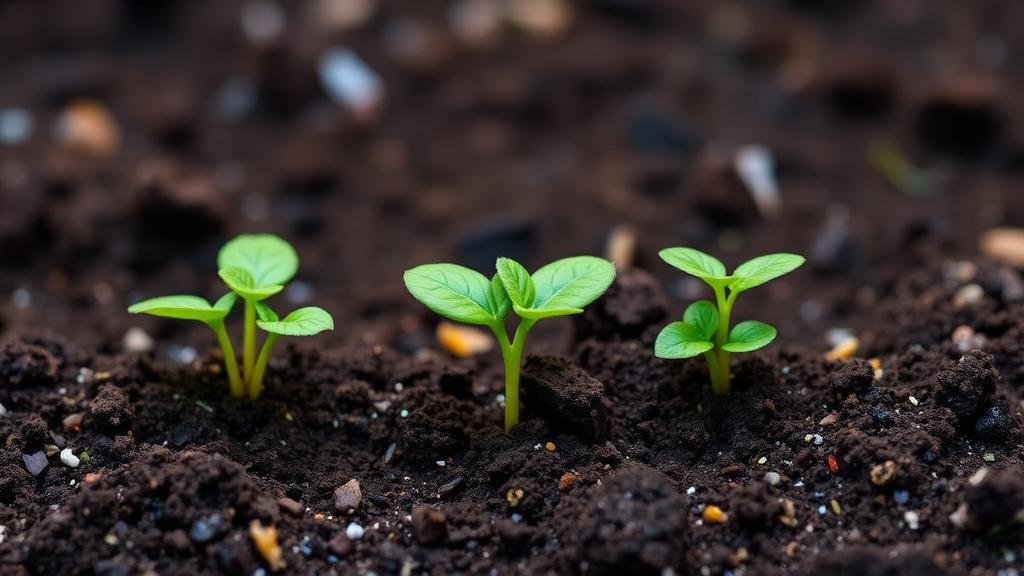
For a seed, the moment of germination is a leap of faith. Buried in darkness and unable to move, the embryo must decide whether conditions above the soil are safe enough to commit to growth. One of the most treacherous situations it can face is salinity. When soils contain too much salt, water becomes harder to absorb, toxic sodium ions creep into tissues, and the delicate mineral economy of a young plant can collapse before the seedling has even broken through the surface. New research from the Hebrew University of Jerusalem has now uncovered a molecular control system that helps embryos navigate this life-or-death decision, offering a detailed picture of how a germinating seed keeps its internal chemistry in balance under salt stress.
The study, led by Dr. Doron Shkolnik and published in The Plant Journal, focused on Arabidopsis thaliana, the small mustard-family plant that has long served as the workhorse of plant molecular biology. The central question was deceptively simple: how does a germinating seed hold on to potassium, an essential nutrient that keeps its cells functioning, while blocking sodium, an ion that becomes poisonous when it accumulates? The answer turned out to involve a calcium-activated signaling pathway built around three proteins: CAMTA6, PP2C49, and HKT1;1. Together, these components form what the researchers describe as a signaling axis that modulates ion homeostasis during germination under salt stress.
To understand why this matters, it helps to appreciate the stakes. Potassium is indispensable for plant cells. It drives enzyme activity, maintains membrane voltage, regulates osmotic pressure, and supports the countless biochemical reactions that keep a cell alive. Sodium, by contrast, is not required for these processes and, when present in excess, competes with potassium for binding sites and transport routes, effectively sabotaging cellular machinery. In saline soils, sodium ions flood into plant tissues through the same channels that normally carry potassium, so a germinating embryo must actively discriminate between the two ions. Failure to do so means stunted growth, cellular damage, or death before the seedling ever sees the light.
The newly identified system begins with calcium. Calcium ions are a universal currency of signaling in living cells, and rising calcium levels inside a cell often indicate stress. In this pathway, calcium signals are read by CAMTA6, a transcription factor that functions as a genetic switch. When calcium binds or activates the relevant signaling machinery, CAMTA6 responds by controlling the expression of the other components of the system, including PP2C49, a protein phosphatase, and HKT1;1, a well-known transporter involved in sodium handling. By sitting at the top of this cascade, CAMTA6 effectively translates a chemical alarm signal into a coordinated genetic program that adjusts how the embryo manages its ions.
One of the most striking findings of the study is that this program is not deployed uniformly across the embryo. The researchers showed that different genes in the pathway are active in different organs of the germinating plant. Some are expressed in the cotyledons, the embryonic leaves that will become the seedling’s first photosynthetic structures, while others are expressed in the radicle, the embryonic root that pushes down into the soil. This spatial division of labor means the emerging seedling can fine-tune its salt response tissue by tissue, protecting the root that directly contacts salty soil while managing the ion balance of the leaves that will fuel early growth.
The team also found that calcium itself plays a protective role. When calcium was applied to seeds under salt-stress conditions, it helped them maintain the critical sodium-potassium balance needed for successful germination. This observation ties the molecular pathway to a practical phenomenon, since calcium has long been known anecdotally to ameliorate salt damage in plants, but the underlying mechanism had remained poorly resolved. The identification of the CAMTA6-PP2C49-HKT1;1 axis provides a concrete explanation for how a calcium signal can be converted into improved ion homeostasis at the very earliest and most vulnerable stage of a plant’s life.
Perhaps the most eye-catching result came from an unexpected source: sanguinarine, a natural compound derived from the bloodroot plant and better known for its antimicrobial and anti-cancer properties. When the researchers applied sanguinarine to seeds germinating under salty conditions, germination rates improved substantially. Under moderate salt stress, germination rose from 76 percent to 92 percent. Under severe salt stress, the effect was even more dramatic, climbing from a mere 3 percent to 37 percent. Sanguinarine works by inhibiting PP2C49, and seeds treated with the compound ended up with less sodium and more potassium, producing the healthier ionic balance needed to germinate.
The excitement generated by these numbers should, however, be tempered by an important caveat. The benefits of sanguinarine were confined to germination itself. Once seedlings had sprouted, the compound no longer protected them from salt damage. This means sanguinarine is not a ready-made solution for farming in saline fields, but it is a powerful experimental tool. By chemically inhibiting PP2C49 and observing the consequences, researchers can probe exactly how the signaling axis operates, and the compound demonstrates that this pathway is a legitimate target for intervention. If a similar boost in ion balance could be achieved genetically rather than chemically, the implications for crop breeding would be considerable.
The study also hints that the three-protein axis is only the visible tip of a much larger network. The researchers found signs that many additional genes participate in the plant’s salt response during germination, suggesting that CAMTA6, PP2C49, and HKT1;1 operate within a broader regulatory web that has yet to be fully mapped. Unraveling that network will be a major task for future work, but each new component identified adds to the repertoire of genes that breeders and biotechnologists might eventually exploit to produce crops capable of establishing themselves in difficult soils.
The broader context gives this research real urgency. Soil salinity is a growing problem for agriculture worldwide, driven by factors including irrigation practices, climate change, and rising sea levels that push salt into coastal farmland. Millions of hectares of once-productive land are already affected, and the problem is expected to worsen as global food demand rises. Seed germination is an extremely vulnerable stage in a plant’s life, as Dr. Shkolnik noted, because salt can disrupt the mineral balance a young plant needs before it has even emerged from the soil. By learning how seeds naturally sense and respond to salt, scientists may eventually identify genes that allow staple crops to germinate and establish themselves where they currently fail. The humble Arabidopsis embryo, deciding moment by moment whether to wake up, may thus point the way toward the salt-tolerant crops of the future.
Subject of Research: A calcium-mediated signaling axis that regulates sodium and potassium balance during seed germination under salt stress in Arabidopsis thaliana
Article Title: How seeds decide whether to wake up in salty soil
Article References: How seeds decide whether to wake up in salty soil. (n.d.). Original publication
Image Credits: AI Generated
DOI: Not provided
Keywords: seed germination, salt stress, soil salinity, Arabidopsis thaliana, calcium signaling, CAMTA6, PP2C49, HKT1;1, ion homeostasis, potassium, sodium toxicity, sanguinarine
News Source: Alan Morgan. (October 5, 2026). Calcium Signals Reveal How Seeds Decide to Germinate in Salty Soil. Scienmag.