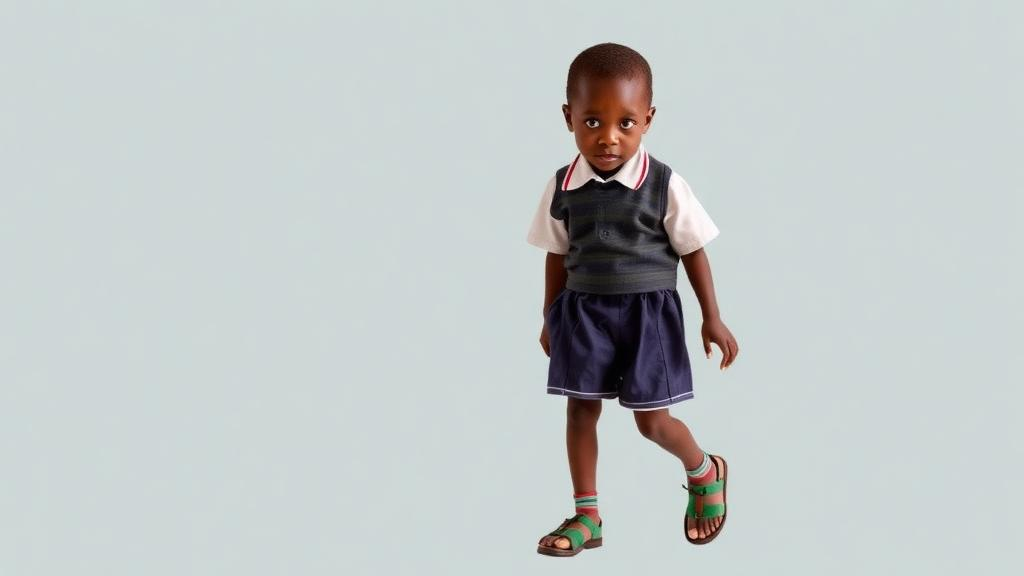
In the rolling highlands of Cameroon’s West region and the savannahs of Adamawa, a quiet medical transformation is changing the lives of children who once faced a future defined by disability and exclusion. A new study published in BMC Pediatrics has followed nearly 200 children who underwent corrective surgery for neglected clubfoot and other musculoskeletal deformities, and the results are striking: almost ninety percent of families reported satisfaction with treatment, and the majority of children could walk without pain, wear ordinary shoes, and return to school. The research, led by Jacques Chirac Awa and Alberic Ndonku Signang of the Cameroon Baptist Convention Health Services, offers one of the most detailed pictures yet of what happens after the operating table in a low-resource setting, where follow-up data has historically been scarce.
Clubfoot is one of the most common congenital musculoskeletal conditions worldwide, causing the foot to twist inward and downward. When treated early with serial casting, the Ponseti method can correct the deformity without major surgery. But in many rural communities across low- and middle-income countries, children arrive at clinics years or even decades late, their feet rigidly deformed by scar tissue, adapted bone structure, and years of walking on unusual surfaces. These neglected cases demand complex corrective surgery, followed by months of rehabilitation. What has often been missing from the global conversation is evidence on what such surgery actually delivers afterward, not just in anatomical correction but in the lived realities of children navigating school, family life, and community attitudes toward disability.
The research team designed a mixed-methods study to capture both numbers and narratives. Between July 2021 and June 2023, 194 children were treated across eight communities in the two regions, 84 for neglected clubfoot and 110 for other musculoskeletal deformities. The quantitative arm consisted of a cross-sectional post-treatment survey using a study-specific, pretested questionnaire. Satisfaction was measured on a five-point Likert scale, pain was assessed through structured categorical frequency questions, and additional outcomes included the ability to wear shoes of one’s choice, participation in social and school life, and the use of livelihood support provided to families. The qualitative arm comprised 16 key informant interviews and five focus group discussions involving 40 participants, allowing caregivers, community members, and program staff to describe in their own words how treatment had reshaped daily life.
The headline numbers are compelling. Overall, 174 participants, or 89.7 percent, expressed satisfaction with the treatment they received. When asked why, the dominant reason, cited by 56.2 percent, was the visible correction of the deformity itself, followed by pain-free walking at 13.44 percent. Functional gains were broad: 73.7 percent of children reported no pain while walking, 55.7 percent reported no pain even during heavy activity, and 76.8 percent could wear shoes of their own choosing. For children who had previously walked barefoot on twisted feet, or hidden their limbs beneath long garments to avoid ridicule, the ability to put on a normal pair of shoes is far more than a cosmetic milestone. It is a passport to social participation, and the survey data suggest families understood it exactly that way.
The qualitative interviews added depth that numbers alone cannot convey. Caregivers and community stakeholders described children who moved with greater mobility and independence, who carried themselves with new self-confidence, who returned to classrooms and playgrounds they had abandoned. Peer interaction increased, and the stigma that shadows visible disability in many communities visibly receded. Parents spoke of children who no longer needed to be carried or shielded, and of households freed from the constant logistical burden of caring for a child with limited mobility. These accounts, analysed thematically and integrated with the survey findings, reinforce a central point of the study: corrective surgery for neglected deformities is not merely an orthopedic intervention but a social one, with ripple effects across education, family economics, and community attitudes.
One of the most distinctive elements of the program evaluated in the study is its livelihood-support component, funded through the Socio-Economic Empowerment of Peoples living with disabilities initiative supported by Christian Blind Mission. Among 89 recipients of such support, 34.8 percent used the funds for transport to follow-up appointments, a practical but critical use in regions where clinics may be hours away and roads are poor. Other allocations included children’s basic needs at 21.3 percent, school fees at 16.9 percent, household food at 14.6 percent, and small business investments at 12.4 percent, alongside medical expenses such as medication and school supplies. The qualitative data echoed these patterns, with families reporting that support for medication, school materials, food, and household economic activities made it possible to sustain the long arc of treatment and recovery.
This finding carries an important lesson for global health. Surgical correction is a single event, but recovery is a months-long process requiring repeated clinic visits, physiotherapy, and consistent home care. In settings where a round-trip bus fare can consume a significant share of a family’s weekly income, even the most successful operation can fail in follow-up. By pairing clinical treatment with targeted socioeconomic assistance, the program addressed the economic determinants of adherence directly. The study’s authors suggest that such integrated models, combining treatment, rehabilitation, education, psychosocial support, and livelihood assistance, may be essential for strengthening long-term outcomes for children with musculoskeletal deformities, rather than treating surgery as an isolated technical fix.
The study is equally candid about the barriers that persist. Transport costs and long travel distances remained significant obstacles for families seeking follow-up care. Access to physiotherapy was limited, a serious constraint given that post-surgical rehabilitation determines how well corrected feet function over a lifetime. Gaps in follow-up itself were noted, meaning some children may not have received the sustained monitoring that complex corrections require. These challenges are not unique to Cameroon; they mirror the structural weaknesses of surgical care systems across many low- and middle-income countries, where workforce shortages, geographic dispersion, and out-of-pocket costs conspire to erode the gains of even excellent clinical work.
Methodologically, the study has the strengths and limits inherent to its design. The cross-sectional survey captures outcomes at a single point in time rather than tracking change longitudinally, and the questionnaire was study-specific rather than a validated generic instrument, which aids relevance but complicates comparison with other settings. Descriptive statistics were used, and the qualitative component, while rich, involved a modest number of participants. Yet the convergence of quantitative and qualitative evidence, with independent lines of inquiry pointing to the same conclusions about mobility, confidence, schooling, and stigma, lends the findings considerable credibility. The research was approved by the Cameroon Baptist Convention Health Services Institutional Review Board, and all participants provided written informed consent in accordance with the Declaration of Helsinki.
The broader significance of this work lies in its reframing of what success means in pediatric orthopedics for resource-limited settings. For decades, surgical missions and outreach programs have been evaluated by volumes of operations performed. This study demonstrates that the metrics that matter most to families, pain-free walking, ordinary shoes, school attendance, peer acceptance, and reduced stigma, are achievable at scale when surgery is embedded in a system of social and economic support. As the global health community intensifies its focus on equity in surgical care, the Cameroonian experience offers a template: correct the deformity, yes, but also fund the bus fare, the school fees, and the small business that keep a family engaged in care. In doing so, medicine does more than straighten feet. It opens doors that childhood disability had long kept closed.
Subject of Research: Post-treatment functional and social outcomes of corrective surgery for neglected clubfoot and other musculoskeletal deformities in children in rural Cameroon
Article Title: Post-treatment functional and social outcomes of corrective surgery for neglected clubfoot and other musculoskeletal deformities in two rural regions in Cameroon
Article References: Awa, J. C., Signang, A. N., Henry, N., Tamon, J., Neba, F. J., Eveline, M. K., Muffih, P. T., & Ngum, S. (2026). Post-treatment functional and social outcomes of corrective surgery for neglected clubfoot and other musculoskeletal deformities in two rural regions in Cameroon. BMC Pediatrics. https://doi.org/10.1186/s12887-026-07752-z
Image Credits: AI Generated
DOI: 10.1186/s12887-026-07752-z
Keywords: clubfoot, musculoskeletal deformities, corrective surgery, Cameroon, pediatric orthopedics, disability, stigma, school participation, livelihood support, mixed-methods research, global health, rehabilitation
News Source: Ophelia Keating. (October 5, 2026). Corrective Surgery Restores Walking, Schooling and Dignity for Children in Rural Cameroon. Scienmag.