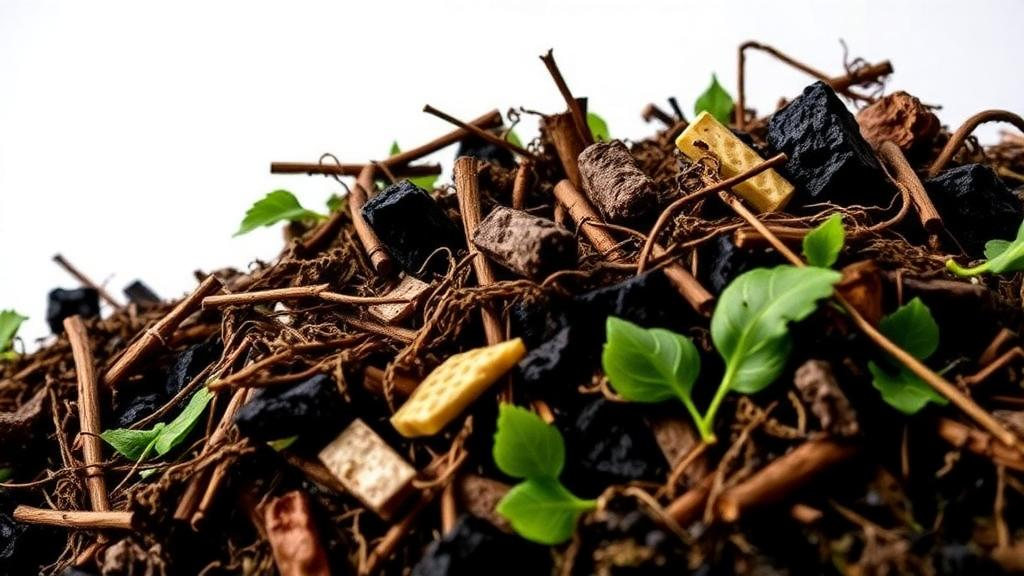
Every harvest season, Canadian prairie fields generate mountains of leftover straw and hulls that are too often burned or dumped. A new study published in Results in Engineering suggests those discarded residues could become a serious weapon in the fight against climate change. Researchers at the University of Saskatchewan transformed four common agricultural byproducts—canola straw, hemp straw, oat hulls, and wheat straw—into upgraded solid biofuels using two pretreatment technologies: oxidative torrefaction and steam explosion. The results show that a relatively simple thermal process borrowed from the world of roasting coffee can turn flimsy, damp farm waste into a carbon-rich fuel that rivals low-grade coal, with heating values approaching 29 megajoules per kilogram.
The motivation is both environmental and economic. In Canada, heat production, electricity generation, and transportation fuels account for roughly 73 percent of greenhouse gas emissions, and the country has pledged to cut total emissions by 40 to 45 percent by 2030 and reach net zero by 2050. Saskatchewan, one of the provinces most dependent on coal-fired electricity, is also the nation’s agricultural powerhouse: more than 40 percent of Canada’s total cropland lies within its borders, and the country produces an estimated 82.4 million metric tons of agricultural residues each year. Converting even a fraction of that stream into clean-burning fuel would simultaneously reduce waste disposal problems, curb open burning of stubble, and displace fossil fuels in power plants.
Raw agricultural residues, however, make poor fuels on their own. They are bulky, hygroscopic, oxygen-rich, and energy-dilute, with heating values in the study’s raw samples ranging only from 17.6 to 18.5 megajoules per kilogram. Their high moisture content saps combustion efficiency, and their tendency to absorb water makes long-term storage a nightmare of mold and decay. Torrefaction addresses these weaknesses directly. The process heats biomass to between 200 and 350 degrees Celsius for anywhere from half an hour to two hours, driving off moisture and volatile compounds and leaving behind a darker, drier, carbon-enriched solid sometimes called bio-coal. In this study, the team used oxidative torrefaction—running the reaction in air rather than an inert nitrogen atmosphere—a choice that dramatically lowers cost and complexity at industrial scale.
The researchers torrefied all four feedstocks at 250, 275, and 300 degrees Celsius for 60 minutes in sealed stainless-steel reactors. The transformation was striking. Elemental carbon content, which started between 44.6 and 46.9 weight percent across the raw materials, climbed to between 65.2 and 69.8 weight percent after treatment at 300 degrees Celsius. Meanwhile, oxygen and hydrogen were stripped away through dehydration, depolymerization, and decarboxylation reactions that release water, acetic acid, carbon monoxide, carbon dioxide, and light hydrocarbons. On a Van Krevelen diagram, which plots atomic hydrogen-to-carbon against oxygen-to-carbon ratios, the torrefied samples marched steadily toward the coal corner of the chart. After treatment at 300 degrees Celsius, the oxygen-to-carbon ratio fell by more than 71 percent for every feedstock, and the hydrogen-to-carbon ratio dropped by roughly half.
The heating values told an equally compelling story. Torrefaction at 250 degrees Celsius already pushed the fuels into the 23.8 to 25.4 megajoule per kilogram range, and the most severe treatment lifted hemp straw to 29.0 megajoules per kilogram—the highest value in the study. That figure places torrefied hemp straw squarely in the territory of sub-bituminous coals, meaning it could potentially be co-fired in existing coal infrastructure with minimal modification. Moisture content, meanwhile, plummeted by 35.7 to 82.4 percent depending on the feedstock, because the heat destroys the hydroxyl groups that normally form hydrogen bonds with water. The result is a hydrophobic fuel that resists reabsorbing moisture during storage, grinds more easily, and burns with less smoke and water vapor, losing less energy up the stack.
To provide a rigorous comparison, the team also ran all four residues through steam explosion at the Canadian Feed Research Centre in Saskatoon. In that process, biomass is exposed to pressurized steam at roughly 300 pounds per square inch for one minute and then subjected to explosive decompression that physically ruptures the rigid fiber structure. Steam explosion did deliver some benefits: it altered lignin structure, increased cellulose crystallinity, and improved the material’s suitability for pelletization. But its chemical impact proved modest. Heating values rose only slightly, from 17.6 to 18.5 megajoules per kilogram in raw samples to between 18.2 and 19.6 megajoules per kilogram after treatment, and elemental composition barely shifted. The contrast illuminates the fundamental difference between the two technologies: steam explosion is primarily a physical restructuring of the biomass, while torrefaction is an irreversible chemical conversion that fundamentally rewrites the fuel’s composition.
Spectroscopic analysis confirmed the chemistry. Fourier transform infrared spectra of torrefied samples showed weakened peaks associated with cellulose and hemicellulose, indicating decomposition of those polymers, and a flattened hydroxyl stretching band consistent with moisture loss. A new peak emerged in the aromatic carbon-hydrogen bending region, signaling that lignin-derived aromatic rings had recombined and formed during heating. The steam-exploded samples, by contrast, looked nearly identical to their raw counterparts in the spectra. Compositional analysis of the raw materials showed the four residues shared similar architectures—hemicellulose contents of 26 to 35 percent and comparable cellulose levels in three of the four—which suggests the findings could generalize across a wide swath of prairie biomass.
The study also confronted an awkward truth about biomass combustion: ash. X-ray fluorescence analysis revealed that potassium and sodium, the alkali metals responsible for fouling boiler heat-exchange surfaces and agglomerating fluidized beds, were abundant in most samples. Predictive indices showed that nearly all torrefied fuels carried a high probability of fouling and slagging, with raw wheat straw scoring an alkali index of 1.93 kilograms per gigajoule—well above the 0.34 threshold at which fouling becomes almost certain. The researchers note that water or acid leaching before torrefaction could strip out these troublesome alkalis, and that adjusting or doping the bed material in fluidized-bed combustors offers another mitigation route. Hemp straw emerged as the cleanest candidate, with the lowest potassium content and a low fouling probability even after treatment.
The economics of scaling up shaped the final analysis. Solid yields declined as torrefaction temperature rose, since devolatilization sacrifices mass to concentrate energy—hemp straw lost 14.6 weight percent of yield moving from 250 to 275 degrees Celsius. Energy yields at 250 degrees Celsius clustered between 62.6 and 64.9 percent but fell as temperatures climbed, creating a classic trade-off between fuel quality and fuel quantity. To find the sweet spot, the team calculated an energy-mass co-benefit index, which peaked at 275 degrees Celsius for canola straw, hemp straw, and wheat straw, and at 300 degrees Celsius for oat hulls. That optimization framework, the authors argue, gives industry a practical target rather than a simple push toward maximum severity.
Challenges remain before torrefied prairie straw feeds a power plant. Torrefied biomass is harder to pelletize than raw material, requiring binders that add cost, and industrial-scale reactors still struggle with uniform heat distribution and process control. Large-scale life-cycle assessments, product standardization, and supportive policy all lag behind the science. Yet the study’s verdict is clear: oxidative torrefaction transforms abundant, cheap agricultural waste into a hydrophobic, coal-like fuel with heating values up to 29 megajoules per kilogram, outperforming steam explosion on every major fuel metric. For a province sitting on tens of millions of tons of residue while burning coal for electricity, the path from field waste to clean power may run through a furnace set at 275 degrees Celsius.
Subject of Research: Upgrading agricultural residues into solid biofuels through oxidative torrefaction and steam explosion pretreatment
Article Title: Development of biofuels from agricultural residues via torrefaction and steam explosion
Article References: Wattan, R., Zamiri, M. A., Newkirk, R., Dalai, A. K., & Acharya, B. (2026). Development of biofuels from agricultural residues via torrefaction and steam explosion. Results in Engineering, 32, Article 113252. https://doi.org/10.1016/j.rineng.2026.113252
Image Credits: AI Generated
DOI: 10.1016/j.rineng.2026.113252
Keywords: torrefaction, steam explosion, biofuels, agricultural residues, lignocellulosic biomass, higher heating value, canola straw, hemp straw, wheat straw, oat hulls, fouling and slagging, renewable energy
News Source: Alan Morgan. (October 4, 2026). Farm Waste Turned Biofuel: Torrefaction Outperforms Steam Explosion in New Study. Scienmag.