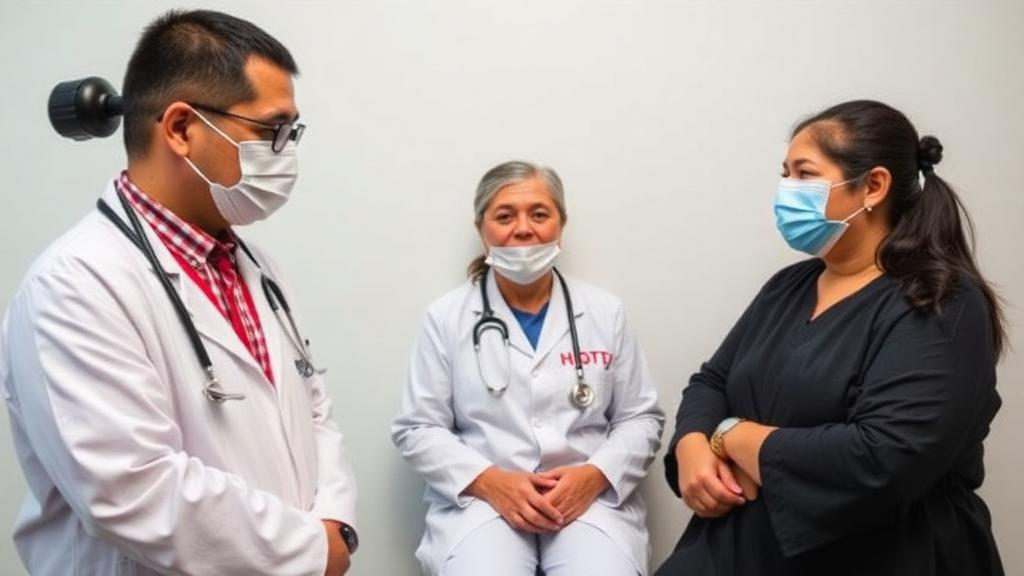
Indigenous communities in Canada carry a disproportionate burden of the country’s opioid crisis, facing significantly higher rates of opioid prescriptions, emergency department visits, hospital admissions, and deaths from opioid toxicity than the general population. A new qualitative study published in BMC Health Services Research offers a rare window into how physicians themselves understand this inequity, revealing a medical system that even well-intentioned doctors describe as fragmented, under-resourced, and shaped by the lingering dynamics of colonialism. The findings suggest that fixing the crisis will require far more than adjusting prescription pads.
The research team, led by Anh Ly, Anika Sehgal, and colleagues at the University of Calgary’s Cumming School of Medicine, set out to explore an underexamined dimension of the opioid epidemic: the perspectives of the physicians who actually prescribe opioids and care for Indigenous patients with opioid use disorder. While previous scholarship has documented risk factors for opioid-related harm among Indigenous peoples, including overprescribing, trauma rooted in ongoing colonization, systemic racism, socioeconomic disadvantage, and barriers to culturally safe health services, the role of healthcare providers and the systems they operate within has received comparatively little attention. The new study addresses that gap directly.
Methodologically, the study relied on in-person, open-ended, semi-structured interviews with a convenience sample of 13 physicians working across a striking range of practice environments: urban centers, rural communities, and on-reserve settings. This diversity matters, because the structural conditions surrounding opioid care differ dramatically depending on geography and jurisdiction. The researchers employed an inductive thematic analysis, with transcripts independently examined and coded by two research associates using an iterative coding process designed to surface overarching themes and their associated sub-themes. The study received ethics approval from the Conjoint Health Research Ethics Board at the University of Calgary, and all participants provided written informed consent before taking part.
Four predominant themes emerged from the analysis. First, physicians emphasized the fundamental importance of maintaining relationships with their patients, positioning continuity and trust as the bedrock of effective care for opioid use disorder. Second, participants called for increased attention to pain management strategies, pointing to a tension at the heart of opioid medicine: the need to treat genuine suffering while avoiding the harms of overprescribing. Third, the physicians described the considerable challenges and goals inherent in a de-prescribing approach, the deliberate, careful process of tapering patients off opioids when clinically appropriate. Fourth, and perhaps most sobering, they described the structural and social contexts that shape care for opioid use disorder, from colonial legacies to poverty and systemic inequity.
That fourth theme carries the study’s most consequential implications. Participants explicitly highlighted the influence of colonization, intergenerational trauma, poverty, and systemic inequities on patient outcomes. Yet they also candidly expressed the difficulty of addressing these forces within the confines of a standard clinical encounter. A physician may recognize that a patient’s opioid use is entangled with housing instability, food insecurity, or the accumulated weight of historical and ongoing discrimination, but the fifteen-minute appointment slot offers few tools to respond. The study captures this dissonance between awareness and action, showing that physicians are not blind to structural determinants of health; they are often simply unequipped to act on them.
The interviews also revealed substantial variation in physicians’ experience, knowledge, and comfort when working with Indigenous patients. This inconsistency is significant because it means the quality of care a patient receives may depend heavily on which physician they happen to see. Some providers bring deep cultural understanding and trauma-informed practice; others lack training in the history and ongoing realities that shape Indigenous patients’ interactions with the healthcare system. The participants themselves pointed to this unevenness as a problem, and several offered suggestions for improving medical education curricula, arguing that better preparation during training could reduce the variability that patients currently experience.
Practical constraints compounded these knowledge gaps. Physicians described being squeezed by clinical schedules that left too little time for the complex, trust-dependent work that opioid use disorder care demands. Resource availability varied widely across settings, and access to services, particularly in rural and on-reserve communities, was frequently limited. A physician who wants to connect a patient with culturally safe addiction treatment, mental health support, or social services may find that those services simply do not exist nearby, or that waitlists stretch for months. In such circumstances, the prescription becomes the path of least resistance, not because clinicians are careless, but because the system offers few alternatives.
The de-prescribing theme deserves particular attention. Reducing or discontinuing opioids in patients who have been on them long-term is clinically delicate work, requiring careful tapering schedules, monitoring for withdrawal and relapse, and robust alternative pain management options. The physicians in this study described de-prescribing as a goal, but one fraught with obstacles: patients with untreated chronic pain, limited access to multidisciplinary pain services, and the risk that abrupt changes could push patients toward illicit and far more dangerous drug supplies. In the context of a toxicity crisis driven increasingly by fentanyl-contaminated street drugs, poorly managed de-prescribing can be as dangerous as overprescribing, a nuance the study’s participants clearly understood.
Taken together, the findings point toward what the authors describe as the necessity for fundamental changes in how care for Indigenous peoples with opioid use disorder is conceptualized and delivered. Physicians, the study concludes, function within a disjointed system influenced by persistent colonial dynamics, unequal resources, and inconsistent training. Progress, the researchers argue, will depend on approaches that engage patients’ social realities, strengthen clinical relationships, and confront the structural factors that shape health outcomes. In other words, the prescription problem is not merely a prescribing problem; it is a systems problem, and it demands systems-level solutions.
The study arrives at a moment when Canada, like the United States, is grappling with the devastating legacy of both aggressive opioid marketing in the 1990s and the subsequent tightening of prescribing that pushed many patients toward illicit drugs. For Indigenous communities, these national dynamics intersect with a distinct history: residential schools, the Sixties Scoop, jurisdictional ambiguities in health service delivery, and ongoing racism within healthcare institutions, all documented contributors to health inequity. What this new research adds is the physician’s-eye view of that intersection, showing that even providers who recognize these forces feel constrained by the structures around them. The message for policymakers is clear: supporting Indigenous patients with opioid use disorder means investing in culturally safe services, reforming medical education, giving clinicians the time and resources to build real relationships, and dismantling the structural inequities that no individual prescription can fix.
Subject of Research: Physicians' perspectives on opioid prescribing and structural factors shaping opioid use disorder care for Indigenous patients in Canada
Article Title: What’s behind the pain? Exploring physicians’ views on prescribing practices and structural factors that contribute to opioid use among Indigenous patients
Article References: Ly, A., McInnes, A., Annan, J., Crowshoe, L. L., Henderson, R., & Sehgal, A. (2026). What’s behind the pain? Exploring physicians’ views on prescribing practices and structural factors that contribute to opioid use among Indigenous patients. BMC Health Services Research. https://doi.org/10.1186/s12913-026-15610-y
Image Credits: AI Generated
DOI: 10.1186/s12913-026-15610-y
Keywords: Indigenous health, opioid use disorder, opioid prescribing, physicians, health inequities, pain management, de-prescribing, colonization, intergenerational trauma, qualitative research, primary care, Canada
Ophelia Keating. (October 4, 2026). Doctors Reveal Why Opioid Care Fails Indigenous Patients in Canada. Scienmag.