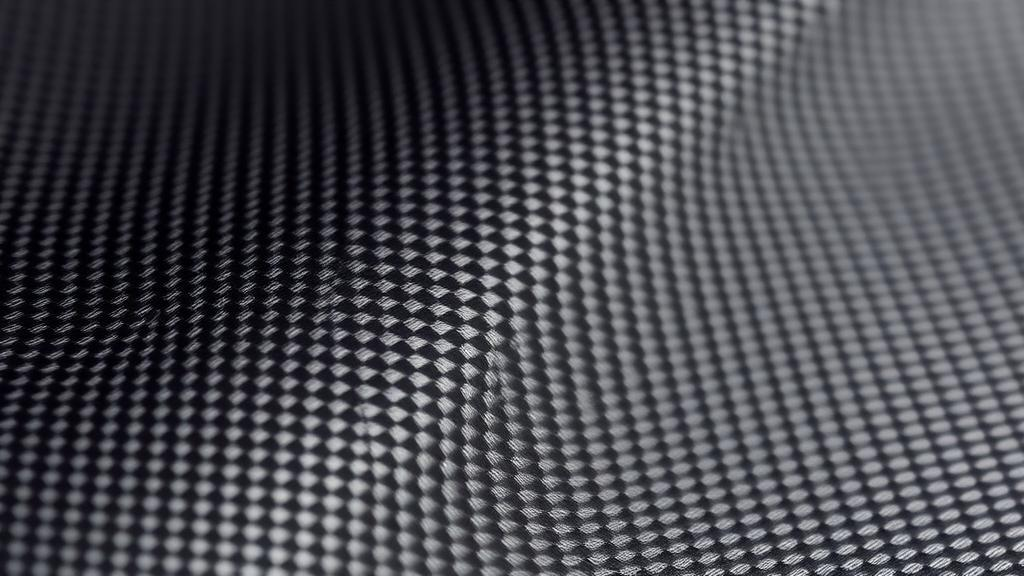
Carbon fiber-reinforced epoxy laminates are among the most celebrated materials in modern engineering, prized for their extraordinary stiffness-to-weight ratio in aircraft fuselages, wind turbine blades, and marine hulls. Yet they carry a hidden liability that has haunted the composites industry for decades: once cured, conventional thermoset epoxy matrices are locked in place permanently. They cannot heal cracks, cannot be reshaped, and cannot be genuinely recycled at end of life, which means millions of tonnes of high-value carbon fiber are destined for landfill or incineration. A new study from the Indian Institute of Science in Bangalore, published in Advanced Composites and Hybrid Materials, presents a strikingly comprehensive answer to this problem, engineering a carbon fiber composite that is simultaneously stronger, self-healing, electrically functional, and fully circular.
The research team, led by Akash Basu, Ashis Halder, Anurima De, S. Kumar, and Suryasarathi Bose of the Department of Materials Engineering, tackled the circularity problem at the level of the polymer network itself. Their matrix is a vitrimer epoxy, a class of polymer that behaves like a conventional thermoset at service temperatures but can rearrange its covalent bonds when heated, allowing flow and repair without melting. Crucially, the team did not rely on a single dynamic chemistry. Instead, they built a dual-dynamic network combining associative disulfide bonds and silyl ether linkages, two distinct covalent adaptable networks that operate synergistically. Disulfide exchange enables bond reshuffling at relatively mild conditions, while silyl ether chemistry adds a second, complementary pathway for network rearrangement, broadening the temperature window and the efficiency of stress relaxation and healing.
Into this dynamic matrix the researchers dispersed hydroxyl-functionalized graphene oxide, or hGO, a two-dimensional carbon nanomaterial whose surface hydroxyl groups can interact strongly with the epoxy network. The nanosheets serve multiple roles at once. They reinforce the matrix mechanically, they provide electrically conductive pathways that dissipate electromagnetic interference, and they contribute Joule heating capability, allowing the laminate to warm itself when a current passes through it. This multifunctionality is a hallmark of the design philosophy: rather than adding separate additives for each property, the team engineered a single integrated network in which every component pulls double or triple duty.
The second half of the innovation addresses a chronic weakness of fiber composites: the interface between fiber and matrix. Poor interfacial bonding allows delamination, the dominant failure mode in laminated structures, and it also frustrates recycling because fibers and resin cling together in unusable ways. The researchers functionalized the carbon fiber surface with a dissociative Diels-Alder adduct, a covalent bridge that forms strongly during manufacturing and service but can reversibly break and reform under the right thermal stimulus. The result is a responsive covalent interface that participates in the same dynamic chemistry as the surrounding matrix, so that the entire laminate, from nanosheet to fiber surface, shares a common language of reversible bonds.
The mechanical payoff of this synergistic engineering is substantial. Compared with conventional carbon fiber-reinforced epoxy laminates, the new architecture showed a 53 percent increase in flexural strength and a 47 percent enhancement in interlaminar shear strength, the property most directly tied to resistance against delamination. These are not incremental gains. Improvements of this magnitude in a structural laminate, achieved while simultaneously adding recyclability, suggest that dynamic covalent chemistry has matured from a laboratory curiosity into a viable route for load-bearing aerospace and marine structures.
The functional performance extends well beyond static strength. After impact damage, the laminate recovered 64 percent of its structural integrity through self-healing, as the dual-dynamic networks flowed across crack surfaces and re-established covalent connectivity. The hGO-enabled conductive network delivered electromagnetic interference shielding of minus 46 decibels, a level relevant to protecting avionics and sensitive electronics from both external interference and internal emissions. The same electrical pathways enabled rapid de-icing: a current passed through the laminate melted surface ice in just 47 seconds, a capability with obvious value for aircraft wings, rotor blades, and marine structures operating in cold climates. In effect, the team has folded lightning protection-adjacent shielding, anti-icing, and damage repair into a single structural material.
Perhaps the most consequential demonstration concerns end of life. Leveraging the team’s patented SaLSO platform, the researchers showed damage-free, closed-loop recycling of both the matrix and the reinforcement. Because the vitrimer network can relax its bonds and the Diels-Alder interface can dissociate, the laminate can be separated cleanly into recovered vitrimer epoxy and recovered carbon fiber without shredding, solvolysis, or the aggressive thermal degradation that destroys fiber length and properties in conventional recycling. The recovered components were then upcycled into new laminates in three configurations: recovered epoxy alone, recovered fiber alone, and a combined recovered carbon fiber-reinforced vitrimer epoxy.
The retention of mechanical performance after recycling is the number that will draw attention across the industry. The remanufactured laminates retained 92 percent of the virgin interlaminar shear strength when made from recovered vitrimer epoxy, 96 percent when made from recovered carbon fiber, and 85 percent when both recovered streams were combined. In a sector where even a single reprocessing cycle typically exacts a heavy penalty on fiber tensile strength and interfacial quality, retaining the vast majority of structural performance through a full closed loop is a benchmark result. It means the carbon fiber, the most energy-intensive and expensive component, can genuinely circulate rather than downcycle.
The broader significance lies in the framework rather than any single metric. Aerospace and marine engineering face mounting regulatory and economic pressure to account for the full lifecycle of composite structures, from embodied energy in fiber production to disposal of retired airframes and blades. Current end-of-life options are poor: mechanical grinding yields low-value filler, pyrolysis damages fibers, and landfill simply defers the problem. A laminate whose matrix can heal in service, whose interface can be deliberately undone, and whose constituents can be recovered at near-virgin quality reframes the composite not as a disposable article but as a durable materials bank. The dual-dynamic vitrimer strategy shows that circularity and performance need not be traded against each other.
Challenges remain before such materials fly. Scaling vitrimer chemistry to aerospace-grade prepreg lines, certifying dynamically bonded structures for primary load-bearing applications, and demonstrating long-term fatigue and environmental durability will all demand further work, and the study reports an early-access, peer-reviewed version subject to final editorial revision. Still, the convergence achieved here, of a 53 percent flexural strength gain, 64 percent healing efficiency, minus 46 decibel shielding, 47-second de-icing, and up to 96 percent strength retention after closed-loop recycling, marks a persuasive proof of concept. If multi-dynamic networks can be carried through certification, the next generation of carbon fiber structures may be designed not only to carry loads but to repair themselves and return, intact, to the beginning of their own supply chain.
Subject of Research: Recyclable self-healing carbon fiber-reinforced vitrimer epoxy composites with dynamic covalent networks
Article Title: A circular carbon fiber composite architecture enabled by synergistic multi-dynamic networks
Article References: Basu, A., Halder, A., De, A., Kumar, S., & Bose, S. (2026). A circular carbon fiber composite architecture enabled by synergistic multi-dynamic networks. Advanced Composites and Hybrid Materials. https://doi.org/10.1007/s42114-026-02041-w
Image Credits: AI Generated
DOI: 10.1007/s42114-026-02041-w
Keywords: carbon fiber composites, vitrimer epoxy, covalent adaptable networks, self-healing materials, recycling, circular economy, graphene oxide, Diels-Alder chemistry, interlaminar shear strength, EMI shielding, de-icing, aerospace materials
Neil Sanderson. (October 4, 2026). Self-Healing, Recyclable Carbon Fiber Composites Push Aerospace Materials Toward Circularity. Scienmag.