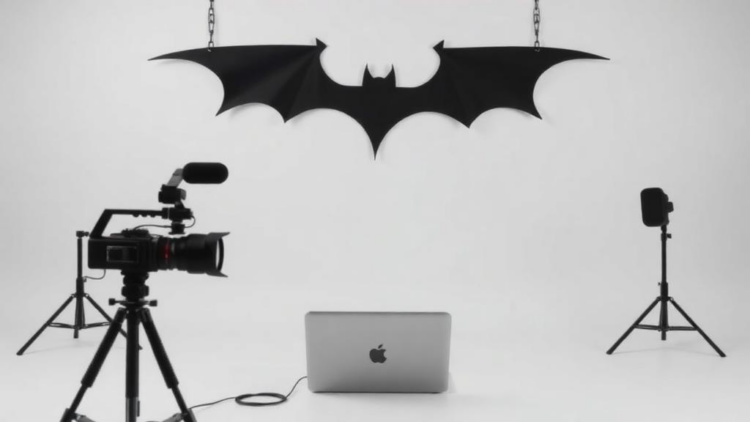
Motion capture has long been the privilege of well-funded laboratories. The gold standard, optoelectronic systems that track reflective markers glued to the skin, delivers exquisite precision but demands dedicated studio space, expensive hardware, hours of careful setup, and a participant willing to move naturally while wearing a constellation of ping-pong-sized spheres. A new open-source software package called BatPose now promises to shrink that entire workflow down to two synchronized cameras, a printed calibration board, and an ordinary computer, with no markers, no cloud service, and no specialized GPU required.
Developed by Jan Hejda and colleagues and described in the journal SoftwareX, BatPose is a Python package that carries a movement recording from raw stereo video all the way to biomechanical statistics. It estimates three-dimensional human pose in real physical units, computes nine joint and trunk angles, and reports range of motion, variability, and left-right symmetry, all through a graphical interface or command-line tools that run entirely on a local CPU. The software is released under the GNU General Public License, with version 1.1.0 available on GitHub, and the team has published a preliminary validation against a professional marker-based system.
The technical pipeline follows a classical stereo-geometry route rather than an end-to-end learned model. First, the user waves a ChArUco calibration board, a checkerboard embedded with fiducial markers, in front of two cameras. The software detects the board across sampled frames, deliberately keeping views that cover different regions of the image, and then solves each camera’s internal parameters and the relative position between the two cameras using Zhang’s planar calibration method. Three lens distortion models are supported, from a standard pinhole model to wide-angle and fisheye formulations, and the program warns users when the chosen model does not match the physical lens, since a mismatch can silently warp every reconstructed coordinate.
Calibration quality is graded automatically using the root mean square reprojection error: below 0.5 pixels is rated excellent, up to 1.5 pixels is acceptable, and anything higher triggers a recommendation to recalibrate, often because the lens is wider than the model allows. The developers are careful to note that this score is an in-sample statistic computed on the calibration images themselves, not a validated bound on three-dimensional accuracy at the distance where movement is later recorded. That kind of methodological honesty runs throughout the project, which distinguishes it from many flashy pose-estimation demos.
Once the cameras are calibrated, a two-dimensional pose detector locates seventeen body keypoints in each view. The default backend is MediaPipe BlazePose, with RTMPose available as an alternative, and both outputs are mapped onto the standard COCO-17 skeleton convention. The software then triangulates each keypoint in three dimensions using the direct linear transform, the workhorse algorithm of multi-view geometry. A confidence gate rejects joints whose detections fall below a threshold in either view or whose reprojection error is too large, and a One Euro filter smooths each coordinate over time with settings that users can tune to match their frame rate and the speed of the movement being studied.
A particularly thoughtful feature is the floor world frame. By triangulating the corners of a board lying on the ground and aligning them with the Kabsch algorithm, BatPose establishes an upright coordinate frame with its origin at the board center, expressed in meters. Every recording from every session then shares the same spatial reference, which makes cross-session comparisons meaningful. From the reconstructed skeletons, the package computes bilateral knee, hip, elbow, and shoulder angles as true three-dimensional geometric segment angles, plus trunk inclination relative to vertical, and derives statistics including peak angular velocity and a bilateral symmetry index originally developed for force-platform gait analysis.
The validation against a twelve-camera Qualisys marker-based system at 300 Hz gives a first quantitative picture of what to expect. Three participants performed arm raises, biceps curls, marching, forward bends, and squats under three different stereo camera configurations. Across eight flash-synchronized recordings, the frame-weighted mean per-joint position error was 52.1 millimeters, with a median of 42.1 millimeters, and 77.3 percent of joint observations met the criteria for direct measurement. Mean absolute error for the nine angle outputs averaged 7.50 degrees, with concordance correlation coefficients between 0.910 and 0.968. Notably, performance depended strongly on camera geometry: one configuration with a wider baseline and steeper convergence angle achieved errors around 45 millimeters and over 92 percent coverage, while another dropped to under 50 percent coverage.
The team also compared angle outputs against the Vicon-derived TotalCapture dataset, finding a mean recording-level error of 9.90 degrees across five participants, though with wide limits of agreement and coverage as low as 44.6 percent in some recordings. Repeatability tests showed that repeated calibrations of a fixed rig agreed to within a few millimeters of baseline and a fraction of a degree of rotation, and that repeated detections on identical input reproduced coordinates almost exactly, with occasional large discrepancies near tracking gaps. The authors repeatedly emphasize that these are preliminary technical validations under specific tested conditions, not evidence of clinical validity or generalizability to other populations, tasks, or camera arrangements.
Those caveats matter, and the limitations section is refreshingly candid. The software matches people between the two camera views by detection order rather than by identity, which means it is designed for a single subject and may fail when multiple people cross paths. Accuracy is ultimately bounded by the quality of the two-dimensional detector and the calibration, and the system reconstructs kinematics only, not the musculoskeletal forces that pipelines built on OpenSim provide. Clothing, occlusion, and camera distance were not systematically varied in controlled experiments, and derived statistics such as peak velocity and symmetry indices cannot be assumed reliable from joint-angle agreement alone. The developers plan to add cross-view identity matching and additional pose backends in future releases.
Even with those boundaries, the implications are striking. A rehabilitation clinic, a sports team, or an ergonomics laboratory in a low-resource setting could now quantify movement asymmetries, track recovery across weeks, or analyze exercise technique with equipment costing a tiny fraction of a professional capture suite, while keeping all recordings on institutional computers rather than uploading them to a cloud service. Cached intermediate files mean users can swap detectors without recalibrating and retune reconstruction without re-running detection, and a built-in camera simulator lets students learn the workflow without any hardware at all. In a field where the gap between laboratory-grade measurement and everyday practice has persisted for decades, a compact, transparent, fully local stereo pipeline with published validation numbers is a genuinely meaningful step toward democratizing the science of human movement.
Subject of Research: Markerless stereo 3D human pose estimation and biomechanical analysis software
Article Title: BatPose: Single-subject stereo 3D human pose estimation and biomechanical analysis from synchronized cameras
Article References: Hejda, J., Sokol, M., Fischer, A. G., Radus, L. F., Leová, L., Volf, P., & Kutílek, P. (2026). BatPose: Single-subject stereo 3D human pose estimation and biomechanical analysis from synchronized cameras. SoftwareX, 36, Article 103093. https://doi.org/10.1016/j.softx.2026.103093
Image Credits: AI Generated
DOI: 10.1016/j.softx.2026.103093
Keywords: BatPose, motion capture, markerless pose estimation, biomechanics, stereo vision, camera calibration, MediaPipe BlazePose, triangulation, joint angles, rehabilitation, open-source software, Qualisys validation
Cite Scienmag News
APA
MLA
Chicago
Denise Maddox. (October 4, 2026). BatPose Turns Two Cameras and a Laptop Into a Markerless 3D Motion Capture Lab. Scienmag. https://scienmag.com/batpose-turns-two-cameras-and-a-laptop-into-a-markerless-3d-motion-capture-lab/
Denise Maddox. “BatPose Turns Two Cameras and a Laptop Into a Markerless 3D Motion Capture Lab.” Scienmag, 4 October 2026, https://scienmag.com/batpose-turns-two-cameras-and-a-laptop-into-a-markerless-3d-motion-capture-lab/. Accessed 4 October 2026.
Denise Maddox. “BatPose Turns Two Cameras and a Laptop Into a Markerless 3D Motion Capture Lab.” Scienmag. October 4, 2026. https://scienmag.com/batpose-turns-two-cameras-and-a-laptop-into-a-markerless-3d-motion-capture-lab/
Copy citation
Download RIS
Tags: BatPosebiomechanical statistics from videobiomechanicscamera calibrationcost-effective motion analysisjoint angleslow-cost biomechanics assessmentmarkerless 3D human motion capturemarkerless motion capture for researchmarkerless pose estimationMediaPipe BlazePosemotion captureopen-source biomechanics softwareopen-source motion analysis softwareopen-source softwarePython-based motion capture toolkitQualisys validationreal-time 3D human pose trackingrehabilitationstereo camera-based pose estimationstereo visionstereo-vision human pose estimationtriangulationvalidation of markerless motion capture