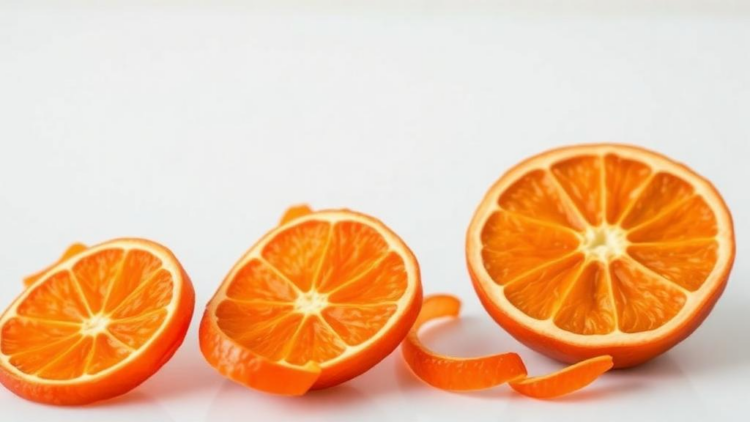
A humble ingredient that has flavoured Chinese kitchens and herbal pharmacies for centuries is now attracting serious attention from food scientists searching for affordable weapons against the global nutrition crisis. Chenpi, the dried ripe peel of the mandarin orange Citrus reticulata Blanco and its cultivars, sits at the intersection of food and medicine in Chinese tradition, used both as a distinctive spice in cooking and as a valued component of classical herbal formulas. A comprehensive review published in the Journal of Agriculture and Food Research now pulls together the biochemical evidence behind this ancient ingredient, cataloguing its rich stores of flavonoids and polysaccharides and the laboratory and animal evidence suggesting it may help counter obesity, diabetes, and cardiovascular disease. At a moment when roughly 720 million people faced hunger and 2.60 billion could not afford a healthy diet in 2024, the case for rediscovering inexpensive traditional foods has rarely been more urgent.
The review’s authors argue that Chenpi fits squarely within the emerging food is medicine movement, which seeks to embed nutritional intervention into everyday eating rather than relying on costly supplements or rare superfoods. Because Chenpi is affordable, versatile, and already woven into daily consumption patterns in China, where it flavours teas, meats, and beverages, it could be more accessible than many expensive functional foods. The researchers frame it as a candidate for supporting both health and nutrition security, provided that science can validate what tradition has long assumed. Their synthesis is distinct from earlier reviews focused on production and processing, concentrating instead on the bioactive compounds themselves and the in vitro and in vivo evidence for health benefits.
The chemical heart of Chenpi is its phenolic fraction, dominated by flavonoids. High-performance liquid chromatography studies compiled in the review identify hesperidin as the flagship compound, with reported concentrations ranging from 6.32 to 135.40 milligrams per gram of peel. Nobiletin follows at 0.02 to 34.68 milligrams per gram, tangeretin at 0.05 to 24.77 milligrams per gram, and narirutin at 0.45 to 9.44 milligrams per gram. Particularly intriguing are the polymethoxyflavones, a class of flavones decorated with multiple methoxyl groups that are characteristic of citrus fruits and have demonstrated strong antioxidant and anti-inflammatory properties. Beyond nobiletin and tangeretin, Chenpi also contains sinensetin, isosinensetin, 5-demethylnobiletin, 3,5,6,7,8,3′,4′-heptamethoxyflavone, and 4′,5,7,8-tetramethoxyflavone, each contributing to a complex phytochemical profile.
That profile, however, is anything but fixed. When researchers collected Chenpi from seven Chinese provinces, including Zhejiang, Jiangxi, Sichuan, Guangdong, Fujian, Hunan, and Hubei, they found that geographical location significantly shaped both the concentrations and compositions of flavonoids. Soil chemistry matters too: potassium, calcium, magnesium, and manganese in the soil were identified as important factors influencing the accumulation of polymethoxyflavones. Even the timing of the harvest plays a role, with polymethoxyflavone content declining as harvest is delayed, and drying at 60 degrees Celsius reducing total flavonoid content and antioxidant activity. This variability has direct commercial consequences, since the quality and potential health benefits of Chenpi-based products depend on the raw material’s composition. The review’s authors argue that establishing quality standardisation for Chenpi is essential to ensure raw materials retain maximum levels of bioactive compounds.
Alongside its flavonoids, Chenpi harbours a second bioactive arsenal: polysaccharides. These are composed of pectin, hemicellulose, and cellulose, with pectin predominating. Hot water extraction typically yields between 4.28 and 8.90 percent pectin, and structural analyses show that Chenpi pectin is built mainly from five monosaccharides: galacturonic acid, galactose, arabinose, rhamnose, and glucose. Sequential extraction has yielded five distinct pectin types, all classified as high methoxyl pectins with degrees of methyl esterification above 55 percent, and the water solubility of Chenpi pectin has been reported to reach 189.85 milligrams per millilitre. Extraction method matters as well. Comparing cellulase extraction, high temperature alkali extraction, and deep eutectic solvent extraction, researchers found that the alkali method produced pectin with the lowest uronic acid content, likely because harsh alkaline conditions solubilise non-pectin impurities that dilute the purity of the final product.
The health evidence begins with antioxidant activity, a property rooted in the chemistry of phenolic compounds. In chemical assays, Chenpi’s DPPH radical-scavenging values range from 0.56 to 20.05 micromoles of Trolox equivalent per gram, while ABTS values span 0.359 to 115.98 micromoles per gram, a wide spread the authors attribute to differences in variety, processing, extraction methods, and the specific phenolics present. Molecular structure itself matters: adding glycoside groups to flavonoids can decrease antioxidant activity, and different compounds dominate different assays, with neohesperidin, naringin, and hesperidin contributing most to DPPH activity while nobiletin and tangeretin drive ABTS activity. Because chemical assays cannot simulate the body’s internal environment, the review turns to cellular and animal models. In liver cells subjected to oxidative damage, Chenpi extract reduced the production of reactive oxygen species and malondialdehyde while boosting glutathione levels. In mice with chemically induced oxidative damage, 56 days of Chenpi extract treatment lowered malondialdehyde in a dose-dependent manner and enhanced antioxidant enzyme activity, effects credited largely to hesperidin and nobiletin, which inhibit COX-2 expression and thereby curb reactive oxygen species generation.
The anti-inflammatory story is equally detailed. Chronic inflammation, which develops when the immune system’s protective response fails to subside, underlies obesity, diabetes, rheumatoid arthritis, and cardiovascular disorders. In macrophage models stimulated with oxidised low-density lipoprotein, Chenpi flavonoids reduced nitric oxide and inflammatory cytokines including IL-1β, IL-6, and TNF-α, while Western blotting revealed suppression of the MAPK and NF-κB signalling pathways through reduced phosphorylation of p38 MAPK, ERK1/2, JNK1/2, and NF-κB p65. In mice with peanut-induced eosinophilic esophagitis, 30 days of Chenpi extract treatment reduced inflammatory infiltration in the esophagus, intestine, and lung tissue, lowering serum IL-4, IL-5, and TNF-α, with effects at medium and high doses comparable to the drug dexamethasone. In diabetic rats, four weeks of treatment suppressed iNOS, COX-2, VCAM-1, and ICAM-1 expression while activating AMPK, pointing to protection against vascular inflammation.
Perhaps the most contemporary line of evidence concerns the gut microbiota, the vast microbial community whose balance is increasingly linked to metabolic health. In high-fat diet-induced obese mice, 12 weeks of Chenpi extract shifted the microbial landscape, decreasing the abundance of Helicobacter, Desulfovibrio, and Lachnospiraceae while increasing beneficial groups including Bacteroides, and simultaneously reducing weight gain, Lee’s index, fasting blood glucose, and serum total cholesterol. Chenpi polysaccharides act as prebiotics: in fermentation studies with human faeces they increased short-chain fatty acid production, particularly acetic and propionic acids, and boosted bacteria such as Parabacteroides, Lachnospira, and Bacteroides while suppressing Shigella, Megamonas, and Haemophilus. In obese mice, four weeks of polysaccharide treatment significantly increased obesity-suppressing bacteria including Lactobacillus and the Lachnospiraceae_NK4A136_group. Notably, polysaccharides with higher uronic acid content performed better, and intriguingly, whole Chenpi powder outperformed the extract in one study, suggesting that polysaccharides and phenolics may work synergistically, a combination effect supported by parallel findings with other fibre-polyphenol pairings.
The review’s authors are careful to temper enthusiasm with scientific caution. Animal doses often exceed realistic human consumption, results from mice cannot be directly extrapolated to people given differences in genetics and metabolism, and safe upper intake levels for Chenpi remain poorly defined. Flavonoid bioavailability adds another layer of complexity: hesperidin must be hydrolysed by colonic microbes before absorption, and the food matrix influences how much of these compounds becomes bioaccessible during digestion. The authors call for chromatographic fingerprint-bioactivity correlation models, exploration of Chenpi in emerging food categories such as plant-based meat analogues, and, above all, clinical human trials with standardised extracts to bridge the gap between functional food science and industrial translation. Until then, the evidence positions Chenpi not as a miracle cure but as something arguably more valuable: an affordable, culturally embedded ingredient whose daily inclusion in diets could meaningfully advance the goal of healthy eating for all.
Subject of Research: Bioactive compounds and health-promoting benefits of Chenpi, dried Citrus reticulata peel, as a functional food ingredient
Article Title: Unlocking the potential of Chenpi for healthy diets: Insights into bioactive compounds and health-promoting benefits
Article References: Zhang, G., Zhang, R.-Y., Wang, Y., Qin, Z., Liu, H.-M., Ayyash, M., Zhou, S., & Wu, B. (2026). Unlocking the potential of Chenpi for healthy diets: Insights into bioactive compounds and health-promoting benefits. Journal of Agriculture and Food Research, 31, Article 103335. https://doi.org/10.1016/j.jafr.2026.103335
Image Credits: AI Generated
DOI: 10.1016/j.jafr.2026.103335
Keywords: Chenpi, Citrus reticulata, flavonoids, hesperidin, nobiletin, polysaccharides, antioxidant, anti-inflammatory, gut microbiota, functional food, food is medicine, nutrition security
Cite Scienmag News
APA MLA Chicago
Daisy Hatcher. (October 4, 2026). Dried Tangerine Peel Emerges as a Functional Food Powerhouse for Healthier Diets. Scienmag. https://scienmag.com/dried-tangerine-peel-emerges-as-a-functional-food-powerhouse-for-healthier-diets/
Daisy Hatcher. “Dried Tangerine Peel Emerges as a Functional Food Powerhouse for Healthier Diets.” Scienmag, 4 October 2026, https://scienmag.com/dried-tangerine-peel-emerges-as-a-functional-food-powerhouse-for-healthier-diets/. Accessed 4 October 2026.
Daisy Hatcher. “Dried Tangerine Peel Emerges as a Functional Food Powerhouse for Healthier Diets.” Scienmag. October 4, 2026. https://scienmag.com/dried-tangerine-peel-emerges-as-a-functional-food-powerhouse-for-healthier-diets/
Copy citation Download RIS
Tags: affordable natural remedies for nutrition crisisanti-inflammatoryantioxidantbioactive compounds in dried citrus peelChenpiChinese culinary spice with medicinal propertiesCitrus reticulataDried tangerine peel health benefitsflavonoidsflavonoids and polysaccharides in herbal foodsfood as medicine movementFood is Medicinefunctional foodfunctional foods for cardiovascular healthgut microbiotahesperidinimpact of ancient foods on global nutritionintegration of traditional foods into everydaynatural solutions for hunger and diet affordabilitynobiletinnutrition securitypolysaccharidesrole of Chenpi in managing obesity and diabetestraditional Chinese medicine uses of Chenpitraditional herbal ingredients for modern health