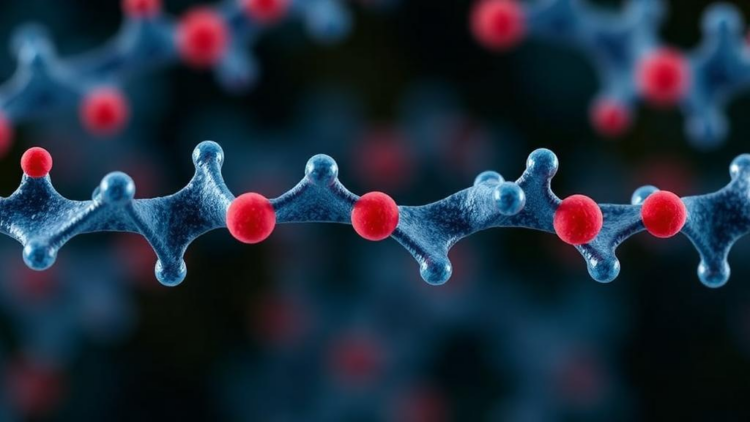
Inside every motor neuron, proteins are constantly condensing into tiny liquid droplets and then dissolving again, a process so fast and so quiet that most of biology ignored it until recently. A review published in BMC Medicine by Naohiko Iguchi, Noriyoshi Isozumi, Kazuma Sugie and Eiichiro Mori of Nara Medical University argues that this quiet process, known as biological phase separation, may sit at the very center of amyotrophic lateral sclerosis, the relentlessly progressive disease that destroys the nerve cells controlling voluntary muscle. The authors’ central claim is that ALS is not simply a story of proteins clumping together, but a story of the cellular machinery that normally keeps those clumps reversible failing to do its job.
Phase separation is the physical phenomenon by which a well-mixed solution splits into distinct phases, the way oil separates from vinegar in a shaken bottle of salad dressing. In cells, proteins containing intrinsically disordered, low-complexity domains can drive the formation of membraneless compartments called condensates, which concentrate specific molecules without any enclosing lipid membrane. Nucleoli, stress granules and nuclear speckles all form this way. The key property of healthy condensates is dynamism: molecules diffuse in and out, and the entire assembly can dissolve within seconds or minutes once conditions change. This liquid-like behavior depends on weak, multivalent interactions among the low-complexity domains, which constantly break and reform.
The trouble begins when those weak interactions stop being weak and transient. The review describes how, in ALS, condensates formed by RNA-binding proteins such as FUS and TDP-43 progressively lose their reversibility, maturing from liquid droplets into gel-like states and eventually into solid fibrillar aggregates that are hallmarks of the diseased motor neuron. This liquid-to-solid transition, sometimes called pathological hardening, is driven by the same low-complexity domains that make condensates form in the first place. Given time, the transient beta-sheet-like contacts within these domains can lock into stable structures, converting a dynamic organelle into an irreversible inclusion that the cell cannot dismantle.
What makes the new review distinctive is its emphasis on the layers of cellular regulation that normally prevent this maturation. The authors assemble evidence that molecular chaperones, best known for helping newly made proteins fold, also patrol condensates. Heat shock protein 70 family members, for example, can bind exposed hydrophobic stretches within condensates, remodel their internal organization and keep the assemblies fluid. Chaperone activity thereby extends the window in which a condensate remains reversible, buying the cell time to dissolve it before aggregation becomes permanent. When chaperone capacity is overwhelmed or declines, as it does with age and stress, that window narrows.
Nuclear import receptors form a second, perhaps more surprising, line of defense. Karyopherin-beta2, the receptor that ferries FUS into the nucleus, does more than transport. It binds directly to the proline-tyrosine nuclear localization signal within FUS and, in doing so, physically shields the low-complexity domain from engaging in the multivalent contacts that drive phase separation and fibrillization. In effect, the import receptor acts as a portable anti-aggregation chaperone, keeping FUS soluble during its journeys through the cytoplasm. The review highlights how this mechanism illustrates a broader principle: compact folded domains can modulate the behavior of disordered regions they are physically linked to or bound against.
The proteostasis network supplies a third layer of regulation. Enzymatic components such as protein disulfide isomerase and peptidyl-prolyl cis-trans isomerase A can alter the conformational state of proteins inside or near condensates, while ubiquilin-like protein 2, an ALS-linked protein, helps shuttle ubiquitinated cargo between condensates and the protein degradation machinery. Optineurin, another ALS-associated factor, participates in autophagic clearance of aggregates. Together these systems form a quality-control pipeline that continuously remodels and removes material from condensates, limiting the residence time of any given molecule and thereby reducing the probability that transient contacts will ripen into stable aggregates.
The review then turns to one of the most devastating genetic insults in ALS: the hexanucleotide repeat expansion in the C9ORF72 gene, the most common known cause of familial disease. This expansion produces arginine-rich dipeptide repeat proteins, and these short, highly basic peptides are potent modifiers of phase behavior. They can seed the condensation of RNA-binding proteins and, critically, impair nuclear import pathways, including the transport receptors that keep FUS in check. The result is a double hit: more condensation is promoted at the same time as the systems that would normally reverse it are disabled. The authors present this as a mechanistic explanation for why C9ORF72 pathology so closely resembles the FUS and TDP-43 proteinopathies seen across the ALS spectrum.
Perhaps the most forward-looking section of the review concerns zinc finger domains. Recent structural and biophysical studies suggest that these small, compact, folded modules can recognize specific polymer states of low-complexity domains and constrain their growth. Rather than dissolving condensates outright, zinc finger domains appear to cap or crosslink the polymers in ways that limit further elongation and material transition. This supports what the authors describe as a model in which structured domains act as modulators of higher-order assemblies, reading the physical state of a condensate and restraining its maturation. If confirmed across multiple ALS-associated proteins, this recognition mechanism could represent an entirely new regulatory vocabulary that cells use to manage their liquid organelles.
The therapeutic implications are considerable. Most ALS drug development has targeted downstream events, such as oxidative stress, excitotoxicity or the aggregates themselves. The framework laid out by the Nara Medical University team suggests an upstream strategy: preserve or restore condensate homeostasis. Enhancing chaperone activity, boosting nuclear import, supporting proteostasis components or mimicking the polymer-capping behavior of zinc finger domains could all, in principle, keep pathological proteins in their reversible, harmless state before fibrils ever form. Because the same regulatory principles appear to govern TDP-43, FUS and C9ORF72-related pathology, a therapy aimed at condensate homeostasis might cut across the genetic subtypes of the disease rather than addressing them one by one.
Cautious optimism is warranted. The review is a synthesis of mechanistic studies rather than a demonstration of efficacy in patients, and the authors themselves frame their conclusions as a model to be tested: clarifying how chaperones, import receptors, proteostasis enzymes and structured domains operate across ALS-associated proteins remains the task ahead. Yet the conceptual shift is hard to overstate. ALS, on this view, is not merely a disease of misfolded proteins but a disease of lost reversibility, in which the cell’s capacity to keep its own internal liquids liquid has been eroded. Understanding and reinforcing that capacity may prove to be one of the most promising directions in the search for effective treatments.
Subject of Research: Regulation of biological phase separation by molecular chaperones and related factors in amyotrophic lateral sclerosis
Article Title: Regulation of biological phase separation by molecular chaperones and related factors in amyotrophic lateral sclerosis
Article References: Regulation of biological phase separation by molecular chaperones and related factors in amyotrophic lateral sclerosis. (n.d.). https://doi.org/10.1186/s12916-026-05261-5
Image Credits: AI Generated
DOI: 10.1186/s12916-026-05261-5
Keywords: amyotrophic lateral sclerosis, phase separation, molecular chaperones, TDP-43, FUS, C9ORF72, nuclear import, proteostasis, protein aggregation, RNA-binding proteins, zinc finger domains, condensates
Cite Scienmag News
APA MLA Chicago
Diana Fleming. (October 4, 2026). Molecular Chaperones Keep ALS Protein Droplets From Hardening Into Disease. Scienmag. https://scienmag.com/molecular-chaperones-keep-als-protein-droplets-from-hardening-into-disease/
Diana Fleming. “Molecular Chaperones Keep ALS Protein Droplets From Hardening Into Disease.” Scienmag, 4 October 2026, https://scienmag.com/molecular-chaperones-keep-als-protein-droplets-from-hardening-into-disease/. Accessed 4 October 2026.
Diana Fleming. “Molecular Chaperones Keep ALS Protein Droplets From Hardening Into Disease.” Scienmag. October 4, 2026. https://scienmag.com/molecular-chaperones-keep-als-protein-droplets-from-hardening-into-disease/
Copy citation Download RIS
Tags: ALS and liquid-liquid phase separationamyotrophic lateral sclerosisC9ORF72cellular mechanisms of protein quality controlcellular phase separation and neurodegenerationcondensatesfailure of cellular machinery in ALSformation of membraneless organelles in cellsFUSimplications of phase separation research for ALS therapyintrinsically disordered protein domainsmolecular chaperonesnuclear importphase separationProtein aggregationprotein condensates and disease progressionprotein droplet dynamics in neuron healthprotein phase separation in neurodegenerative diseasesproteostasisRNA-binding proteinsrole of molecular chaperones in preventing protein aggregationstress granules and nucleoli dynamicsTDP-43zinc finger domains