Doctors often prescribe preventative drugs to women who are to receive spinal blocks while giving birth via a Caesarean section. This is done to ensure that they do not experience a severe drop in blood pressure. Such preventative treatment against hypotension, however, can have side-effects, both for the mother and her baby. In a study in Springer's journal Annals of Biomedical Engineering, Augusto Navarro of the Miguel Servet University Hospital in Spain and collaborators investigate how clinicians can use aspects of pulse rate to decide whether blood pressure medication should be provided.
Most women undergoing a Caesarean section delivery tend to suffer from a hypotensive drop of about 20 percent in their blood pressure after receiving spinal anesthesia. It makes them dizzy or nauseous, and can even cause vomiting – to the extreme discomfort of the patient and the medical staff taking care of her. A blanket prescription of preventative medication has proved to be undesirable, because in some women it causes excessive high blood pressure. Unborn babies in turn could suffer oxygen deprivation (called hypoxia) or a build-up of acid in the blood (called acidosis).
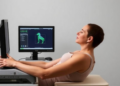
To help clinicians decide whether and how much medication should be administered, Navarro and his team monitored the vital signs of 54 women who received preventative treatment, and 51 who did not. The women were waiting for an elective Caesarean section to be performed on them at a university hospital in Spain. An electrocardiogram sensor and a pulse photo plethysmograph sensor attached to a finger were used to record heart and pulse rate changes while the women were sitting or lying down.
Most women who did not receive preventative treatment developed hypotension. The research group therefore advises clinicians to focus on identifying patients whose blood pressure stays in the normal range, despite a spinal block and subsequent C-section. These patients are part of the outlying group who would not need any preventative medication.
Navarro's team recommend taking the levels of regularity and unpredictability in a woman's pulse rate variability into account when she moves from lying on her back to lying on her left side. In addition, measuring patient's pulse transit time while she was in different positions, as well as respiration rates, and specific personal details such as a woman's body mass index (BMI) provide clues as to whether the patient will develop hypotension.
"The combination of demographic data and features derived from electrocardiogram and pulse photo plethysmograph signals can lead to better classification results," says Navarro.
###
Reference: Bolea, J. et al (2017). Pulse rate and transit time analysis to predict hypotension events after spinal anesthesia during programmed Caesarean labor, Annals of Biomedical Engineering DOI: 10.1007/s10439-017-1864-y
Media Contact
Stella Mueller
[email protected]
49-622-148-78130
@SpringerNature
http://www.springer.com
http://www.springer.com/gp/about-springer/media/research-news/all-english-research-news/pulse-rate-monitoring-before-a-c-section-can-improve-maternal-health/13294076
Related Journal Article
http://dx.doi.org/10.1007/s10439-017-1864-y