A terse but pointed correspondence published in the Journal of Perinatology has reignited one of neonatology’s most practical debates: how best to identify which newborns are breaking down red blood cells too quickly and therefore face a heightened risk of dangerous jaundice. In the letter, David L. Schutzman, a neonatologist based in Philadelphia and Wilmington, takes aim at a recent comparison of two diagnostic approaches to hemolytic hyperbilirubinemia, endorsing one of its central findings while sharply contesting its conclusions about cost and overtreatment. The exchange matters because hemolysis is one of the most important modifiable risk factors for severe neonatal jaundice, and the choice of screening test shapes how hundreds of thousands of infants are evaluated each year.
The underlying biology is straightforward but consequential. Bilirubin is the yellow pigment produced when the heme portion of hemoglobin is catabolized, and every molecule of bilirubin generated corresponds to one molecule of carbon monoxide released as heme oxygenase does its work. In newborns, whose livers are still maturing and whose red cell lifespan is shorter than in older children and adults, any acceleration of red cell destruction can push bilirubin concentrations upward rapidly. When bilirubin crosses the blood-brain barrier in sufficient quantities, it can cause acute bilirubin encephalopathy and permanent kernicterus, a devastating outcome that modern screening and phototherapy are designed to prevent. Identifying hemolysis early therefore gives clinicians a chance to intervene before bilirubin levels reach neurotoxic territory.
The study at the center of the dispute, conducted by Burch and colleagues, compared the direct antiglobulin test, commonly known as the DAT or Coombs test, against end-tidal carbon monoxide corrected for ambient carbon monoxide, abbreviated ETCOc, across three threshold levels. The DAT has long been the traditional tool for flagging immune-mediated hemolysis, particularly in infants whose mothers have antibodies that cross the placenta and coat the fetal red cells. It detects antibody bound to the infant’s red blood cells, which is an indirect and imperfect proxy for whether red cells are actually being destroyed at an accelerated rate. Many infants with clinically significant hemolysis test negative, and many DAT-positive infants never develop problematic bilirubin elevations.
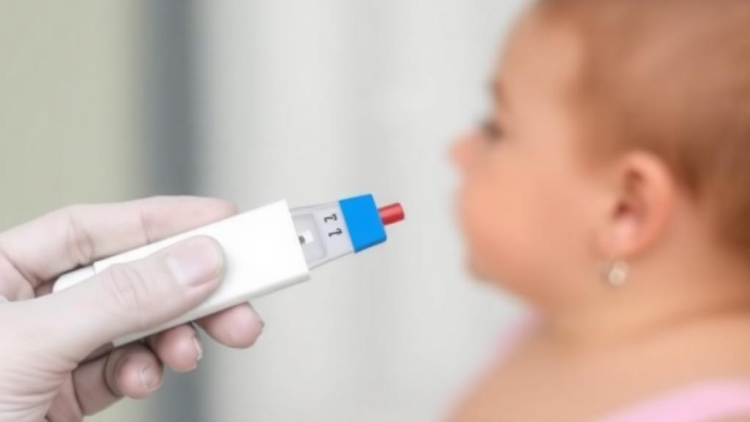
The performance numbers cited in the correspondence are striking. Schutzman endorses the Burch group’s finding that the DAT had a sensitivity of only 13 percent for identifying hemolysis as a neurotoxicity risk factor, meaning the vast majority of hemolyzing infants went undetected by the blood test. ETCOc, by contrast, achieved a sensitivity of 88 percent at a correction threshold of 2.1 parts per million. The logic of the breath test follows directly from heme catabolism: because carbon monoxide is exhaled in proportion to bilirubin production, measuring it in the terminal portion of the infant’s exhaled breath, after subtracting background carbon monoxide in the ambient air, provides a direct physiological readout of the rate of red cell destruction. The approach has been refined over decades, and nomograms establishing reference ranges for term and late-preterm infants, including work in Chinese newborn populations, have helped define what constitutes abnormal heme catabolism in the first days of life.
Where Schutzman parts company with the original study is in its conclusion that ETCOc screening would lead to overdiagnosis, overtreatment, and higher costs. He argues that this conclusion rests on prevalence-dependent quantities, specifically the rates of indicated testing and phototherapy observed in the study cohort, and that those rates cannot be generalized to routine screening. Although all nursery admissions were nominally eligible for the Burch study, the authors themselves acknowledged that their cohort was enriched with DAT-positive and hyperbilirubinemic infants. In other words, the sample was not representative of an ordinary well-baby nursery population, and any cost or treatment projections drawn from it inherit that bias.
The magnitude of the bias, as Schutzman lays it out, is considerable. The Burch cohort showed a phototherapy rate of 9 percent, which he notes is more than fourfold the 2.1 percent rate reported in the same eight-hospital network when an unselected population of 22,455 infants was examined in earlier work by Sarathy and colleagues. That earlier study, published in Pediatrics, examined bilirubin measurement and phototherapy use after the American Academy of Pediatrics issued its 2022 newborn hyperbilirubinemia guideline, providing a large benchmark for what phototherapy utilization actually looks like across a broad, unselected nursery population. A selective sample, Schutzman contends, simply cannot support conclusions about what would happen if ETCOc were adopted for routine or universal screening.
To make the counterpoint concrete, the correspondence points to the only study to date that evaluated a large, continuous cohort of all admissions to a well-baby nursery. That investigation, by Wells and colleagues and published in the Journal of Perinatology in 2025, examined end-tidal carbon monoxide monitoring for significant hemolysis in the routine management of newborn hyperbilirubinemia. Its findings ran in the opposite direction from the overdiagnosis concern: when ETCOc was used across an unselected population, it was associated with reductions in serum bilirubin sampling, in phototherapy use, and in readmissions. The mechanistic explanation is plausible. If a breath test reliably identifies which infants are truly hemolyzing, clinicians can reserve blood draws and treatment for those who need them, while confidently observing infants whose bilirubin production is normal, rather than reflexively testing and treating based on an insensitive proxy.
The correspondence also situates the debate within a broader effort to establish a definitive reference standard for neonatal hemolysis. A 2023 review by Christensen, Stevenson, Bhutani, and coauthors asked whether any test could serve as a gold standard for diagnosing and quantifying hemolysis in neonates and infants, highlighting the inherent difficulty of the problem. Hemolysis is a dynamic process, its rate changing hour by hour in the first days of life, and no single static measurement captures it perfectly. Earlier collaborative work by Bhutani, Maisels, Schutzman, and colleagues published in Acta Paediatrica in 2018 addressed the identification of risk for neonatal hemolysis directly, helping to frame ETCOc as a physiologically grounded candidate for that role. The current exchange is thus not an isolated squabble over a single study but part of a decade-long effort to replace indirect markers with a direct measure of heme catabolism.
What hangs on this methodological dispute is far from academic. Severe neonatal hyperbilirubinemia remains one of the most common reasons for newborn readmission, and kernicterus, while rare in well-resourced settings, is entirely preventable when at-risk infants are recognized in time. A screening strategy that misses nearly nine out of ten hemolyzing infants, as a 13 percent sensitivity implies, leaves a substantial reservoir of risk undetected, particularly among infants whose hemolysis is not immune-mediated and would never be flagged by a DAT. Conversely, an approach that indiscriminately expands testing and treatment burdens families and health systems. The correspondence argues that the evidence points toward the breath test as the more faithful instrument, and that fears of overtreatment rest on a biased sample rather than on data from the populations in which routine screening would actually be deployed.
For now, the field awaits the kind of large, unselected, prospective studies that both sides agree would settle the question. The correspondence itself declares no funding, and its author discloses only an unpaid advisory role with a company in the field, Capnia, Inc., alongside affiliations with Jefferson Einstein Philadelphia Hospital, Thomas Jefferson University Hospital, and Nemours Children’s Hospital Delaware. Whether ETCOc moves from research tool to standard nursery practice will depend on whether the reductions in blood sampling, phototherapy, and readmissions seen in the Wells cohort can be replicated at scale. But the core physiological insight at the heart of the debate, that every bilirubin molecule announces itself in a puff of exhaled carbon monoxide, continues to make the breath test a compelling candidate for catching the hemolyzing newborn before jaundice becomes dangerous.
Subject of Research: Comparison of the direct antiglobulin test and end-tidal carbon monoxide measurement for detecting hemolytic hyperbilirubinemia in newborns
Article Title: Hemolytic hyperbilirubinemia
Article References: Schutzman, D. L. (2026). Hemolytic hyperbilirubinemia. Journal of Perinatology. https://doi.org/10.1038/s41372-026-02919-z
Image Credits: AI Generated
DOI: 10.1038/s41372-026-02919-z
Keywords: neonatal jaundice, hyperbilirubinemia, hemolysis, end-tidal carbon monoxide, direct antiglobulin test, phototherapy, newborn screening, bilirubin, kernicterus, neonatology, Journal of Perinatology, diagnostic sensitivity
Cite Scienmag News
APA MLA Chicago
Harold Sullivan. (October 1, 2026). Carbon Monoxide Breath Test Outperforms Blood Test in Detecting Newborn Hemolysis, Commentary Argues. Scienmag. https://scienmag.com/carbon-monoxide-breath-test-outperforms-blood-test-in-detecting-newborn-hemolysis-commentary-argues/
Harold Sullivan. “Carbon Monoxide Breath Test Outperforms Blood Test in Detecting Newborn Hemolysis, Commentary Argues.” Scienmag, 1 October 2026, https://scienmag.com/carbon-monoxide-breath-test-outperforms-blood-test-in-detecting-newborn-hemolysis-commentary-argues/. Accessed 1 October 2026.
Harold Sullivan. “Carbon Monoxide Breath Test Outperforms Blood Test in Detecting Newborn Hemolysis, Commentary Argues.” Scienmag. October 1, 2026. https://scienmag.com/carbon-monoxide-breath-test-outperforms-blood-test-in-detecting-newborn-hemolysis-commentary-argues/
Copy citation Download RIS
Tags: Bilirubinbilirubin metabolism in newbornsblood test vs breath analysis in neonatologycarbon monoxide breath test for infantsdiagnosis of hemolytic hyperbilirubinemiadiagnostic sensitivitydirect antiglobulin testend-tidal carbon monoxidehemolysishemolysis and bilirubin productionhyperbilirubinemiaJournal of PerinatologykernicterusNeonatal hemolysis detectionneonatal jaundiceneonatal jaundice managementneonatal risk factors for jaundiceneonatologynewborn bilirubin level assessmentnewborn jaundice screeningnewborn screeningnon-invasive infant screening methodsphototherapyred blood cell breakdown in newborns