

• HOME
  • NEWS
  • EXPLORE
    • CAREER
      • Companies
      • Jobs
    • EVENTS
    • iGEM
      • News
      • Team
    • PHOTOS
    • VIDEO
    • WIKI
  • BLOG
  • COMMUNITY
    • FACEBOOK
    • INSTAGRAM
    • TWITTER
Friday, January 23, 2026
BIOENGINEER.ORG
No Result
View All Result
  • Login
  • HOME
  • NEWS
  • EXPLORE
    • CAREER
      • Companies
      • Jobs
        • Lecturer
        • PhD Studentship
        • Postdoc
        • Research Assistant
    • EVENTS
    • iGEM
      • News
      • Team
    • PHOTOS
    • VIDEO
    • WIKI
  • BLOG
  • COMMUNITY
    • FACEBOOK
    • INSTAGRAM
    • TWITTER
  • HOME
  • NEWS
  • EXPLORE
    • CAREER
      • Companies
      • Jobs
        • Lecturer
        • PhD Studentship
        • Postdoc
        • Research Assistant
    • EVENTS
    • iGEM
      • News
      • Team
    • PHOTOS
    • VIDEO
    • WIKI
  • BLOG
  • COMMUNITY
    • FACEBOOK
    • INSTAGRAM
    • TWITTER
No Result
View All Result
Bioengineer.org
No Result
View All Result
Home NEWS Science News Stem Cells

Proper Stem Cell Function Requires Hydrogen Sulfide

Bioengineer by Bioengineer
April 21, 2014
in Stem Cells
Reading Time: 1 min read
0
Share on FacebookShare on TwitterShare on LinkedinShare on RedditShare on Telegram

Stem cells in bone marrow need to produce hydrogen sulfide in order to properly multiply and form bone tissue, according to a new study from the Center for Craniofacial Molecular Biology at the Ostrow School of Dentistry.
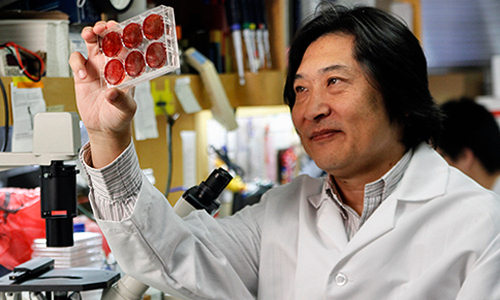
Professor Songtao Shi

Professor Songtao Shi, principal investigator on the project. Photo Credit: University of Southern California

Professor Songtao Shi, principal investigator on the project, said the presence of hydrogen sulfide produced by the cells governs the flow of calcium ions. The essential ions activate a chain of cellular signals that results in osteogenesis, or the creation of new bone tissue, and keeps the breakdown of old bone tissue at a proper level.

Conversely, having a hydrogen sulfide deficiency disrupted bone homeostasis and resulted in a condition similar to osteoporosis—weakened, brittle bones—in experimental mice. In humans, osteoporosis can cause serious problems such as bone fractures, mobility limitations and spinal problems; more than 52 million Americans have or are at risk for the disease.

However, Shi and his team demonstrated that the mice’s condition could be rescued by administering small molecules that release hydrogen sulfide inside the body. The results indicate that a similar treatment may have potential to help human patients, Shi said.

“These results demonstrate hydrogen sulfide regulates bone marrow mesenchymal stem cells, and restoring hydrogen sulfide levels via non-toxic donors may provide treatments for diseases such as osteoporosis, which can arise from hydrogen sulfide deficiencies,” Shi said.

Story Source:
The above story is based on materials provided by University of Southern California, Beth Newcomb.
Share14Tweet9Share2ShareShareShare2

Related Posts

Human stem cells treat spinal cord injury side effects in mice

October 4, 2016

Research into fly development provides insights into blood vessel formation

September 30, 2016

Fertility genes required for sperm stem cells

September 28, 2016

Regulatory RNA essential to DNA damage response

September 27, 2016
Please login to join discussion

POPULAR NEWS

  • Enhancing Spiritual Care Education in Nursing Programs

    156 shares
    Share 62 Tweet 39
  • PTSD, Depression, Anxiety in Childhood Cancer Survivors, Parents

    148 shares
    Share 59 Tweet 37
  • Robotic Ureteral Reconstruction: A Novel Approach

    80 shares
    Share 32 Tweet 20
  • Digital Privacy: Health Data Control in Incarceration

    62 shares
    Share 25 Tweet 16
>

About

We bring you the latest biotechnology news from best research centers and universities around the world. Check our website.

Follow us

Recent News

Exploring WD40 Proteins in Populus yunnanensis Under Salt Stress

Factors Influencing Climate-Smart Farming in Nigeria

New Insights on Carbonyl-Infused Bis-Pyrazoles: Synthesis and Significance

Subscribe to Blog via Email

Enter your email address to subscribe to this blog and receive notifications of new posts by email.

Join 71 other subscribers
  • Contact Us

Bioengineer.org © Copyright 2023 All Rights Reserved.

Welcome Back!

Login to your account below

Forgotten Password?

Retrieve your password

Please enter your username or email address to reset your password.

Log In
No Result
View All Result
  • Homepages
    • Home Page 1
    • Home Page 2
  • News
  • National
  • Business
  • Health
  • Lifestyle
  • Science

Bioengineer.org © Copyright 2023 All Rights Reserved.
