

• HOME
  • NEWS
  • EXPLORE
    • CAREER
      • Companies
      • Jobs
    • EVENTS
    • iGEM
      • News
      • Team
    • PHOTOS
    • VIDEO
    • WIKI
  • BLOG
  • COMMUNITY
    • FACEBOOK
    • INSTAGRAM
    • TWITTER
Wednesday, April 1, 2026
BIOENGINEER.ORG
No Result
View All Result
  • Login
  • HOME
  • NEWS
  • EXPLORE
    • CAREER
      • Companies
      • Jobs
        • Lecturer
        • PhD Studentship
        • Postdoc
        • Research Assistant
    • EVENTS
    • iGEM
      • News
      • Team
    • PHOTOS
    • VIDEO
    • WIKI
  • BLOG
  • COMMUNITY
    • FACEBOOK
    • INSTAGRAM
    • TWITTER
  • HOME
  • NEWS
  • EXPLORE
    • CAREER
      • Companies
      • Jobs
        • Lecturer
        • PhD Studentship
        • Postdoc
        • Research Assistant
    • EVENTS
    • iGEM
      • News
      • Team
    • PHOTOS
    • VIDEO
    • WIKI
  • BLOG
  • COMMUNITY
    • FACEBOOK
    • INSTAGRAM
    • TWITTER
No Result
View All Result
Bioengineer.org
No Result
View All Result
Home NEWS Science News

UMMS researcher, colleagues develop tumor-targeting MRI contrast based on human protein

Bioengineer by Bioengineer
July 7, 2017
in Science News
Reading Time: 2 mins read
0
Share on FacebookShare on TwitterShare on LinkedinShare on RedditShare on Telegram
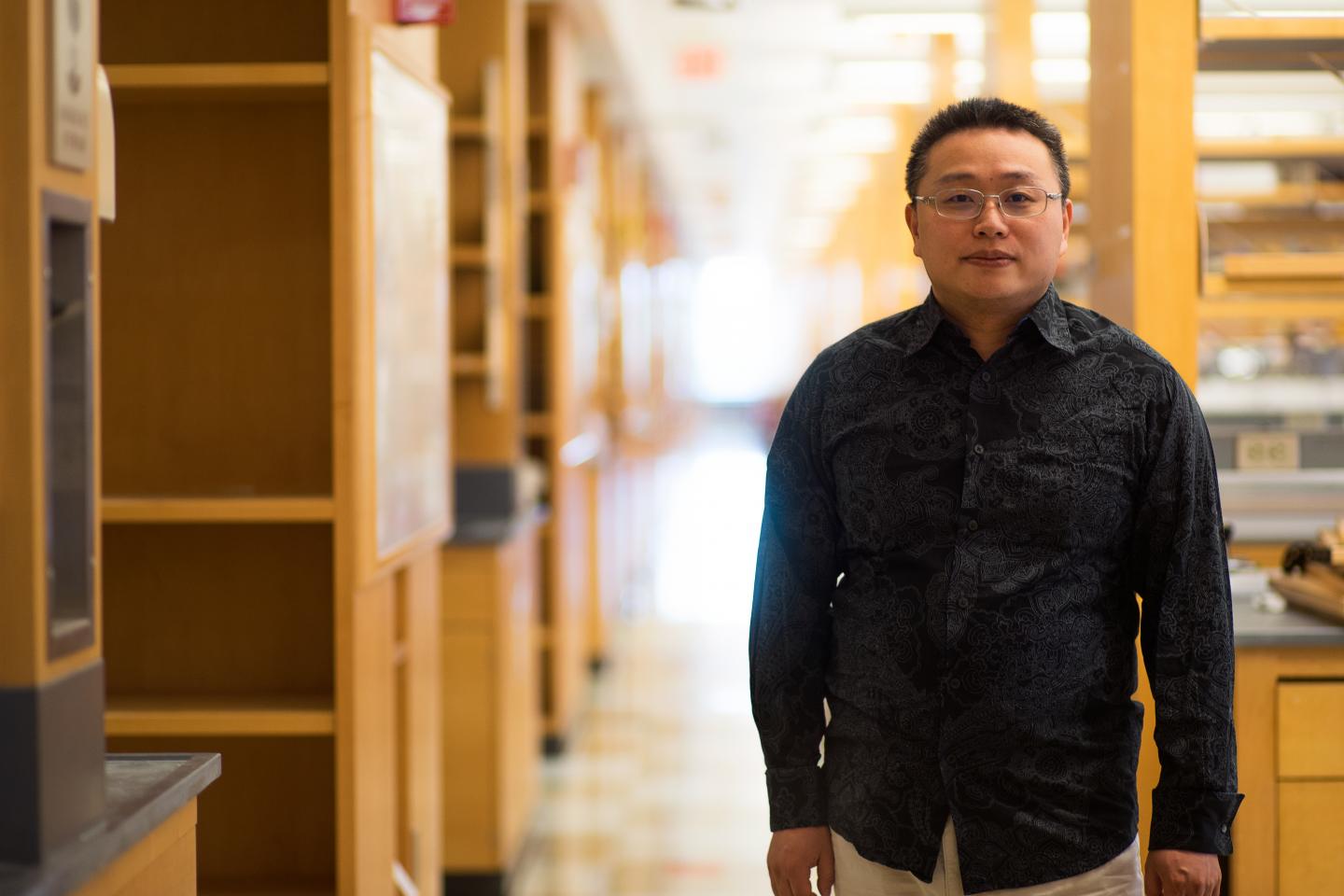
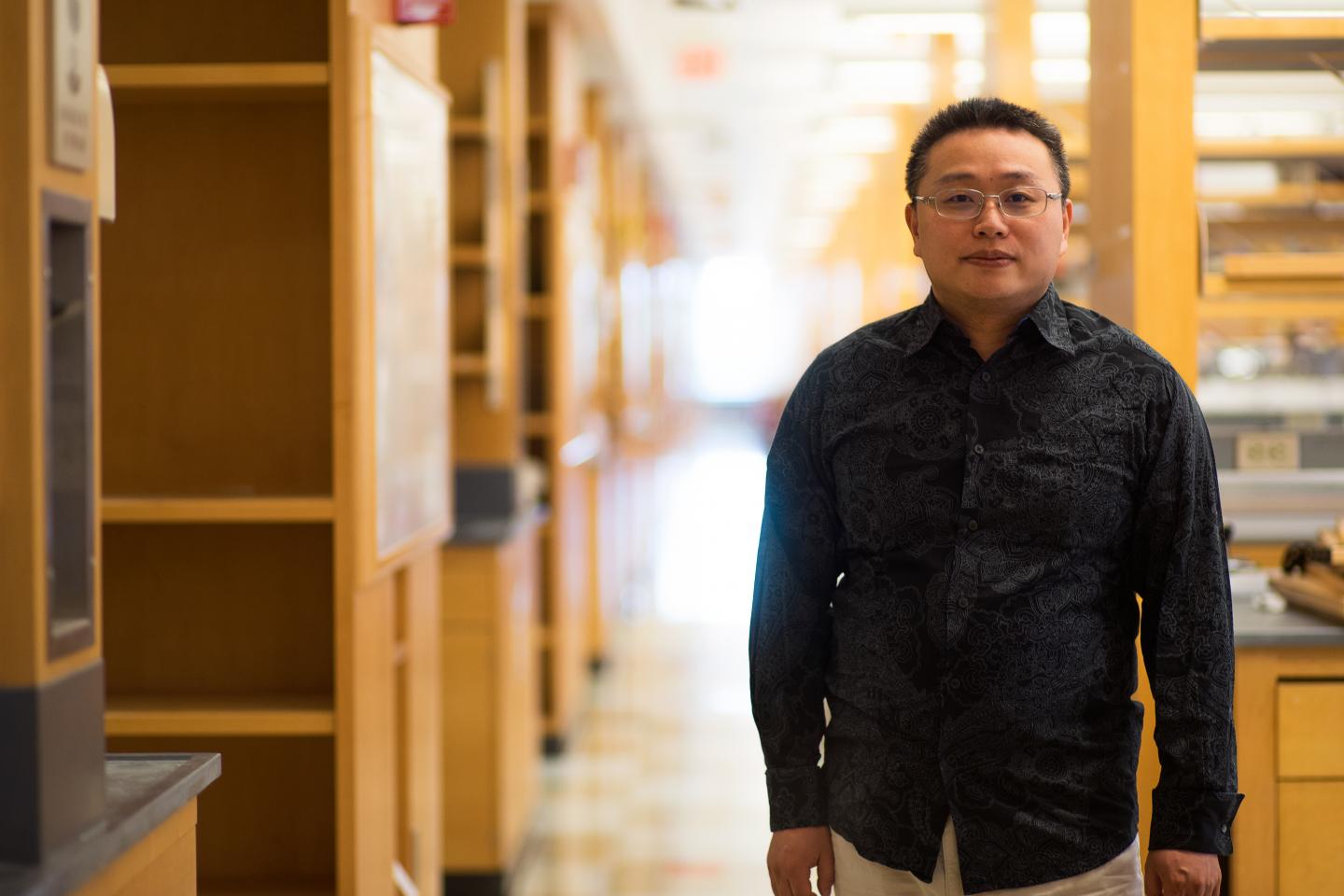
IMAGE

Credit: UMass Medical School

A team led by Gang Han, PhD, has designed a human protein-based, tumor-targeting Magnetic Resonance Imaging (MRI) contrast that can be easily cleared by the body. The discovery holds promise for clinical application, including early stage tumor detection because of the enhanced MRI contrast, according to Dr. Han, associate professor of biochemistry & molecular pharmacology at University of Massachusetts Medical School.

MRI is one of the most widely used, noninvasive and versatile imaging tools for clinical detection, staging and monitoring of malignancy, without the need for ionizing radiation or harmful radionuclides.

The most frequently employed contrast agents used in MRI are gadolinium (Gd)-based, since they do not provoke an immune response in cells. However, such compounds require high doses of intravenous administration and are retained in the body's organs.

In the search for alternative, Han and colleagues focused on proteins, which are naturally occurring nanomaterials. For example, the protein-bound nanoparticle Abraxane can be used to treat metastatic breast cancer. In the same way, protein scaffolds that encapsulate metal-based nanoparticulate contrast agents also appear to enhance the effectiveness of contrast agents.

In a paper published June 26 in Nano Letters, ACS Publications, Han and colleagues outlined how human transferrin (Tf) proteins can be used to create an MRI contrast nanoprobe by mimicking the natural process to form special nanoparticles called gadolinium biomineralized human transferrin protein-based nanoparticles or Gd@TfNP.

"The Gd@TfNPs preserve the functions of Tf very well, possess superior chemical and physical properties, and are brighter compared to the Gd-based agents currently in use," Han said, adding that the nanoparticles could also be used as tumor-targeting and systematically clearable contrast agents for MR detection of early-stage tumors.

"Such probes can immediately leave the tumor sites after delivery and we could track the overall process by MRI. Such a technique might be useful not only for visualizing tumor therapies, but for optimizing drug dose and evaluating clinical results," said Yang Zhao, MD, PhD, of the Second Hospital of Tianjin Medical University and the paper's first author.

###

Media Contact

Jim Fessenden
[email protected]
508-856-2688
@UMassMedical

http://www.umassmed.edu

Original Source

http://www.umassmed.edu/news/news-archives/2017/06/gang-han-colleagues-develop-tumor-targeting-mri-contrast-based-on-human-protein/ http://dx.doi.org/10.1021/acs.nanolett.7b00828


Share12Tweet8Share2ShareShareShare2

Related Posts

Unveiling the Biological Pathways Linking Pesticides to Cancer Risk: New Study Sheds Light on Environmental Health Impacts

April 1, 2026

Inequities in Family Engagement Within the NICU

April 1, 2026

FGFR2b Links to Biomarkers, Tumor Diversity, Survival

April 1, 2026

Frailty, Malnutrition Link Falls to Daily Functioning

April 1, 2026
Please login to join discussion

POPULAR NEWS

  • blank

    Revolutionary AI Model Enhances Precision in Detecting Food Contamination

    96 shares
    Share 38 Tweet 24
  • Imagine a Social Media Feed That Challenges Your Views Instead of Reinforcing Them

    1006 shares
    Share 398 Tweet 249
  • Promising Outcomes from First Clinical Trials of Gene Regulation in Epilepsy

    51 shares
    Share 20 Tweet 13
  • Popular Anti-Aging Compound Linked to Damage in Corpus Callosum, Study Finds

    43 shares
    Share 17 Tweet 11

About

We bring you the latest biotechnology news from best research centers and universities around the world. Check our website.

Follow us

Recent News

Unveiling the Biological Pathways Linking Pesticides to Cancer Risk: New Study Sheds Light on Environmental Health Impacts

Inequities in Family Engagement Within the NICU

FGFR2b Links to Biomarkers, Tumor Diversity, Survival

Subscribe to Blog via Email

Success! An email was just sent to confirm your subscription. Please find the email now and click 'Confirm' to start subscribing.

Join 78 other subscribers
  • Contact Us

Bioengineer.org © Copyright 2023 All Rights Reserved.

Welcome Back!

Login to your account below

Forgotten Password?

Retrieve your password

Please enter your username or email address to reset your password.

Log In
No Result
View All Result
  • Homepages
    • Home Page 1
    • Home Page 2
  • News
  • National
  • Business
  • Health
  • Lifestyle
  • Science

Bioengineer.org © Copyright 2023 All Rights Reserved.
