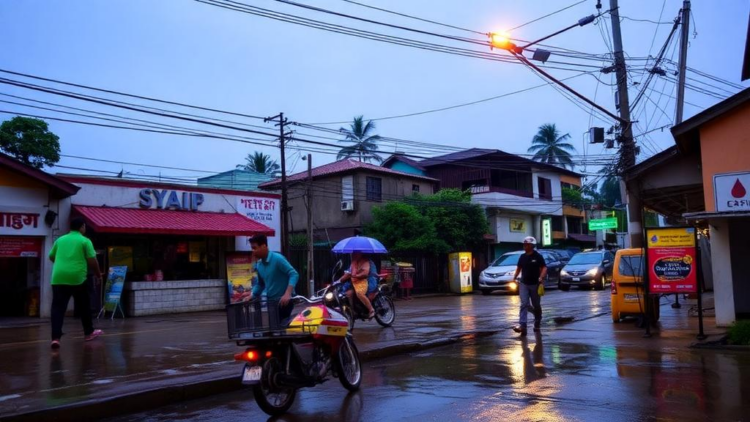
Acute respiratory infections remain one of the most consequential yet under-characterized public health burdens in tropical Southeast Asia, where dense urban populations, year-round viral circulation, and limited diagnostic infrastructure combine to obscure the true epidemiology of common respiratory pathogens. A new molecular surveillance study conducted in Yangon, Myanmar, during the 2024 rainy season offers one of the most detailed snapshots to date of which respiratory viruses were circulating among outpatients in the country’s largest city, how their activity was distributed across the monsoon months, and how the viruses themselves were evolving at the genetic level. The findings, published in Virology Journal, underscore both the diversity of pathogens responsible for febrile respiratory illness in the region and the value of sustained, laboratory-based monitoring in settings where such data have historically been sparse.
The research team, led by investigators from the Infectious Diseases Research Center of Niigata University in Myanmar in collaboration with Myanmar’s National Health Laboratory and Thingangyun General Hospital, enrolled 646 outpatients presenting with acute respiratory infections at two Yangon hospitals between June and November 2024, a period spanning the country’s rainy season. The enrolled patients had a median age of just 3.7 years, reflecting the heavy toll that respiratory illness takes on young children in the region. Nasopharyngeal swabs collected from each participant were first screened using rapid diagnostic tests targeting three of the most clinically significant respiratory viruses: influenza, respiratory syncytial virus (RSV), and SARS-CoV-2. This two-tiered diagnostic strategy allowed the investigators to combine the speed and accessibility of point-of-care testing with the sensitivity and breadth of modern molecular platforms.
Of the 646 samples collected, at least one respiratory pathogen was detected in 548 cases, an overall detection rate of 84.8 percent. This strikingly high proportion confirms that during the rainy season, acute respiratory infections in Yangon are overwhelmingly viral in origin, with only a minority of cases attributable to non-viral causes or to pathogens outside the panel tested. The rapid diagnostic tests returned positive results for 331 specimens, and these were subsequently confirmed by real-time reverse transcription polymerase chain reaction (RT-PCR), the reference standard for respiratory virus detection. Among the RDT-positive specimens, influenza A(H3N2) dominated, accounting for 40.5 percent of detections, followed by RSV subtype A at 21.5 percent and influenza B/Victoria lineage at 20.2 percent. A single case of influenza A(H1N1)pdm09, the pandemic lineage that has circulated seasonally since 2009, was identified, representing just 0.3 percent of RDT-positive detections.
The 315 specimens that tested negative by rapid diagnostic tests were subjected to a far broader molecular interrogation using the BioFire FilmArray Respiratory 2.1 Panel, a multiplex PCR platform capable of detecting more than twenty respiratory pathogens simultaneously, including common coronaviruses, parainfluenza viruses, adenovirus, human rhinovirus and enterovirus, and human metapneumovirus (hMPV). Within this RDT-negative group, human rhinovirus/enterovirus emerged as the most prevalent pathogen, detected in 42.5 percent of specimens, while human metapneumovirus ranked second at 15.2 percent. These results highlight a critical limitation of narrow-panel screening: without multiplex molecular testing, a substantial fraction of the viral etiology of acute respiratory infections would have gone entirely unrecognized, particularly the contributions of rhinoviruses, enteroviruses, and hMPV, which are not covered by most rapid point-of-care assays.
Co-infections, in which more than one respiratory pathogen was detected in the same patient, were identified in 35 of the 229 BioFire-positive specimens, representing 15.3 percent of that subgroup. The frequency of co-detection raises important questions about viral interference, disease severity, and diagnostic interpretation, since the presence of multiple viruses in a single nasopharyngeal swab may reflect genuine simultaneous infection, sequential infection, or prolonged shedding from a prior illness. In pediatric populations such as the one studied in Yangon, where the median patient was under four years old, co-infections are a well-recognized feature of respiratory disease, and their documentation contributes to a more complete understanding of the viral ecology of the rainy season.
The temporal patterns observed across the six-month surveillance window were among the study’s most operationally significant findings. Influenza activity peaked in July and August, early in the rainy season, while RSV transmission followed a distinct trajectory, reaching its maximum in September. This staggered seasonality, with influenza and RSV peaking in separate months rather than coinciding, has direct implications for clinical preparedness, diagnostic capacity planning, and the timing of preventive interventions. For a tropical setting where respiratory virus seasonality does not follow the temperate winter pattern familiar in higher latitudes, defining these local peaks is essential for guiding when hospitals should anticipate surges in pediatric respiratory admissions and when vaccination campaigns, particularly against seasonal influenza, would deliver the greatest benefit.
Beyond pathogen detection, the study pursued viral genetic characterization to place the Yangon isolates within the global evolutionary context of circulating respiratory viruses. Influenza A(H3N2), A(H1N1)pdm09, and B/Victoria viruses with cycle threshold values below 32, indicating sufficiently high viral loads, underwent next-generation sequencing targeting the hemagglutinin gene, the principal surface antigen against which vaccine-induced and natural immunity are directed. Phylogenetic analysis revealed that the A(H3N2) sequences clustered within clades J.2, J.2.1, and J.2.2, the recently emerged subgroups that have dominated A(H3N2) circulation in many parts of the world. The B/Victoria sequences fell within subclade V1A.3a.2, primarily within the C.5.7 subgroup, while the single A(H1N1)pdm09 sequence belonged to clade C.1.9. These assignments demonstrate that the influenza viruses circulating in Yangon were genetically aligned with contemporary global lineages, information that is directly relevant to assessing the match between circulating strains and the composition of seasonal vaccines.
Perhaps the most notable genetic finding concerned human metapneumovirus, a paramyxovirus that has gained increasing attention as a significant cause of respiratory illness in young children and the elderly. Partial sequencing of the fusion (F) gene, the target of most hMPV genotyping efforts and the gene encoding a major surface glycoprotein, revealed a striking genotype shift between consecutive years: while specimens from 2023 showed a mixture of genotypes A2 and B1, the 2024 samples were predominantly genotype B2. Such inter-annual genotype turnover is a recognized feature of hMPV epidemiology, thought to reflect population-level immune pressure driving the successive dominance of antigenically distinct lineages. Documenting this shift in Myanmar provides valuable data for a region where hMPV genotype dynamics have been poorly characterized, and it illustrates how quickly the genetic composition of even lesser-studied respiratory viruses can change from one season to the next.
The broader significance of the study lies in what it reveals about the state of respiratory virus surveillance in Myanmar and comparable settings. Comprehensive molecular surveillance data from the country have long been limited, leaving public health authorities with an incomplete picture of pathogen distribution, seasonality, and viral evolution. By combining accessible rapid diagnostics with confirmatory RT-PCR, multiplex panel testing, and next-generation sequencing, the surveillance program established a layered diagnostic architecture that could serve as a model for other resource-constrained settings. The work was conducted under the framework of the Japan Initiative for Global Research Network on Infectious Diseases, funded by the Japan Agency for Medical Research and Development, reflecting the growing recognition that infectious disease threats in any region demand internationally collaborative, locally embedded laboratory capacity.
The study’s conclusions carry clear forward-looking implications. Multiple respiratory viruses co-circulated throughout the 2024 rainy season in Yangon, each following its own seasonal rhythm, and the genetic lineages detected were actively evolving in step with global trends. The authors emphasize that this ongoing viral genetic evolution, from the J.2 clade dominance in influenza A(H3N2) to the hMPV genotype shift toward B2, makes sustained molecular surveillance not merely desirable but necessary. Continuous monitoring of which viruses are circulating, when they peak, and how their genomes are changing provides the evidentiary foundation for vaccine strain selection, clinical guideline updates, and pandemic preparedness. For Myanmar, a country whose surveillance systems have faced substantial challenges, the demonstration that such integrated molecular monitoring is feasible during a single rainy season represents a meaningful step toward closing a long-standing gap in the global map of respiratory virus epidemiology.
Subject of Research: Molecular surveillance of respiratory viruses among outpatients with acute respiratory infections in Yangon, Myanmar
Article Title: Molecular surveillance of respiratory viruses among outpatients with acute respiratory infections in Yangon, Myanmar, during the 2024 rainy season
Article References: Win, S. M. K., Saito, R., Tamura, T., Ichikawa, Y., Matsuno, N., Kyaw, Y., Setk, S., Aye, M. M., Tin, H. H., Lwin, K. W., Linn, A. P., Oo, K. K., Mon, K. L., Sun, Y., Li, J., & Watanabe, H. (2026). Molecular surveillance of respiratory viruses among outpatients with acute respiratory infections in Yangon, Myanmar, during the 2024 rainy season. Virology Journal. https://doi.org/10.1186/s12985-026-03304-0
Image Credits: AI Generated
DOI: 10.1186/s12985-026-03304-0
Keywords: acute respiratory infections, molecular surveillance, influenza A(H3N2), respiratory syncytial virus, human metapneumovirus, rhinovirus, Myanmar, Yangon, rainy season, phylogenetics, next-generation sequencing, pediatric respiratory illness
Cite Scienmag News
APA MLA Chicago
Kristina Jarvis. (October 1, 2026). Rainy-Season Surveillance in Yangon Reveals Shifting Respiratory Virus Landscape. Scienmag. https://scienmag.com/rainy-season-surveillance-in-yangon-reveals-shifting-respiratory-virus-landscape/
Kristina Jarvis. “Rainy-Season Surveillance in Yangon Reveals Shifting Respiratory Virus Landscape.” Scienmag, 1 October 2026, https://scienmag.com/rainy-season-surveillance-in-yangon-reveals-shifting-respiratory-virus-landscape/. Accessed 1 October 2026.
Kristina Jarvis. “Rainy-Season Surveillance in Yangon Reveals Shifting Respiratory Virus Landscape.” Scienmag. October 1, 2026. https://scienmag.com/rainy-season-surveillance-in-yangon-reveals-shifting-respiratory-virus-landscape/
Copy citation Download RIS
Tags: acute respiratory infectionsfebrile respiratory illness in childrengenetic evolution of respiratory viruseshuman metapneumovirusimpact of rainy season on virus circulationinfluenza A(H3N2)laboratory-based respiratory virus monitoringmolecular epidemiology of respiratory pathogensmolecular surveillanceMyanmarnext-generation sequencingpediatric respiratory illnessphylogeneticspublic health implications of respiratory virus dynamicsrainy seasonrainy season respiratory infections in Myanmarrespiratory infection epidemiology in tropical regionsrespiratory syncytial virusrespiratory virus surveillance in Yangonrhinovirusurban respiratory disease burden in Southeast Asiaviral diversity during monsoon seasonviral pathogen distribution in YangonYangon