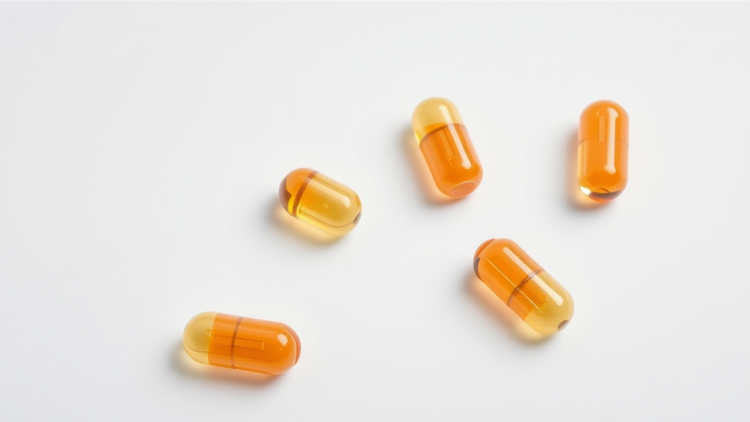
Non-fat yogurt has a problem. Strip away the milk fat and you strip away much of what makes yogurt taste good, hold together, and carry fat-loving nutrients such as vitamin E. A research team led by Amr M. Bakry of New Valley University in Egypt, together with colleagues at Henan University in China and King Faisal University in Saudi Arabia, believes the answer lies in microscopic oil capsules built from two humble food ingredients: modified starch and a protein hydrolysate derived from wheat gluten. Their study, published in Food Science and Biotechnology, shows that these wheat germ oil microparticles can restore the texture, stability, and nutritional value of non-fat goat yogurt, while also delivering a surprising bonus in the form of enhanced umami taste.
The challenge the researchers set out to solve is familiar to anyone who follows the low-fat food trend. Health concerns about saturated fat intake have pushed consumers toward low- and non-fat dairy products, but removing milk fat from goat yogurt does more than cut calories. Fat contributes to the smooth mouthfeel, the firmness of the gel, and the water-holding behavior of the fermented milk matrix. It also carries bioactive compounds, including fat-soluble vitamins, that simply vanish when the fat is removed. The result is often a watery, grainy, nutritionally diminished product that few consumers want to eat twice.
Bakry and his colleagues turned to wheat germ oil, a byproduct of wheat milling that is rich in α-tocopherol, the most biologically active form of vitamin E, along with beneficial fatty acids. The oil itself is fragile: it oxidizes quickly, developing rancid flavors and losing nutritional value during storage. To protect it, the team encapsulated the oil inside microparticles whose walls were built from two complementary materials. The first was octenyl succinic anhydride-modified starch, or OSAS, a starch that has been chemically modified with hydrophobic octenyl groups, allowing it to anchor at oil-water interfaces and act as an emulsifier. The second was wheat gluten protein hydrolysate, or WGPH, produced by breaking wheat gluten proteins into smaller peptides.
The pairing is chemically elegant. OSAS provides interfacial stability, forming a protective barrier around each oil droplet that resists coalescence and shields the oil from oxygen. The protein hydrolysate adds its own advantages: peptides from hydrolyzed proteins often carry antioxidant activity of their own, scavenging the free radicals that drive lipid oxidation. In addition, protein hydrolysates can interact with the yogurt’s casein network during fermentation, reinforcing the gel structure from within. By varying the ratio of OSAS to WGPH in the wall material, the researchers could tune how the microparticles behaved both in the yogurt matrix and during digestion.
When the fortified microparticles were blended into non-fat goat yogurt, the effects on the physical structure were striking. Microstructural analysis using laser scanning confocal microscopy and scanning electron microscopy revealed that the control yogurt, made without any fortification, had a porous and relatively loose protein network, a typical defect of fat-free fermented gels. The fortified samples, particularly those containing higher levels of the wheat gluten protein hydrolysate, showed a denser and more compact structure. The microparticles appeared to act as active fillers within the casein gel, bridging gaps in the network and mimicking some of the structural roles that fat globules normally play.
The functional measurements backed up what the microscopes showed. Increasing the WGPH content in the microparticles significantly enhanced the yogurt’s water-holding capacity, meaning the gel retained its moisture instead of weeping whey into the container. Texture improved as well, with firmer, more cohesive gels. Oxidative stability rose in parallel, a direct benefit for the delicate wheat germ oil locked inside the capsules. Perhaps most notably, the antioxidant activity of the fortified yogurt climbed as WGPH levels increased, reaching 76.33 percent in the best formulation, a measurement of the product’s ability to neutralize free radicals in laboratory assays such as the DPPH test.
The team then asked what would happen when the yogurt met the digestive tract, using a simulated in vitro digestion model. Here the interfacial design of the microparticles proved decisive. Because the OSAS and WGPH layers stabilized the oil-water interface so effectively, lipid digestion proceeded in a more controlled manner, with the capsules releasing their cargo gradually rather than all at once. Crucially, this controlled release translated into higher bioaccessibility of α-tocopherol, meaning more of the vitamin E became available for potential absorption in the intestine. Encapsulation systems that protect a nutrient too well can paradoxically prevent its release, so achieving both protection during storage and accessibility during digestion represents a genuine balancing act that this formulation appears to manage.
Flavor turned out to be a story of trade-offs. Using an electronic nose and electronic tongue, the researchers found that the wheat gluten protein hydrolysate enhanced umami perception, the savory fifth taste associated with amino acids and small peptides. This is consistent with growing interest in protein hydrolysates as natural sources of umami peptides, and it suggests the microparticles could partially compensate for the flavor losses that accompany fat removal. However, the sensory picture was not uniformly positive. While moderate levels of fortification produced the best overall results, high levels of WGPH negatively affected sensory acceptability, likely reflecting the bitterness that protein hydrolysates can impart. The formulation identified as the best all-around performer, labeled YS10-P10, achieved the optimal combination of water-holding capacity, stability, texture, and sensory quality.
The study also documented subtler changes. The microparticles altered the color of the yogurt depending on the composition of the wall material, a factor that matters for consumer perception in a product category where appearance drives purchasing decisions. These color shifts, along with the texture and flavor effects, illustrate a central principle of modern food colloids: you cannot add particles to a fermented gel without changing the entire system, so the art lies in choosing wall materials whose side effects are beneficial rather than detrimental.
What makes this work notable beyond the yogurt itself is its demonstration that food byproducts can be upgraded into high-value functional ingredients. Wheat germ oil is a milling byproduct; wheat gluten hydrolysate derives from a widely available protein stream. Combining them into a delivery system that simultaneously improves texture, protects a fragile oil, boosts antioxidant capacity, enhances umami, and increases vitamin E bioaccessibility turns two low-cost inputs into a multifunctional fortifier for a growing market segment. The researchers caution that sensory acceptance limits how much hydrolysate can be used, and further work would be needed to confirm the findings in human digestion and consumer panels. But the core message stands: with the right molecular architecture at the oil-water interface, fat-free dairy does not have to mean flavor-free, texture-free, or nutritionally hollow. The capsules are invisible to the eye, but their effects on the yogurt, and potentially on the diner, are anything but.
Subject of Research: Encapsulation of wheat germ oil in starch-protein microparticles to improve non-fat goat yogurt quality and α-tocopherol bioaccessibility
Article Title: Enhancing the technological quality and α-tocopherol bioaccessibility of non-fat goat yogurt fortified with wheat germ oil microparticles stabilized by octenyl succinic anhydride-modified starch and wheat gluten protein hydrolysate
Article References: Bakry, A. M., Huang, J., Al Shik Mubarak, B. I., & Ibrahim, M. E. E.-D. (2026). Enhancing the technological quality and α-tocopherol bioaccessibility of non-fat goat yogurt fortified with wheat germ oil microparticles stabilized by octenyl succinic anhydride-modified starch and wheat gluten protein hydrolysate. Food Science and Biotechnology. https://doi.org/10.1007/s10068-026-02297-4
Image Credits: AI Generated
DOI: 10.1007/s10068-026-02297-4
Keywords: goat yogurt, wheat germ oil, microparticles, modified starch, protein hydrolysate, α-tocopherol, bioaccessibility, microencapsulation, antioxidant activity, non-fat dairy, umami, food science
Cite Scienmag News
APA
MLA
Chicago
Alan Morgan. (September 27, 2026). Tiny Wheat Germ Oil Capsules Rescue Fat-Free Goat Yogurt’s Texture and Vitamin E. Scienmag. https://scienmag.com/tiny-wheat-germ-oil-capsules-rescue-fat-free-goat-yogurts-texture-and-vitamin-e/
Alan Morgan. “Tiny Wheat Germ Oil Capsules Rescue Fat-Free Goat Yogurt’s Texture and Vitamin E.” Scienmag, 27 September 2026, https://scienmag.com/tiny-wheat-germ-oil-capsules-rescue-fat-free-goat-yogurts-texture-and-vitamin-e/. Accessed 27 September 2026.
Alan Morgan. “Tiny Wheat Germ Oil Capsules Rescue Fat-Free Goat Yogurt’s Texture and Vitamin E.” Scienmag. September 27, 2026. https://scienmag.com/tiny-wheat-germ-oil-capsules-rescue-fat-free-goat-yogurts-texture-and-vitamin-e/
Copy citation
Download RIS
Tags: antioxidant activitybioaccessibilitybioactive compound preservation in low-fat foodsenhancing yogurt mouthfeel without fatfat replacement in non-fat goat yogurtfood sciencegoat yogurtinnovative food microencapsulation techniquesmicroencapsulationmicroparticlesmodified starchnon-fat dairynon-fat yogurt texture improvementnutritional fortification of non-fat dairy productsplant-based oil encapsulation for dairyprotein hydrolysatestability of non-fat fermented dairy productsumamiumami flavor enhancement in non-fat yogurtuse of modified starch and wheat gluten in food sciencevitamin E delivery in low-fat dairywheat germ oilwheat germ oil microparticles in dairyα-tocopherol