When the COVID-19 pandemic shut down schools, parties, and entire social lives in early 2020, public health researchers wondered whether one of the world’s most stubborn adolescent behaviors might finally loosen its grip: underage drinking. A sweeping new systematic review and meta-analysis, published in the International Journal of Mental Health and Addiction, now offers the most comprehensive global answer to date. Drawing on 55 studies spanning six world regions, the analysis confirms that alcohol consumption among adolescents generally fell during the early pandemic, but it also reveals a far more complicated and uneven picture than the headline trend suggests, with some regions bucking the decline entirely and later pandemic phases hinting at a quiet rebound.
The research team, led by Sonia Cerrai of Italy’s National Research Council and colleagues, took an unusual two-pronged approach to assembling the evidence. Rather than relying on a single literature search, they combined an umbrella review of 28 previously published syntheses with a traditional systematic search of PubMed/MEDLINE, Scopus, and later Embase. The umbrella phase yielded 214 original articles, and the fresh search added 328 more. After removing duplicates and screening 514 full-text publications against strict eligibility criteria, the team settled on 72 eligible studies, of which 17 were excluded for overlapping data, leaving 55 studies in the systematic review. The protocol was prospectively registered with PROSPERO, and the screening was conducted independently by two reviewers with a third senior reviewer resolving disagreements.
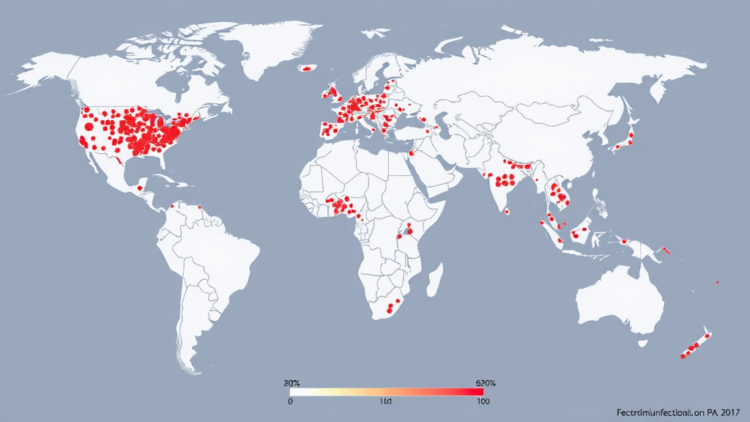
The studies themselves, published between 2020 and 2025, came from a remarkably wide geographic spectrum: 18 from North America, 15 from Europe, 12 from Asia, 4 from South America, 3 from Oceania, and 1 from Africa, with two additional studies covering multiple continents. Most relied on cross-sectional designs, though 21 were longitudinal. Outcomes varied from general alcohol use, reported in 48 studies, to binge drinking in 17, with smaller numbers examining intoxication, drunkenness, or AUDIT-C scores. This diversity reflects both the urgency of pandemic-era research and the fragmented way in which different countries measured and reported adolescent drinking.
For the quantitative synthesis, the researchers made a deliberate and technically important choice: they excluded cohort studies from the meta-analyses, retaining only cross-sectional data. The reasoning is subtle but crucial. In a cohort study, adolescents naturally grow older between measurement points, and because drinking typically increases with age during late adolescence, any observed rise in consumption could reflect normal development rather than a pandemic effect. By restricting the pooled analysis to cross-sectional comparisons, the team sought to minimize this developmental confounding, though they acknowledge that it cannot be eliminated entirely. Pooled odds ratios were computed using random-effects models with restricted maximum likelihood estimation and the Hartung-Knapp-Sidik-Jonkman adjustment, a conservative approach designed to perform well when heterogeneity between studies is high, which it certainly was here.
The central finding was statistically clear but contextually messy. Across 18 estimates from 15 studies comparing drinking during versus before the pandemic, the pooled odds ratio was 0.72 (95% confidence interval 0.55 to 0.94), indicating a significant overall reduction in adolescent alcohol consumption during the early pandemic. Yet the heterogeneity statistic was a staggering I-squared of 98%, and the 95% prediction interval stretched from 0.23 to 2.23, meaning that a new study in a different setting could plausibly have shown either a dramatic decrease or a substantial increase. Stratified analyses underscored this variability: reductions were statistically nonsignificant in North America, Asia, and Europe, a single South American study showed a significant decline, and one Australian study recorded a significant increase, with an odds ratio of 1.87.
Binge drinking told an even more regionally fractured story. The overall pooled estimate across seven estimates from six studies was nonsignificant at 0.87, but the continental breakdowns diverged sharply. North America showed a significant decrease, with a pooled odds ratio of 0.63, while Europe showed a significant increase, at 1.22, and the lone Australian study again reported a significant rise, at 1.77. Meanwhile, comparisons between later and earlier pandemic phases, based on just three studies, hinted at a nonsignificant upward trend in consumption, with a pooled odds ratio of 1.10. The authors interpret this cautiously, but the direction matters: the early pandemic decline may not have been sustained as restrictions eased and social life resumed.
Why did adolescent drinking fall in most places while rising in pockets of Europe and Oceania? The review points to a convergence of mechanisms. Lockdowns removed the physical venues where teenage drinking typically occurs, from parties to unsupervised gatherings, and increased parental supervision at home likely curbed access. Yet alcohol, unlike many other goods, never lost its availability; many countries even relaxed rules on online sales and home delivery to support producers, and some studies detected a lowering of parental vigilance during the pandemic. In Australia, the adolescent findings align with national data showing that off-premise alcohol sales consistently exceeded pre-pandemic levels between 2020 and 2023, alongside excess alcohol-related hospitalizations from mid-2020, suggesting a broader shift toward home-based drinking that may have trickled down to minors.
Beneath the averages, individual studies reveal a striking polarization that aggregate statistics can obscure. A Dutch study found that while 40.4% of adolescents reduced or stopped their weekly drinking during the pandemic, a nearly equal 38.4% intensified or newly initiated use, two large and opposing movements that nearly cancel out. In Croatia, the overall decline was driven almost entirely by occasional drinkers, whose prevalence collapsed from 67.7% to 1.3% after losing their social settings, while heavier drinkers may have persisted. Research from the United States linked poor mental health to increased substance use among adolescents, and family studies associated parental monitoring and supportive home environments with lower heavy drinking, whereas family conflict raised the risk. Peer influence emerged as one of the strongest correlates across virtually every setting examined.
The review also documents darker corners of the pandemic’s relationship with youth alcohol. In Iran, misinformation claiming that alcohol could prevent COVID-19 infection triggered a catastrophic methanol poisoning outbreak that affected children and adolescents and caused at least 22 pediatric deaths. In Uganda, overall prevalence declined during lockdown, but those who kept drinking increased both frequency and quantity, particularly males and youth living with friends. South Africa’s complete alcohol bans during certain lockdown periods were associated with reduced suicide rates and alcohol-related harm, though their long-term effects on adolescent drinking remain uncertain. These cases illustrate how pandemic policies, misinformation, and social disruption interacted in ways no single global average can capture.
The authors are candid about the limitations. Self-reported drinking is vulnerable to recall and misclassification bias, definitions of binge drinking varied across studies, and differences in alcohol availability, ranging from total sales bans to permissive delivery policies, likely drove much of the heterogeneity. Only English-language studies were included, and detailed age distributions were not always available, leaving open the possibility that some participants were 18 or older. Publication bias tests were reassuring, with Egger’s tests showing no significant funnel plot asymmetry, and leave-one-out analyses confirmed that no single study drove the pooled results. Still, the wide prediction intervals demand humility. The authors’ conclusion is a call for context-specific public health responses: the early pandemic decline was real but fragile, the later upward drift warrants active post-crisis monitoring as adolescent mobility normalizes, and prevention strategies must account for baseline risk profiles rather than assuming a uniform global teenager.
Subject of Research: Trends in underage alcohol consumption and binge drinking among adolescents during the COVID-19 pandemic
Article Title: Underage Drinking During COVID-19 Pandemic: A Systematic Review and Meta-Analysis
Article References: Cerrai, S., Romelli, M., Lugo, A., Ferrante, B., Odone, A., Smits, L., Molinaro, S., & Gallus, S. (2026). Underage Drinking During COVID-19 Pandemic: A Systematic Review and Meta-Analysis. International Journal of Mental Health and Addiction. https://doi.org/10.1007/s11469-026-01727-y
Image Credits: AI Generated
DOI: 10.1007/s11469-026-01727-y
Keywords: underage drinking, adolescents, COVID-19, alcohol consumption, binge drinking, meta-analysis, systematic review, public health, lockdowns, parental monitoring, regional differences, youth substance use
Cite Scienmag News
APA MLA Chicago
Ophelia Keating. (September 26, 2026). Lockdowns Curbed Teen Drinking Worldwide, But a New Analysis Reveals Stark Regional Divides. Scienmag. https://scienmag.com/lockdowns-curbed-teen-drinking-worldwide-but-a-new-analysis-reveals-stark-regional-divides/
Ophelia Keating. “Lockdowns Curbed Teen Drinking Worldwide, But a New Analysis Reveals Stark Regional Divides.” Scienmag, 26 September 2026, https://scienmag.com/lockdowns-curbed-teen-drinking-worldwide-but-a-new-analysis-reveals-stark-regional-divides/. Accessed 26 September 2026.
Ophelia Keating. “Lockdowns Curbed Teen Drinking Worldwide, But a New Analysis Reveals Stark Regional Divides.” Scienmag. September 26, 2026. https://scienmag.com/lockdowns-curbed-teen-drinking-worldwide-but-a-new-analysis-reveals-stark-regional-divides/
Copy citation Download RIS
Tags: adolescentsalcohol consumptionbinge drinkingCOVID-19COVID-19 pandemic impact on adolescent drinkingeffect of school closures on youth alcohol usegeographic disparities in adolescent substance useglobal analysis of teen alcohol consumptioninfluence of social restrictions on teen alcohol uselockdownslongitudinal studies of teen drinking during COVID-19meta-analysismeta-analysis of underage drinking trendspandemic-related changes in youth social behaviorsparental monitoringPublic healthpublic health implications of pandemic on youth alcohol habitsregional differencesregional differences in underage drinkingsystematic reviewsystematic review of adolescent drinking behaviorTeen alcohol consumptionunderage drinkingyouth substance use