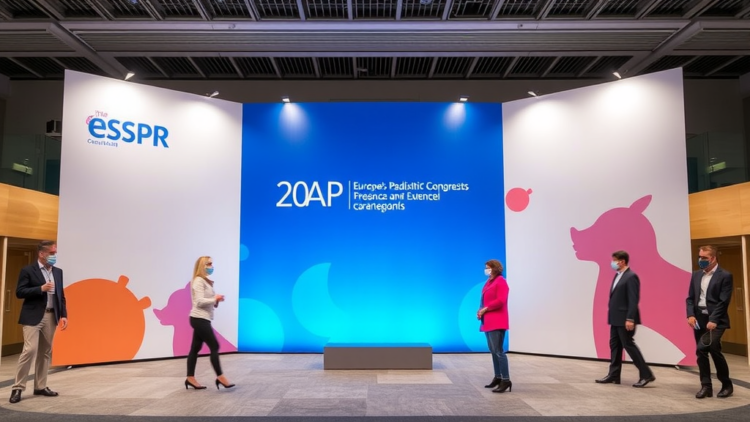
European paediatric medicine is preparing for one of the most significant organisational milestones in its recent history. The inaugural Congress of the European Paediatric Academic Societies, known as CEPAS 2026, will bring together two of the continent’s leading child health bodies, the European Society for Paediatric Research and the European Academy of Paediatrics, for a joint meeting in Lyon, France, from 28 to 31 October 2026. Ahead of the congress, the journal Pediatric Research has published a collection of selected abstracts from the oral presentations scheduled for the meeting, offering an early window into the research that will be presented on stage in Lyon.
The publication of congress abstracts in a peer-reviewed journal is a well-established practice in academic medicine, but its significance is often underestimated by readers outside the research community. Abstracts are condensed summaries of studies that are typically still in progress or recently completed, and they allow scientists to stake a claim on new findings months or even years before full papers appear in journals. For paediatric research, where patient populations are smaller and studies often take longer to recruit than in adult medicine, the rapid dissemination of preliminary findings through abstract collections can be especially consequential. It allows clinical teams across Europe to see, almost in real time, which questions their colleagues are asking and which approaches are producing results.
The decision by the European Society for Paediatric Research and the European Academy of Paediatrics to merge their meeting calendars into a single congress reflects a broader trend in European medicine toward consolidation. Both organisations have long histories: the society for paediatric research has traditionally focused on the biological and translational science of child health, spanning neonatology, developmental physiology and experimental paediatrics, while the academy has represented a broader clinical constituency, including general paediatrics, subspecialty practice and the training of the next generation of paediatricians. By convening jointly, the two bodies effectively create a single venue where laboratory scientists, neonatologists, hospital paediatricians and primary care researchers can encounter one another’s work without the disciplinary silos that have historically separated them.
Lyon, the host city, is itself a fitting choice for a congress of this scope. The French city sits at the heart of one of Europe’s densest biomedical corridors, with major university hospitals, research institutes and a strong tradition in infectious disease, immunology and clinical research. For the several thousand delegates expected at a congress of this kind, the combination of an accessible European location and a concentrated four-day programme is a practical consideration as much as a symbolic one. Congresses of this scale depend on the ability of clinicians with demanding hospital schedules to attend, and the compressed format of an inaugural joint meeting is designed to maximise scientific exchange per day away from the ward.
What does the publication of the abstract collection actually contain? As is typical for such collections, the document comprises the accepted abstracts for oral presentation, organised by the congress’s scientific tracks. Each abstract represents a study that has passed through a review process conducted by the congress’s scientific committees, which evaluate submissions for originality, methodological rigour and relevance to paediatric practice. The selected oral presentations are, in most congress systems, the highest-ranked subset of a much larger pool of submitted abstracts, with the remainder often presented as posters. Publication in the journal gives these contributions a citable form, which matters for young researchers whose careers depend on documented output, and it preserves a permanent record of what was presented even for work that may never reach full publication.
For the wider readership of Pediatric Research, the collection serves a second function as a barometer of the field. The distribution of abstracts across topics reveals where European paediatric research is concentrating its energy. In recent years, congresses in this space have been dominated by themes such as neonatal brain injury and neuroprotection, the long-term consequences of preterm birth, the rising burden of allergic and inflammatory disease in children, the impact of the microbiome on early development, and the application of genomic diagnostics to critically ill infants. The oral presentation lineup at a joint ESPR and EAP congress would be expected to span the full arc from bench to bedside, reflecting the combined identity of the two parent organisations.
The timing of the publication, roughly a month before the congress opens, is deliberate. Delegates can use the abstract collection to plan which sessions to attend, and research groups can identify potential collaborators whose work dovetails with their own. In an era when much scientific networking happens asynchronously online, the congress abstract book retains a distinctive role: it is a snapshot of an entire community’s priorities at a single moment, unfiltered by the lengthy delays of the journal publication pipeline. For journalists, clinicians and policy makers, it is also one of the few places where the questions being asked at the front line of child health research appear together in one document.
The creation of CEPAS as a standing congress brand also carries implications for how European paediatric science is coordinated. A single annual joint meeting reduces the fragmentation that comes from parallel conferences competing for the same delegates and the same speakers, and it strengthens the negotiating position of European paediatrics in its exchanges with counterpart organisations in North America, Asia and Latin America. The two founding societies have complementary memberships, and a shared congress gives early-career researchers in particular a single, larger stage on which to present, with a correspondingly larger audience for their work. The abstract collection published in the journal is, in this sense, the first public artefact of a new institutional structure.
There are also practical considerations for readers approaching an abstract collection for the first time. Abstracts are by design preliminary: they report findings that have often not yet undergone the full scrutiny of peer review that a complete paper receives, and sample sizes in paediatric studies are frequently modest. The standard caution in the field is that abstract findings should be treated as signals rather than conclusions, to be confirmed or refuted as full manuscripts emerge. At the same time, the review process that selects abstracts for oral presentation is not trivial, and historically many of the most influential ideas in paediatrics, from advances in neonatal respiratory care to new frameworks for developmental screening, circulated as congress presentations long before they appeared in final form in the literature.
As the Lyon congress approaches, the published collection will function as both a programme and a promise: a programme of the oral sessions that will unfold over four days in late October, and a promise of the fuller studies that many of these abstracts are expected to become. For a field in which the health of children often receives a smaller share of research funding and publication attention than adult medicine, the visibility afforded by a joint congress of two major societies, and by a dedicated abstract collection in a leading paediatric journal, is a meaningful step. Whether the inaugural CEPAS meeting establishes a durable new fixture in the European calendar will be judged in Lyon, but the groundwork, in the form of the research its members will present, is already in print.
Subject of Research: Publication of selected abstracts from the inaugural Congress of the European Paediatric Academic Societies (CEPAS 2026)
Article Title: CEPAS abstracts
Article References: CEPAS abstracts. (2026). Pediatric Research. https://doi.org/10.1038/s41390-026-05383-9
Image Credits: AI Generated
DOI: 10.1038/s41390-026-05383-9
Keywords: CEPAS 2026, paediatric research, ESPR, EAP, Pediatric Research, congress abstracts, Lyon, child health, neonatology, academic medicine, oral presentations, European paediatrics
Cite Scienmag News
APA MLA Chicago
Harold Sullivan. (September 26, 2026). Europe’s Paediatric Researchers Unite as ESPR and EAP Launch First Joint Congress. Scienmag. https://scienmag.com/europes-paediatric-researchers-unite-as-espr-and-eap-launch-first-joint-congress/
Harold Sullivan. “Europe’s Paediatric Researchers Unite as ESPR and EAP Launch First Joint Congress.” Scienmag, 26 September 2026, https://scienmag.com/europes-paediatric-researchers-unite-as-espr-and-eap-launch-first-joint-congress/. Accessed 26 September 2026.
Harold Sullivan. “Europe’s Paediatric Researchers Unite as ESPR and EAP Launch First Joint Congress.” Scienmag. September 26, 2026. https://scienmag.com/europes-paediatric-researchers-unite-as-espr-and-eap-launch-first-joint-congress/
Copy citation Download RIS
Tags: Academic MedicineCEPAS 2026Child healthcongress abstractsEAPearly dissemination of pediatric researchESPREuropean Academy of PaediatricsEuropean Paediatric Academic Societies CongressEuropean paediatricsEuropean Society for Paediatric Researchimportance of conference abstracts in medicinejoint paediatric medical conferenceLyonLyon France pediatric health eventneonatologyoral presentationspaediatric researchpaediatric research collaborationpediatric clinical studies and findingspediatric researchpediatric research community collaborationpeer-reviewed abstracts in pediatric medicine