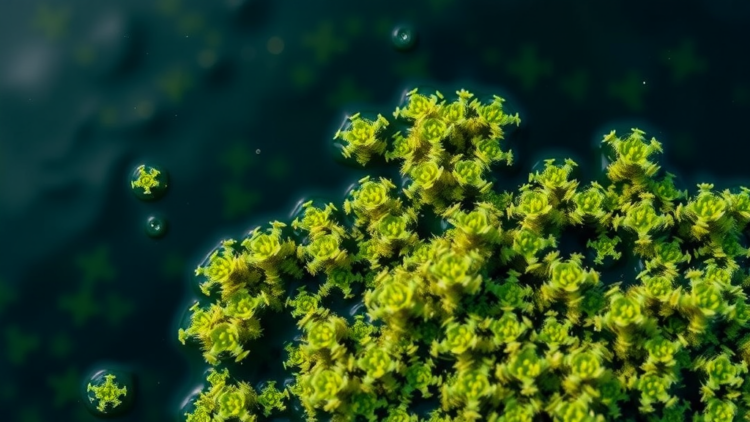
Wastewater treatment is one of those unglamorous cornerstones of modern civilization that most people never think about, yet it consumes enormous amounts of energy and chemicals every single day. Conventional treatment plants rely on energy-hungry aeration, substantial chemical dosing, and can even generate secondary pollutants of their own. As environmental regulations tighten and the pressure to decarbonize grows, researchers have been searching for alternatives that do not simply shift the environmental burden from one place to another. A comprehensive review published in the journal Blue Biotechnology argues that one of the most compelling answers may have been floating in ponds and oceans all along: algae.
Algae are an extraordinarily diverse group of photosynthetic organisms, with more than 100,000 known species spanning diatoms, green algae, coccolithophores, and dinoflagellates. Collectively they produce roughly half of the oxygen in Earth’s atmosphere and pull vast quantities of carbon dioxide out of the air. According to the review, led by Heng Li of Xiamen Ocean Vocational College and colleagues, this same photosynthetic machinery can be hijacked for pollution control. Algae absorb nitrogen and phosphorus, the nutrients responsible for choking waterways with harmful algal blooms, and convert them into biomass that can be harvested and turned into something useful. The authors, including Lingfen Kong, Wanyun Ai, and corresponding author Yong Zhang, published their findings on 14 October 2025.
The review’s scope is ambitious. It examines three very different categories of wastewater, namely domestic sewage, industrial effluents, and aquaculture wastewater, and finds that algae-based systems can be tailored to all of them. Domestic wastewater, rich in nitrogen and phosphorus but variable in composition, is well suited to algae cultivation, and the economics are striking. The review cites estimates suggesting that algae-based nitrogen removal could save aquaculture operations roughly $48,400 to $74,800 annually per hectare compared with conventional removal methods, with phosphorus removal savings of $4,575 to $7,625 per hectare. Because the nutrients locked in algal biomass are not destroyed but recycled, the process turns a disposal problem into a resource.
One of the most interesting technical themes in the review is the power of partnership. A single algal species rarely copes well with the messy, fluctuating chemistry of real wastewater. Algal-bacterial symbiotic systems solve this by exploiting the complementary metabolisms of the two organisms. Bacteria break down organic matter into inorganic compounds, releasing carbon dioxide in the process, while the algae consume that carbon dioxide along with dissolved nutrients and, crucially, release oxygen that the bacteria need to keep degrading pollutants. The review reports that these symbiotic systems routinely achieve nutrient removal rates exceeding 80 percent, and that algal-bacterial granular sludge systems offer similar performance with added benefits such as reduced sludge production and improved organic matter degradation.
Membrane bioreactors represent another frontier. When the microalga Scenedesmus was paired with membrane filtration systems, the combination boosted nutrient removal while addressing one of the technology’s chronic weaknesses: membrane fouling. Microalgae reduce the concentration of soluble microbial products and extracellular polymeric substances that gum up membranes, extending membrane life and cutting maintenance costs. The review also highlights an important metabolic nuance for engineers. When ammonium nitrogen is abundant, algae preferentially assimilate nitrogen over phosphorus, so once the ammonium is consumed, phosphorus uptake slows and total nitrogen and phosphorus removal can fall below 50 percent. Ammonia removal itself can exceed 90 percent, but maintaining the right nitrogen-to-phosphorus ratio is critical if both nutrients are to be scrubbed effectively.
The energy case for algae is perhaps the review’s most eye-catching claim. Traditional activated sludge treatment can demand up to 0.5 kilowatt-hours per cubic meter of water treated, largely because bacteria need oxygen pumped into their tanks. Algae generate that oxygen for free through photosynthesis. Integrated algae-based systems require only about 0.2 kilowatt-hours per cubic meter, cutting energy consumption by more than 50 percent while simultaneously sequestering carbon dioxide. In the review’s framing, this could transform wastewater treatment plants into biorefineries that produce biofuels, bioplastics, and fertilizers alongside clean water, aligning municipal infrastructure squarely with climate goals.
Industrial wastewater poses thornier problems, since effluents vary wildly depending on the source and may contain heavy metals, dyes, pharmaceuticals, and organic solvents. Yet the review documents impressive successes. Food processing wastewater, which is biodegradable and non-toxic but laden with organic matter and nutrients, proved an excellent growth medium; Chlorella achieved nitrogen and phosphorus removal rates above 97 percent in wastewater from seaweed (Pyropia) processing. Chlorella sorokiniana removed both nutrients and pharmaceutical compounds from drug-laden effluents, while Chlorella vulgaris tolerated the harsh conditions of landfill leachate. For heavy metals, the mechanism is biosorption: metal ions such as cadmium, lead, and mercury bind to carboxyl, hydroxyl, and amino groups on algal cell surfaces. Spirulina platensis and Chlorella vulgaris both showed high efficacy, and even the red macroalga Gracilaria corticata demonstrated significant metal-uptake capacity, sometimes enhanced by simple tricks such as supplementing potassium to boost cadmium removal by Microcystis aeruginosa.
Aquaculture wastewater occupies a middle ground: lower organic content than domestic sewage but nitrogen concentrations ranging from 3.53 to 737.8 milligrams per liter and phosphorus from 0.79 to 22.1 milligrams per liter. At low nutrient loads, algae alone can meet discharge standards, but at high loads they must be combined with other technologies, such as physical adsorption to bring nutrient levels into the optimal range before algal polishing. The circular potential here is especially vivid. Li and colleagues’ review describes how Tetraselmis and Phaeodactylum biomass grown on fishpond effluent was successfully fed to oysters, closing the nutrient loop. Algae also contain antioxidant compounds, including chlorophyll derivatives, carotenoids, vitamins E and C, and mycosporine-like amino acids, adding further value to harvested biomass. In hot marine environments, high-temperature-resistant strains are emerging as a solution to summer growth collapse.
The field is also going digital. Machine learning algorithms are now being used to mine operational data from algal treatment systems and recommend real-time adjustments to light intensity, nutrient dosing, and hydraulic retention time. One study cited in the review, by Pavendan and colleagues, achieved a 25 percent increase in nutrient removal efficiency through such optimization, while work by Meenatchisundaram and colleagues used machine learning to predict optimal nutrient loading and cut energy consumption by 30 percent. Bioreactor hardware is advancing too, from airlift photobioreactors that use gas injection to improve mixing and light availability, demonstrated to remove polycyclic aromatic hydrocarbons while fixing carbon dioxide, to a stratosphere-rated reactor designed to test algal cultures under extreme temperatures and radiation, with implications for both space missions and terrestrial cultivation.
Pilot-scale results are encouraging but sobering about the remaining hurdles. A 10-cubic-meter sequential anaerobic-aerobic hybrid algal-bacterial reactor achieved over 85 percent nitrogen removal and 90 percent phosphorus removal from domestic wastewater, and a meta-analysis of high-rate algal ponds between 50 and 200 cubic meters found nitrogen removal consistently above 90 percent and phosphorus above 85 percent. Yet scaling up demands robust bioreactor designs, consistent wastewater quality, and cost-effective harvesting. Capital costs for microalgae-based treatment systems are estimated at $50,000 to $100,000 per hectare, although algal biodiesel at an estimated $2.00 to $5.00 per gallon is approaching cost parity with conventional diesel at $3.00 to $4.00 per gallon. Sustainability assessments also flag water use in arid regions, land conversion, and the ecological risks of genetically modified strains. The authors conclude that unstable removal efficiency remains the industry’s central challenge, but with resilient strains, hybrid systems, and artificial intelligence steadily closing the gap, algae may soon graduate from pond curiosity to the backbone of circular wastewater treatment.
Subject of Research: Algae-based technologies for sustainable treatment of domestic, industrial, and aquaculture wastewater
Article Title: Algal systems reimagined: exploring the potential for sustainable solutions to diverse wastewater challenges
Article References: Algal systems reimagined: exploring the potential for sustainable solutions to diverse wastewater challenges. (n.d.). https://doi.org/10.1186/s44315-025-00033-x
Image Credits: AI Generated
DOI: 10.1186/s44315-025-00033-x
Keywords: algae, wastewater treatment, microalgae, nutrient removal, algal-bacterial symbiosis, photobioreactor, membrane bioreactor, heavy metals, aquaculture, machine learning, circular economy, biomass
Cite Scienmag News
APA
MLA
Chicago
Sloane Callahan. (September 25, 2026). Algae Step Up as a Powerful Sustainable Weapon Against Wastewater Pollution. Scienmag. https://scienmag.com/algae-step-up-as-a-powerful-sustainable-weapon-against-wastewater-pollution/
Sloane Callahan. “Algae Step Up as a Powerful Sustainable Weapon Against Wastewater Pollution.” Scienmag, 25 September 2026, https://scienmag.com/algae-step-up-as-a-powerful-sustainable-weapon-against-wastewater-pollution/. Accessed 25 September 2026.
Sloane Callahan. “Algae Step Up as a Powerful Sustainable Weapon Against Wastewater Pollution.” Scienmag. September 25, 2026. https://scienmag.com/algae-step-up-as-a-powerful-sustainable-weapon-against-wastewater-pollution/
Copy citation
Download RIS
Tags: algaealgae as bio-remediation agentsalgae cultivation for wastewater managementalgae harvesting for biomassAlgae-based wastewater treatmentalgal-bacterial symbiosisaquaculturebiomassCircular economydecarbonization through algae-based processeseco-friendly water purification methodsenvironmental benefits of algae in water treatmentheavy metalsMachine learningmarine and freshwater algae for pollution mitigationmembrane bioreactorMicroalgaenutrient removalnutrient removal using algaephotobioreactorphotosynthetic organisms in environmental cleanuprole of algae in reducing algal bloomssustainable pollution controlwastewater treatment