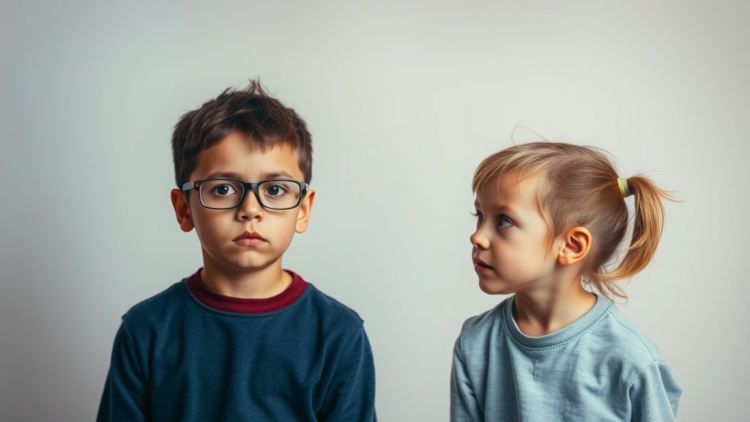
When parents of autistic adults die, responsibility for care often falls to a brother or sister. That handover is one of the most predictable events in the lives of families affected by autism, yet the people expected to step into the caregiving role remain strikingly understudied — especially when their autistic sibling shows distressing behaviors such as physical aggression, self-injury, or property destruction. A new qualitative study published in the Journal of Autism and Developmental Disorders offers one of the most detailed portraits to date of these adult siblings, and its findings complicate a research literature that has long treated them as either silent victims or unsung heroes. The picture that emerges is neither: it is a nuanced account of resilience forged under pressure alongside lasting psychological wounds that shape decisions about love, marriage, children, and careers.
The research team, led by Meghan M. Burke of Vanderbilt University’s Department of Special Education, interviewed sixteen adults whose autistic brothers or sisters engaged in behaviors the siblings perceived as threatening to physical or emotional safety. All sixteen participants reported that their sibling had shown physical aggression, and many described self-injurious behavior, property destruction, and elopement as well. The sample is notable because most existing sibling research relies on convenience samples in which the autistic brother or sister does not display distressing behavior at all. That gap matters: longitudinal studies of autistic individuals suggest that roughly 42 percent demonstrate aggressive behaviors, and about one-third exhibit persistent aggression across development. In other words, the siblings in this new study are not a rare edge case — they represent a substantial and largely invisible population.
To interpret what they heard, the researchers drew on two complementary theoretical frameworks. Trauma Exposure Theory, developed by Cook and colleagues, describes how repeated exposure to threatening events can produce dysregulation, social withdrawal, and diminished self-concept. The Hidden Talents Framework, advanced by Ellis and colleagues in 2022, takes the opposite starting point: it asks which social and cognitive skills are strengthened by adversity, identifying capacities such as enhanced threat detection and stress management that emerge in harsh environments. The study’s design allowed both frameworks to be tested against lived experience rather than assumed in advance. Crucially, the authors emphasize that exposure to distressing behavior does not automatically equal trauma — some siblings described chronic emotional distress, others described events in explicitly traumatic terms, and the framework was used as a lens rather than a diagnosis.
On the positive side of the ledger, participants consistently reported increased resilience. They described developing what one called tougher skin and a greater ability to handle stress. One 32-year-old participant, whose 41-year-old brother had an intellectual disability and anxiety and had lived through episodes of aggression, self-injury, and property destruction, explained that she now reacts calmly in crises involving raised voices or violence precisely because she has been through so many such episodes with him. Another participant, a 27-year-old who helped her family decide to move her brother into a group home, traced her resilience to the weight of that decision — a choice she called the biggest her family had ever made. These accounts align closely with the Hidden Talents Framework’s prediction that adversity can cultivate genuine competence, not merely scar tissue.
The second positive theme was a closer family unit. Several participants said that the shared struggle of managing their sibling’s behaviors drew parents and non-disabled siblings together, sometimes because the family felt isolated from the public and had only each other to rely on. A 19-year-old participant with two non-disabled siblings described the relationship as a mutual safety net: her brothers and sisters used each other for support when things felt uncomfortable or vulnerable, precisely because they lived with the same reality and understood it without explanation. This finding suggests that distressing behavior does not uniformly fracture families; in some households it functions as a bonding force, though the researchers caution that this cohesion may partly reflect isolation from broader social networks rather than pure closeness.
The negative findings were more sobering. Participants reported lasting harm to their mental health, with several using language strikingly close to clinical descriptions of post-traumatic stress. One participant recalled being hypervigilant around anyone who seemed angry, backing away or hiding when she sensed a meltdown coming, even when no physical threat materialized. Another described her experiences as chronic trauma, noting that trauma can exist without meeting full diagnostic criteria for PTSD, and that everyone in her family had experienced periods of depression and anxiety. These reports echo a 2023 scoping review by Rochefort and colleagues, which found that siblings of individuals with autism and distressing behavior show psychological challenges consistent with developmental trauma theory, and earlier work linking the sibling experience to parentification — children absorbing adult responsibilities that carry forward into adult stress and anxiety.
Safety fears formed a second cluster of negative effects. Even participants whose siblings’ behaviors had diminished with age, medication, or residential placement described a bodily state of being on guard. One 49-year-old participant whose brother had a history of violent outbursts reported that, although he had not been violent toward her in years, her physical response around him remained one of fear and anxiousness — she constantly scanned for unpredictable actions like reaching for the steering wheel or hitting her from behind. Another participant, though unafraid for her own safety, described persistent anxiety about her mother, a small-statured primary caregiver she feared could be hurt. Such hypervigilance is well documented in families affected by aggression and trauma more broadly, but it had rarely been examined specifically in adult siblings of autistic individuals until now.
Perhaps the most provocative findings concern life choices, because they directly contradict prior research. Earlier national survey data had suggested that siblings of people with disabilities marry later and have children later, but ultimately do not forgo marriage or parenthood. In this study, several participants said they had decided against having children altogether, reasoning that if they eventually had to take their sibling in, they could not devote the resources and energy another child would need. Others reported stepping back from dating and marriage entirely; one participant said she hesitated to date because she assumed her sister would live with her forever and doubted a partner would accept that, so she questioned whether dating was worth the time at all. The researchers argue that the mere presence or absence of a disability is too crude a variable — it may be the specific experience of distressing behavior that redirects these decisions, a distinction future studies must untangle.
Careers, by contrast, showed a constructive pattern. Multiple participants said their experiences steered them toward disability advocacy and helping professions: one became a special education teacher after years of advocating for her sister within an unsupportive school system, while another described channeling her advocacy into work focused on people in circumstances similar to her brother’s. And despite everything, nearly all participants anticipated assuming future caregiving roles — arranging nearby housing, managing special needs trusts, or worrying about whether the obligation would fall on them alone. That last worry is well founded: consistent with Family Systems Theory and prior research, the study found that caregiving responsibility tends to concentrate on a single sibling, often a female one, rather than being distributed across the family, a pattern that raises the risk of burnout and resentment precisely among those already carrying mental health burdens.
The authors are candid about the study’s limits. The sample of sixteen was predominantly White, female, and high-income, recruited through disability and sibling organizations, which may skew findings toward siblings already connected to support networks; research suggests siblings of color are actually more likely to assume caregiving roles and face distinct advocacy barriers. Diagnoses and behavioral severity were self-reported rather than independently verified, only one side of the bidirectional sibling relationship was heard, and there was no comparison group of siblings whose autistic brothers and sisters lacked distressing behaviors. Still, the practical implications are concrete: practitioners could build peer support groups and forums where siblings with similar experiences connect, refer families to organizations such as the Sibling Leadership Network and the Sibling Support Project, and treat siblings as an untapped advocacy constituency with firsthand knowledge of where policy fails. The study’s core message is that interventions should work both directions at once — leveraging the resilience and family cohesion these siblings have developed while seriously addressing the trauma, hypervigilance, and constrained life choices that too often come bundled with them.
Subject of Research: The perceived positive and negative impacts of distressing behaviors in autistic adults on their adult siblings and future caregiving roles
Article Title: Exploring the Perspectives of Siblings of Autistic Adults With Distressing Behavior: Perceptions of Positive and Negative Impacts
Article References: Burke, M. M., Humphries, R., Burakov, I., Kim, J., Kalb, T., Singh, S., Smith, B. C., & Alagozoglu, E. (2026). Exploring the Perspectives of Siblings of Autistic Adults With Distressing Behavior: Perceptions of Positive and Negative Impacts. Journal of Autism and Developmental Disorders. https://doi.org/10.1007/s10803-026-07534-7
Image Credits: AI Generated
DOI: 10.1007/s10803-026-07534-7
Keywords: autism, siblings, distressing behavior, aggression, trauma, resilience, caregiving, mental health, family systems, life choices, Hidden Talents Framework, qualitative research
Cite Scienmag News
APA MLA Chicago
Ophelia Keating. (September 25, 2026). Siblings of Autistic Adults With Aggressive Behavior Report Both Trauma and Hidden Strengths. Scienmag. https://scienmag.com/siblings-of-autistic-adults-with-aggressive-behavior-report-both-trauma-and-hidden-strengths/
Ophelia Keating. “Siblings of Autistic Adults With Aggressive Behavior Report Both Trauma and Hidden Strengths.” Scienmag, 25 September 2026, https://scienmag.com/siblings-of-autistic-adults-with-aggressive-behavior-report-both-trauma-and-hidden-strengths/. Accessed 25 September 2026.
Ophelia Keating. “Siblings of Autistic Adults With Aggressive Behavior Report Both Trauma and Hidden Strengths.” Scienmag. September 25, 2026. https://scienmag.com/siblings-of-autistic-adults-with-aggressive-behavior-report-both-trauma-and-hidden-strengths/
Copy citation Download RIS
Tags: aggressionaggressive behavior in autistic adultsautismAutistic adult siblingscaregivingdistressing behavioremotional challenges of sibling caregiversfamily decision-making with autistic membersfamily dynamics in autismfamily systemshidden strengths of autistic adult siblingsHidden Talents Frameworklife choiceslong-term effects of sibling caregivingMental healthpsychological impact on sibling caregiversqualitative autism researchqualitative researchresiliencesibling caregiving responsibilitiessiblingssupporting siblings of autistic adultstraumatrauma and resilience in autism