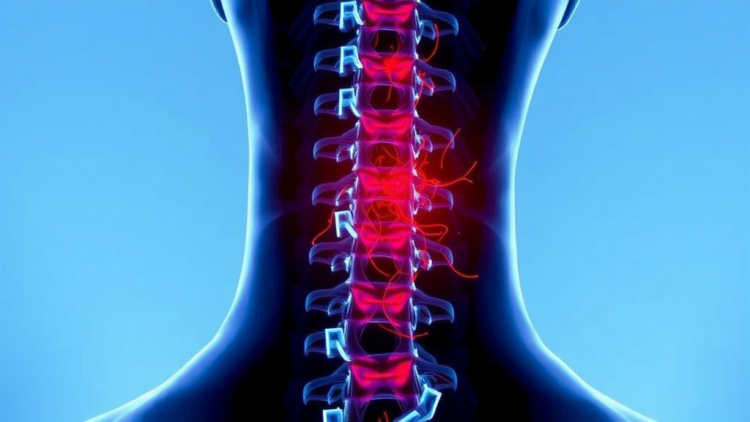
Spinal cord injury is one of the most devastating outcomes in medicine, and the initial mechanical blow is only the beginning. In the hours and days that follow, a cascade of molecular events known as secondary injury quietly destroys tissue that survived the trauma itself. A new review published in Molecular Biology Reports argues that two processes at the heart of this cascade, ferroptosis and neuroinflammation, feed each other in a vicious cycle, and that a small molecule derived from a traditional Chinese medicinal herb may be able to break that loop by simultaneously manipulating two opposing signaling pathways.
The compound in question is tetramethylpyrazine, or TMP, the principal active component of Ligusticum chuanxiong, an herb long used in Chinese medicine. TMP is a small, highly symmetric pyrazine ring decorated with four methyl groups, giving it a molecular weight of just 136.20 grams per mole and a moderate lipophilicity that theoretically favors membrane permeability. Crucially, it can cross the blood-brain barrier, in part by downregulating a microRNA called miR-297c-5p, which stabilizes the tight junction protein occludin and improves barrier integrity. Its oral bioavailability, however, is limited by first-pass metabolism and rapid clearance, a hurdle that any clinical translation will need to address through new formulations.
The review, conducted under PRISMA guidelines with searches of PubMed, Web of Science, and Google Scholar through December 2025, screened 132 articles and ultimately included 69. Its central thesis is that TMP acts as what the authors call a pathway crosstalk modulator, activating the Nrf2/ARE antioxidant axis while suppressing the JNK/AP-1 inflammatory axis. Because these two pathways are physically connected through shared molecular nodes, a single compound that tilts both in the right direction could, in principle, interrupt the ferroptosis-inflammation feedback loop that drives permanent neurological deficits.
Ferroptosis itself is a relatively recent addition to the cell death lexicon. Unlike apoptosis, it is iron-dependent and non-apoptotic, characterized by the runaway accumulation of lipid peroxides and the inactivation of glutathione peroxidase 4, or GPX4. After spinal cord injury, hemorrhage floods the lesion with free iron, which catalyzes the Fenton reaction and generates hydroxyl radicals that attack the polyunsaturated fatty acids in neuronal and oligodendrocyte membranes. As cells rupture, they release damage-associated molecular patterns such as HMGB1 and ATP, which activate microglia and infiltrating macrophages. These immune cells then pump out tumor necrosis factor-alpha and interleukin-1 beta, along with reactive oxygen species that further fuel lipid peroxidation, closing the loop.
The Nrf2 pathway is the cell’s first line of defense against exactly this kind of oxidative catastrophe. Under resting conditions, the adaptor protein Keap1 escorts Nrf2 to the proteasome for degradation, keeping the transcription factor scarce. When oxidative stress modifies key cysteine residues on Keap1, Nrf2 escapes destruction, translocates to the nucleus, binds antioxidant response elements, and switches on a battery of protective genes. The review emphasizes that Nrf2 is not merely a general antioxidant switch; it directly regulates the ferroptosis machinery itself, upregulating xCT to import cystine for glutathione synthesis, GPX4 to clear lipid peroxides, ferritin heavy chain 1 to sequester free iron, and simultaneously suppressing the pro-ferroptotic enzyme ACSL4. Genetic evidence underscores the point: Nrf2 knockout mice suffer larger lesions and worse neurological deficits after spinal cord injury.
The JNK pathway, by contrast, is the villain of the piece. A member of the MAPK kinase family, JNK is activated by dual phosphorylation from MKK4 and MKK7, which are themselves triggered by oxidative stress through the kinase ASK1 or by inflammatory cytokines. Once active, JNK phosphorylates c-Jun, energizing the AP-1 transcription factor complex, which drives expression of TNF-alpha, IL-1 beta, IL-6, COX-2, and inducible nitric oxide synthase. This pushes microglia toward the pro-inflammatory M1 phenotype and amplifies the inflammatory cascade. JNK also promotes apoptosis by activating Bax and upregulating Fas ligand, and emerging evidence suggests it worsens ferroptosis by inducing mitochondrial dysfunction and suppressing antioxidant enzymes, creating the ROS-rich environment in which lipid peroxidation thrives.
The review proposes that TMP intervenes on both arms through several mechanisms. On the Nrf2 side, its electron-rich pyrazine ring may mimic alpha,beta-unsaturated ketones and undergo Michael addition reactions with cysteine residues such as Cys151 and Cys273 on Keap1, destabilizing the Keap1-Cullin3 ubiquitin ligase complex and freeing Nrf2. TMP may also activate upstream kinases like PI3K/Akt and PKC, and it upregulates the autophagy adaptor p62, which competitively binds Keap1. On the JNK side, TMP’s direct radical-scavenging capacity prevents reactive oxygen species from prying thioredoxin away from ASK1, keeping the JNK cascade in check. Because Nrf2 transcriptionally upregulates thioredoxin-1, which itself inhibits ASK1, activating Nrf2 creates a positive feedback loop that further suppresses JNK, a molecular ratchet that favors protection over inflammation.
What distinguishes this review from earlier work is its spatiotemporal framing. Ferroptosis peaks rapidly, within roughly six hours of injury, while neuroinflammation rises later, beginning around 12 to 24 hours and peaking between days three and seven. The authors therefore propose a time-sequential dual regulation strategy: in the acute phase, TMP’s Nrf2 activation should dominate, blocking lipid peroxidation and preserving vulnerable neurons and oligodendrocytes; in the subacute to chronic phase, JNK inhibition should take precedence, curbing cytokine release, limiting M1 microglial polarization, and softening glial scar formation. In this framing, TMP transforms the injury microenvironment from a cytotoxic battlefield into a niche permissive for axonal sparing, remyelination, and eventual motor recovery, a shift from antioxidant damage control toward active regenerative repair.
The evidence base is not purely theoretical. A systematic review and meta-analysis has confirmed that TMP improves motor function recovery in rat models of spinal cord injury, and animal studies show reduced glial scar formation and preserved residual white matter tracts even in incomplete injuries. TMP has also demonstrated anti-ferroptotic effects in sepsis-induced liver injury and chronic kidney disease models, and TMP nitrone derivatives have shown safety and some functional benefits in clinical trials for amyotrophic lateral sclerosis. Yet the authors are candid about the gaps: most mechanistic studies remain at the level of phosphorylation measurements and phenotypic description, lacking gene knockout validation, direct target identification, ChIP-seq or co-immunoprecipitation evidence for pathway crosstalk, and systematic pharmacokinetic or clinical time-window studies.
The path forward, the review argues, runs through modern tools. Single-cell sequencing could resolve how neurons, microglia, astrocytes, and oligodendrocytes respond differently to TMP; proteomics could identify its direct molecular targets; and gene-edited mouse models could confirm pathway dependence. On the translational side, nanoparticle formulations, sustained-release hydrogels, and exosome-based delivery could overcome the bioavailability bottleneck, while combination strategies pairing TMP with stem cell transplantation, biomaterial scaffolds, or rehabilitation training could amplify its effects. If those efforts succeed, a compound extracted from an ancient medicinal root could become a template for a new generation of multi-target neuroprotective therapies, ones that do not merely mop up damage after spinal cord injury but actively reshape the injured cord for repair.
Subject of Research: Tetramethylpyrazine modulation of the Nrf2/JNK axis to inhibit ferroptosis and neuroinflammation after spinal cord injury
Article Title: Tetramethylpyrazine modulates the Nrf2/JNK axis to intervene in ferroptosis and neuroinflammation after spinal cord injury: an integrated perspective from antioxidant to regenerative therapy
Article References: Jiahao, D., Zirui, Z., & Tao, C. (2026). Tetramethylpyrazine modulates the Nrf2/JNK axis to intervene in ferroptosis and neuroinflammation after spinal cord injury: an integrated perspective from antioxidant to regenerative therapy. Molecular Biology Reports, 53(1), Article 1621. https://doi.org/10.1007/s11033-026-12641-w
Image Credits: AI Generated
DOI: 10.1007/s11033-026-12641-w
Keywords: tetramethylpyrazine, spinal cord injury, ferroptosis, neuroinflammation, Nrf2, JNK, Keap1, GPX4, microglia, Ligusticum chuanxiong, oxidative stress, neuroprotection
Cite Scienmag News
APA MLA Chicago
Cassandra Pierce. (September 25, 2026). Chinese Herb Compound Tetramethylpyrazine May Rewire Damage Response After Spinal Cord Injury. Scienmag. https://scienmag.com/chinese-herb-compound-tetramethylpyrazine-may-rewire-damage-response-after-spinal-cord-injury/
Cassandra Pierce. “Chinese Herb Compound Tetramethylpyrazine May Rewire Damage Response After Spinal Cord Injury.” Scienmag, 25 September 2026, https://scienmag.com/chinese-herb-compound-tetramethylpyrazine-may-rewire-damage-response-after-spinal-cord-injury/. Accessed 25 September 2026.
Cassandra Pierce. “Chinese Herb Compound Tetramethylpyrazine May Rewire Damage Response After Spinal Cord Injury.” Scienmag. September 25, 2026. https://scienmag.com/chinese-herb-compound-tetramethylpyrazine-may-rewire-damage-response-after-spinal-cord-injury/
Copy citation Download RIS
Tags: blood-brain barrier penetrationChinese medicinal herb tetramethylpyrazineferroptosisferroptosis and neuroinflammationGPX4JNKKeap1Ligusticum chuanxiongLigusticum chuanxiong active compoundsmicrogliamicroRNA regulation in neural injurymolecular mechanisms of nerve damageneuroinflammationneuroinflammatory signaling pathwaysNeuroprotectionneuroprotective agents for spinal cord repairNRF2Oxidative stresspotential of herbal compounds in neuroregenerationsecondary injury cascadeSpinal Cord Injurytetramethylpyrazinetraditional Chinese medicine in neuroprotection