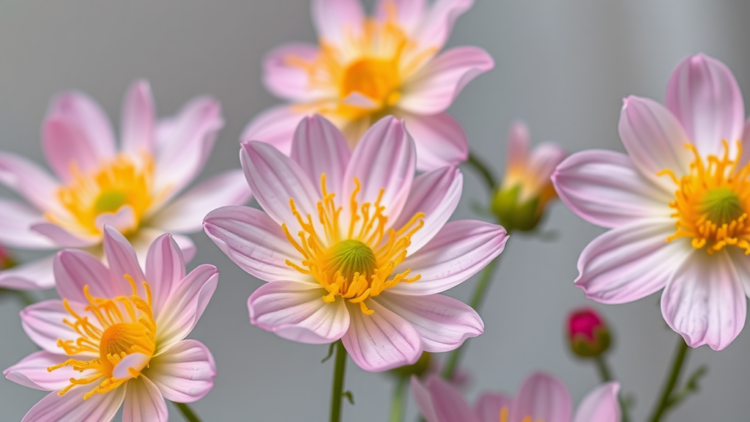
The sulphur cosmos, Cosmos sulphureus, is one of those plants that gardeners and herbalists think they know well. A fast-growing member of the daisy family, it paints roadsides and gardens across the tropics in shades of yellow and orange, and it has long been valued in traditional medicine for its antioxidant-rich tissues. Yet beneath its cheerful floral display lies a question that has received surprisingly little attention: do the different flower forms that occur within the species differ only in appearance, or do they also differ in the way their bodies are built and in the chemistry they produce? A new study from southern Vietnam suggests the answer is far more interesting than a simple matter of petal count.
Researchers led by Thao Thanh Nguyen and colleagues at the University of Science, Vietnam National University Ho Chi Minh City, examined five natural varieties of Cosmos sulphureus collected in southern Vietnam. Their work, published in Plant Biosystems, combined three complementary lines of evidence: measurements of external morphological traits, microscopic examination of stem and leaf anatomy, and phytochemical analysis of the plants’ secondary metabolites. The varieties included single-flowered forms in yellow and orange, as well as semi-double forms in light yellow, yellow, and orange, allowing the team to ask whether the architectural distinction between single and semi-double flowers is echoed deeper inside the plant.
The short answer from the study is yes, and in a strikingly coordinated way. When the researchers subjected their morphological, anatomical, and chemical data to multivariate analysis, the five varieties separated into three groups, with the most important divide running between single-flowered and semi-double forms. In other words, a plant’s floral architecture predicted not just how its flower head is arranged, but also how its stem is reinforced and what kinds of defensive and medicinal compounds it accumulates. This kind of trait integration, where external form and internal physiology move together, is exactly what evolutionary biologists look for when trying to understand how complex phenotypes evolve as a package.
The anatomical differences were among the most vivid findings. Single-flowered varieties grew taller and showed clear signs of structural reinforcement: enlarged vascular tissues for transporting water and nutrients, and a continuous layer of sclerenchyma, the thick-walled support tissue, running through the stem. These are the hallmarks of a plant investing heavily in mechanical strength and hydraulic capacity, which makes sense for forms that channel resources into elongated growth and a simpler floral display. Lignin, the tough polymer that stiffens cell walls, was distributed more abundantly in these robust, single-flowered plants, giving their stems the internal scaffolding needed to hold up their height.
The semi-double varieties told the opposite story. These plants showed reduced lignification, meaning less investment in woody, structural tissue, but they compensated with markedly higher accumulation of secondary metabolites, the chemically diverse compounds plants use for defense, signaling, and interaction with their environment. In the Cosmos sulphureus varieties studied, this included elevated levels of phenolics, flavonoids, and alkaloids, three classes of compounds with well-documented antioxidant and pharmacological relevance. Phenolics and flavonoids in particular are the molecules behind much of the antioxidant activity attributed to plant extracts, and their enhanced presence in the semi-double forms points to a real phytochemical advantage.
Histological observation added an anatomical explanation for where these extra chemicals might be stored. The semi-double flowers contained a higher abundance of secretory structures, the specialized tissues and cells that plants use to produce, sequester, and release metabolites. This suggests that the enhanced chemical profile of the semi-double forms is not simply a matter of more chemistry per cell, but is supported by additional storage and secretory capacity built into the flower itself. The finding provides a satisfying mechanistic link: a change in floral architecture is accompanied by a change in the internal tissue landscape that accommodates a different metabolic strategy.
Among all the varieties examined, one stood out consistently. The orange semi-double type displayed the highest phytochemical levels across the tissues analyzed, making it the chemical champion of the group. For anyone interested in Cosmos sulphureus as a source of bioactive compounds, whether for pharmaceutical screening, nutraceutical development, or traditional medicine validation, this single variety emerges as the most promising starting material. The authors frame this as a practical outcome of the study: by linking floral form to chemical investment, breeders and researchers now have a visible, easily assessed trait, flower architecture, that can serve as a proxy for selecting germplasm with enhanced phytochemical potential.
Interpreted broadly, the study proposes a coordinated shift in resource allocation tied to floral modification. Plants cannot spend their finite carbon and energy budget twice; resources devoted to building thick, lignified stems are not available for synthesizing phenolic defenses, and vice versa. The single-flowered forms appear to prioritize the structural route, building taller plants with reinforced plumbing and support, while the semi-double forms redirect that investment toward secondary metabolism, filling their tissues with defensive and bioactive chemistry. This trade-off between structure and chemistry is a well-recognized theme in plant physiology, but demonstrating it so cleanly across naturally occurring varieties of a single medicinal species is a valuable contribution, because it shows the two strategies operating as alternatives within one species’ gene pool.
The findings also sit within a larger scientific conversation about how floral diversity evolves in the daisy family. Asteraceae is one of the largest flowering plant families, and its characteristic composite flower heads, which are actually inflorescences of many tiny florets, are famous for their developmental flexibility. Variations such as single versus double or semi-double forms arise from changes in how ray florets develop, and related research on chrysanthemums and other composites has shown that these architectural shifts can have deep developmental and genetic underpinnings. What the new Cosmos sulphureus study adds is evidence that such shifts ripple outward through the whole plant, influencing stem anatomy, lignin deposition, secretory tissue abundance, and metabolic profile simultaneously.
For a species with recognized medicinal value, the practical implications are considerable. Cosmos sulphureus has been documented as a source of antioxidant compounds, has been studied for its phytochemical screening and chromatographic profiles, and even serves as a bioindicator for bee diversity in agroecological research. If semi-double varieties reliably offer higher concentrations of phenolics, flavonoids, and alkaloids, then flower form becomes a low-tech selection marker that farmers, herbal producers, and plant breeders can use without expensive laboratory screening. At the same time, the study raises ecological questions worth pursuing: whether the chemical differences between floral forms affect pollinator attraction, herbivore pressure, or the plant’s performance as a nectar resource. By connecting what a flower looks like to what the whole plant is made of, this Vietnamese team has turned a familiar garden ornamental into a model for understanding how form, function, and chemistry are woven together in plants, and has given phytochemistry a surprisingly simple visual clue to follow.
Subject of Research: Floral polymorphism and its relationship to anatomy and secondary metabolism in Cosmos sulphureus
Article Title: Morpho-anatomical variation and secondary metabolism associated with floral polymorphism in Cosmos sulphureus Cav. (Asteraceae)
Article References: Nguyen, T. T., Nguyen, H. T., Nguyen, L. T., Nguyen, L. N., & Tran, T. T. (2026). Morpho-anatomical variation and secondary metabolism associated with floral polymorphism in Cosmos sulphureus Cav. (Asteraceae). Plant Biosystems, 160(5), Article 242. https://doi.org/10.1007/s44473-026-00248-9
Image Credits: AI Generated
DOI: 10.1007/s44473-026-00248-9
Keywords: Cosmos sulphureus, floral polymorphism, plant anatomy, secondary metabolites, phenolics, flavonoids, alkaloids, lignin, Asteraceae, phytochemistry, Vietnam, medicinal plants
Cite Scienmag News
APA MLA Chicago
Bethany Barker. (September 25, 2026). Showy Flowers Trade Strength for Chemistry in Cosmos sulphureus, Study Finds. Scienmag. https://scienmag.com/showy-flowers-trade-strength-for-chemistry-in-cosmos-sulphureus-study-finds/
Bethany Barker. “Showy Flowers Trade Strength for Chemistry in Cosmos sulphureus, Study Finds.” Scienmag, 25 September 2026, https://scienmag.com/showy-flowers-trade-strength-for-chemistry-in-cosmos-sulphureus-study-finds/. Accessed 25 September 2026.
Bethany Barker. “Showy Flowers Trade Strength for Chemistry in Cosmos sulphureus, Study Finds.” Scienmag. September 25, 2026. https://scienmag.com/showy-flowers-trade-strength-for-chemistry-in-cosmos-sulphureus-study-finds/
Copy citation Download RIS
Tags: alkaloidsantioxidant compounds in ornamental plantsAsteraceaeCosmos sulphureusCosmos sulphureus flower chemistryflavonoidsfloral diversity in daisy familyfloral polymorphismflower form and chemical variationligninMedicinal plantsphenolicsphytochemical analysis of Cosmos sulphureusphytochemistryplant anatomyplant anatomy and morphologyplant morphological diversityplant secondary metabolites and ecological functionssecondary metabolitessecondary metabolites in flowering plantstraditional medicinal plantstropical garden plantsVietnamVietnam native plant research