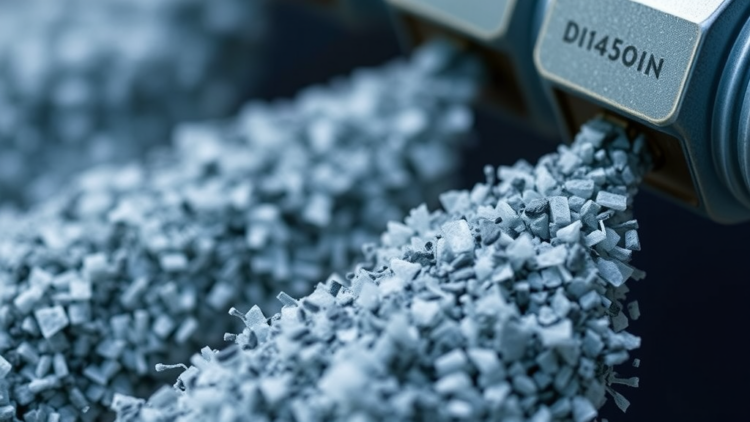
Activated carbon and biochar have long been celebrated as workhorses of water purification, materials that latch onto heavy metals, organic pollutants, and other hazards and hold them tight. A new study, however, reveals a sobering twist in that familiar story: the very particles doing the cleaning can themselves become vehicles for the contaminants they capture, slipping through treatment barriers that engineers assumed were catching everything. The research, published in the journal Biochar, suggests that adsorption, the process by which pollutants stick to carbon surfaces, does not guarantee that a pollutant has left the water for good.
The study was led by Ziheng Wang of The University of Manchester, working with Majid Sedighi, and examined what happens when extremely fine particles shed from carbon-based adsorbents remain suspended in treated water. The team’s central discovery is what researchers call co-transport: dissolved contaminants bind to microscopic carbon fragments, and those fragments then travel through sand filters and even membranes with pores far smaller than the particles themselves appear to be. In their experiments, the overwhelming majority of lead remaining after fine-sand filtration was not dissolved in the water at all but riding on residual carbonaceous particles.
The numbers are striking. After fine-sand filtration, particle-bound lead accounted for 84.5 percent of the total lead detected in filtrates from activated carbon, and reached as much as 90.2 percent for biochar produced from corn straw. In other words, when the researchers measured what was actually left in the water after treatment, nearly nine parts in ten of the model contaminant were attached to particles rather than floating freely as dissolved ions. Any assessment that looked only at the dissolved fraction would have dramatically underestimated how much lead remained in the system.
Activated carbon is a staple of drinking water and wastewater treatment worldwide, prized for its enormous internal surface area and its affinity for a broad range of pollutants. Biochar, a close cousin produced by heating biomass such as wood and crop residues in low-oxygen conditions, is attracting growing interest as a potentially lower-cost alternative, with the added appeal of turning agricultural waste into a useful remediation material. Both work by adsorption: pollutant molecules and ions adhere to surfaces and pores, effectively pulled out of the water column and immobilized on the solid.
But solids are not immortal. Physical breakdown, erosion, and the simple presence of very fine material in the original product mean that some carbonaceous fragments inevitably escape the adsorbent bed and move downstream. The Manchester team set out to quantify this under controlled conditions, testing activated carbon alongside three biochars made from hardwood, wheat straw, and corn straw, with lead serving as a representative heavy-metal contaminant. Their experimental toolkit combined adsorption experiments with fixed-bed filtration, stirred suspensions, sand filtration, and membrane filtration at pore sizes of 0.45 and 0.02 micrometers.
What they found in the filtrates was a population of residual particles with size features clustered around 100 to 200 nanometers, around 0.5 to 1 micrometer, and an apparent fraction near 5 micrometers. The researchers are careful about that largest figure. It is unlikely, they caution, that intact 5-micrometer particles passed directly through the pores of a 0.45-micrometer membrane. A more plausible explanation is that smaller particles aggregated during filtration, sample handling, concentration, or measurement, creating larger apparent structures. Further experiments, they note, are needed to verify exactly how this aggregation occurs.
The most consequential result emerged when the team separated dissolved lead from particle-carried lead. Even after 0.45-micrometer membrane filtration, a standard step in many analytical and treatment workflows, lead remained associated with particles in the 0.02 to 0.45 micrometer size range. That means conventional filtration and dissolved-phase measurements can overlook part of the contaminant load entirely. A water sample that appears clean by dissolved-metal standards may still carry a substantial hidden burden of pollutant, provided it is attached to particles small enough to pass through the filter.
This distinction has implications that reach well beyond the laboratory bench. Common analytical procedures often filter water samples before measuring dissolved metals, precisely to remove particles and obtain what is considered the truly dissolved concentration. But if a significant share of the contaminant is particle-bound, that pre-filtration step removes the contaminants along with the particles, potentially giving an incomplete, even misleading, picture of contaminant transport. In practical terms, a treatment plant could report low dissolved lead while substantial lead continues moving through the system on carbon fragments too fine to see. The authors argue that water-treatment performance should therefore be evaluated using both dissolved contaminants and contaminants carried by residual particles, treating the two fractions as distinct components of the total load.
The researchers are careful to frame their findings within the limits of the study. All experiments were conducted under controlled laboratory conditions, and real treatment systems are messier places. Water chemistry, including pH, ionic strength, natural organic matter, and dissolved ions, could change how stable the residual particles are and how readily they and their attached contaminants move through actual treatment trains. Natural organic matter, for instance, is known in colloid science to alter particle surfaces and aggregation behavior, so the fractions measured in the laboratory may shift in different water matrices. The authors call for future work to test representative drinking water and wastewater matrices rather than idealized solutions.
They also point toward practical countermeasures that could be evaluated in follow-up research. These include pre-washing adsorbents before deployment to remove loose fines, mechanical stabilization of the carbon materials, granulation to reduce the generation of mobile fragments, improved coagulation and flocculation downstream to capture escaping particles, and combined sand and membrane filtration schemes designed to intercept the finest fractions. None of these measures is proposed as a proven fix; each is a candidate for testing against the co-transport pathway the study has now documented. The broader message is a recalibration of expectations for two of the most widely studied materials in water treatment. Activated carbon and biochar remain excellent adsorbents, and the study does not challenge their capacity to bind pollutants. What it challenges is the assumption that binding equals removal. As Wang put it, if very small carbon particles remain mobile, the contaminants attached to them may also continue moving through the treatment system. For engineers, regulators, and researchers, that means the particles leaving an adsorbent bed deserve the same scrutiny as the water flowing past them, and the dissolved fraction alone can no longer stand in for the whole story of what a filter has, and has not, removed.
Subject of Research: Co-transport of particle-bound contaminants by residual superfine activated carbon and biochar particles in water filtration
Article Title: Tiny carbon particles may carry contaminants through water treatment filters
Article References: Tiny carbon particles may carry contaminants through water treatment filters. (n.d.). Original publication
Image Credits: AI Generated
DOI: Not provided
Keywords: activated carbon, biochar, water treatment, co-transport, lead contamination, sand filtration, membrane filtration, adsorption, particle-bound pollutants, dissolved metals, colloids, water quality
Cite Scienmag News
APA
MLA
Chicago
Bethany Barker. (September 24, 2026). Water Treatment’s Hidden Flaw: Carbon Particles Ferry Pollutants Past Filters. Scienmag. https://scienmag.com/water-treatments-hidden-flaw-carbon-particles-ferry-pollutants-past-filters/
Bethany Barker. “Water Treatment’s Hidden Flaw: Carbon Particles Ferry Pollutants Past Filters.” Scienmag, 24 September 2026, https://scienmag.com/water-treatments-hidden-flaw-carbon-particles-ferry-pollutants-past-filters/. Accessed 24 September 2026.
Bethany Barker. “Water Treatment’s Hidden Flaw: Carbon Particles Ferry Pollutants Past Filters.” Scienmag. September 24, 2026. https://scienmag.com/water-treatments-hidden-flaw-carbon-particles-ferry-pollutants-past-filters/
Copy citation
Download RIS
Tags: activated carbonactivated carbon pollutionadsorptionBiocharbiochar in water purificationco-transportco-transport of contaminantscolloidscontaminants attached to residual carbondissolved metalsfiltration particle breakthroughfine-sand filtration limitationsheavy metal transport in waterlead contaminationmembrane filtrationmembrane filtration challengesmicroscopic carbon particlesparticle-bound pollutantspollutant adsorption failurepollutant retention in water treatmentsand filtrationwater qualityWater treatmentWater treatment flaws