Chronic pain affects hundreds of millions of people worldwide, and for many of them, implanted devices that stimulate peripheral nerves offer one of the few remaining options when drugs fail. Yet these devices have a stubborn limitation: they rarely eliminate pain completely. A new study published in BMC Neuroscience by researchers at the Bionics Institute in Melbourne, together with colleagues at Swinburne University of Technology and the University of Melbourne, has now mapped out in unprecedented detail why a purely electrical approach falls short, and why combining it with light-based stimulation may be the key to better, longer-lasting relief. The work, led by Mary G. Ardren and senior author Rachael T. Richardson, provides some of the most rigorous evidence yet that a hybrid stimulation strategy could transform the way neuromodulation devices are designed.
The core problem with conventional peripheral nerve stimulation lies in its lack of selectivity. When a cuff electrode wrapped around a nerve delivers current, it activates many types of fibers at once: the large, heavily myelinated Aα and Aβ fibers that carry touch and proprioceptive signals toward the spinal cord, the thinner Aδ fibers associated with sharp pain, and the efferent motor fibers that drive muscles. For pain relief, clinicians generally want to activate only the large sensory Aα/Aβ fibers, which can suppress pain transmission through gating mechanisms in the spinal cord. But because electrical stimulation cannot reliably distinguish afferent sensory fibers from efferent motor fibers, the current must be capped at levels that avoid unwanted muscle contractions. That ceiling can leave the therapeutic target population under-activated, blunting the treatment’s analgesic effect.
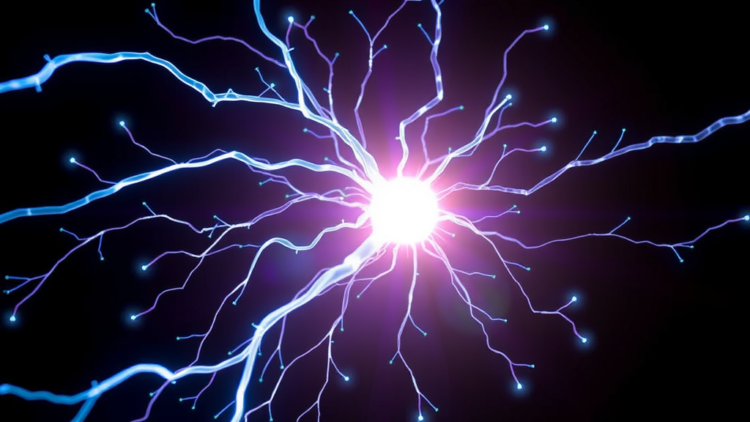
Optogenetics has long been proposed as an elegant solution. By introducing light-sensitive proteins such as channelrhodopsin 2 (ChR2) into specific populations of neurons, researchers can activate precisely those cells with pulses of light while leaving neighboring fibers untouched. In the new study, the team used transgenic mice expressing ChR2 and recorded compound action potentials (CAPs), the summed electrical signature of many axons firing together, from the sciatic nerve of anaesthetized animals. The results confirmed the selectivity promise: optogenetic stimulation activated Aα/Aβ fibers with impressive precision and produced no motor response at all, something electrical stimulation cannot achieve. For a field struggling to silence pain without triggering twitching limbs or tingling side effects, that selectivity is a major prize.
But there was a catch, and it is a serious one. When the researchers delivered tonic optogenetic stimulation, continuous trains of light pulses lasting up to 60 seconds at clinically relevant frequencies ranging from 4 to 100 Hz, the nerve responses faded dramatically. The optically evoked compound action potentials, or oCAPs, declined in an exponential and strongly frequency-dependent manner, with the statistical analysis showing a highly significant frequency effect (p < 0.001). At stimulation rates above 20 Hz, the response often vanished entirely, leaving no detectable signal even while the light continued to flash. In other words, the very thing that makes optogenetics selective also makes it fragile: the light-activated channels and the fibers themselves fatigue quickly, and the technique as it currently stands is simply untenable for the sustained stimulation that real-world pain therapy demands, even at low frequencies.
Electrical stimulation did not escape unscathed either. The electrically evoked compound action potentials, or eCAPs, also declined over the course of the 60-second stimulation trains, and they did so in a frequency-dependent, dual-phase exponential pattern that the team captured statistically (p < 0.001). This biphasic decay suggests two overlapping processes: a rapid initial drop, likely reflecting activity-dependent changes in axonal excitability such as hyperpolarization or potassium accumulation, followed by a slower secondary decline. Clinicians and device engineers have long observed that nerve responses wane during continuous stimulation, and this study quantifies that phenomenon precisely in the large sensory fiber population that pain therapy seeks to recruit, across the exact frequency range used in clinical peripheral nerve stimulation devices.
The most striking findings emerged when the researchers combined the two modalities. Delivering light and electrical stimulation together produced what the team describes as a facilitated response: the combined electrically and optically evoked CAP, or cCAP, was larger than what either stimulus could achieve alone. Across the entire stimulation period, more than 85 percent of the recorded responses showed this facilitation, and critically, the effect was maintained regardless of stimulation frequency (p = 0.33). The rapid initial reduction in response amplitude for combined stimulation was actually greater than that seen with electrical stimulation alone (p < 0.05), but after that fast phase, the response settled into a similar secondary decline as the electrical-only condition (p = 0.10). The net result, however, was a response that stayed larger and more sustained than either modality could deliver on its own.
Why does combining light and electricity boost the response? The mechanistic picture that emerges from this and earlier work is that the two stimuli act on the fibers through partially independent pathways. Electrical stimulation directly depolarizes the axonal membrane at the electrode, while optogenetic stimulation opens light-gated channels distributed along the ChR2-expressing sensory neurons. When both are applied, the depolarizations summate, preferentially boosting activation in the genetically targeted population of large sensory fibers. Because the electrical component does not fatigue in the same way as the optical one, it appears to prop up the response during the periods when the optically driven component would otherwise collapse. The consequence is a stimulus that retains the selectivity of the optogenetic approach, targeting only the Aα/Aβ fibers, while achieving the sustained responsiveness that pure light-based stimulation lacks.
The clinical implications are considerable. Peripheral nerve stimulation devices are already implanted in patients for chronic pain, but their efficacy is limited by the current ceilings imposed by motor fiber activation and by the inherent non-selectivity of electrical currents. If a hybrid device could deliver a small, safe electrical pulse alongside targeted optical activation of ChR2-expressing sensory fibers, it might achieve stronger and more sustained recruitment of the therapeutic fiber population without crossing into motor territory. The Melbourne team’s demonstration that facilitated responses persist across the full 4 to 100 Hz clinical frequency range, and throughout stimulation trains lasting a full minute, provides exactly the kind of preclinical evidence needed to justify pushing this approach toward translational development. This study adds to growing evidence that combined stimulation could improve the analgesic effect of existing peripheral nerve stimulation methods.
Significant hurdles remain before any such device reaches patients. Optogenetics in humans requires gene delivery, typically via adeno-associated viruses, to introduce light-sensitive proteins into the target neurons, and translating the transgenic mouse approach used here into a safe and durable human therapy is a formidable challenge involving dosing, immune responses and long-term expression. Light delivery to deep peripheral nerves also requires implanted LEDs or optical fibers, adding engineering complexity. The study itself was conducted in isoflurane-anaesthetized mice over relatively short stimulation windows, so questions about responses over hours, days or weeks of continuous use remain open. Ethical oversight was rigorous: all procedures were approved by the St Vincent’s Hospital Animal Ethics Committee in Melbourne and conducted under Australian animal welfare guidelines.
Nevertheless, the study represents a methodical and important step forward. By systematically comparing electrical, optogenetic and combined stimulation across clinically relevant frequencies and durations, and by quantifying the decay dynamics of each with rigorous statistical modeling, Ardren, Wrobel, Matarazzo, Thompson, Fallon, Richardson and their colleagues have given the neuromodulation field a clear-eyed assessment of what each approach can and cannot do. Optogenetics alone, however selective, cannot yet sustain the signals needed for therapy. Electrical stimulation alone, however durable, cannot select its targets. Together, the data suggest, they cover each other’s weaknesses. For the millions of chronic pain patients whose conditions resist every existing treatment, that combination, light and current working in concert, may be the most promising avenue yet for making nerve stimulation devices finally live up to their promise. The research was funded by the National Health and Medical Research Council and the Bionics Institute Incubation Fund, with support from the Victorian Government, and is published open access so that researchers worldwide can build on its findings immediately.
Subject of Research: How optogenetic, electrical and combined stimulation recruit large sensory nerve fibers in the mouse sciatic nerve during sustained neuromodulation for chronic pain treatment.
Article Title: Recruitment of Aα/Aβ fibers during tonic electrical, optogenetic and combined stimulation in the mouse sciatic nerve
Article References: Ardren, M. G., Wrobel, B., Matarazzo, J. V., Thompson, A. C., Fallon, J. B., & Richardson, R. T. (2026). Recruitment of Aα/Aβ fibers during tonic electrical, optogenetic and combined stimulation in the mouse sciatic nerve. BMC Neuroscience. https://doi.org/10.1186/s12868-026-01049-8
Image Credits: AI Generated
DOI: 10.1186/s12868-026-01049-8
Keywords: optogenetics, peripheral nerve stimulation, chronic pain, neuromodulation, sciatic nerve, A-alpha/A-beta fibers, compound action potential, channelrhodopsin, electrical stimulation, neuroengineering, BMC Neuroscience, pain therapy
Cite Scienmag News
APA
MLA
Chicago
Ophelia Keating. (September 23, 2026). Scientists Combine Light and Electricity to Keep Nerve Stimulation Working Longer. Scienmag. https://scienmag.com/scientists-combine-light-and-electricity-to-keep-nerve-stimulation-working-longer/
Ophelia Keating. “Scientists Combine Light and Electricity to Keep Nerve Stimulation Working Longer.” Scienmag, 23 September 2026, https://scienmag.com/scientists-combine-light-and-electricity-to-keep-nerve-stimulation-working-longer/. Accessed 23 September 2026.
Ophelia Keating. “Scientists Combine Light and Electricity to Keep Nerve Stimulation Working Longer.” Scienmag. September 23, 2026. https://scienmag.com/scientists-combine-light-and-electricity-to-keep-nerve-stimulation-working-longer/
Copy citation
Download RIS
Tags: A-alpha/A-beta fibersadvanced neuromodulation strategiesBMC NeuroscienceBMC Neuroscience studychannelrhodopsinchronic painchronic pain treatmentcombined light-electrical neuromodulationcompound action potentialelectrical stimulationhybrid neuromodulationlight and electrical nerve stimulationlong-lasting nerve stimulation devicesnerve fiber selectivitynerve stimulationneuroengineeringneuromodulationoptogeneticspain management technologypain therapyperipheral nerve stimulationperipheral nerve stimulation limitationssciatic nerveselective nerve fiber activation