• HOME
  • NEWS
  • EXPLORE
    • CAREER
      • Companies
      • Jobs
    • EVENTS
    • iGEM
      • News
      • Team
    • PHOTOS
    • VIDEO
    • WIKI
  • BLOG
  • COMMUNITY
    • FACEBOOK
    • INSTAGRAM
    • TWITTER
Thursday, April 2, 2026
BIOENGINEER.ORG
No Result
View All Result
  • Login
  • HOME
  • NEWS
  • EXPLORE
    • CAREER
      • Companies
      • Jobs
        • Lecturer
        • PhD Studentship
        • Postdoc
        • Research Assistant
    • EVENTS
    • iGEM
      • News
      • Team
    • PHOTOS
    • VIDEO
    • WIKI
  • BLOG
  • COMMUNITY
    • FACEBOOK
    • INSTAGRAM
    • TWITTER
  • HOME
  • NEWS
  • EXPLORE
    • CAREER
      • Companies
      • Jobs
        • Lecturer
        • PhD Studentship
        • Postdoc
        • Research Assistant
    • EVENTS
    • iGEM
      • News
      • Team
    • PHOTOS
    • VIDEO
    • WIKI
  • BLOG
  • COMMUNITY
    • FACEBOOK
    • INSTAGRAM
    • TWITTER
No Result
View All Result
Bioengineer.org
No Result
View All Result
Home NEWS Science News Biology

Baker’s yeast can help plants cope with soil contamination

Bioengineer by Bioengineer
July 3, 2017
in Biology
Reading Time: 2 mins read
0
Share on FacebookShare on TwitterShare on LinkedinShare on RedditShare on Telegram
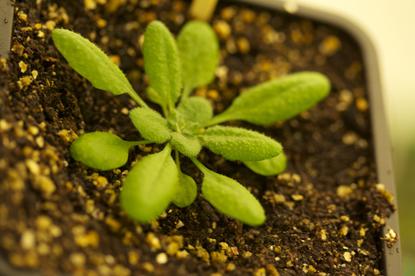
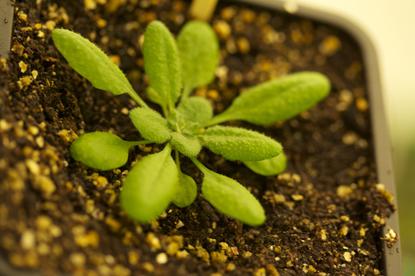
IMAGE

Credit: Raquel Carvalho

Most plant species, including crops, cannot tolerate the toxic effects of soil pollutants, which dramatically impair their growth and development. In a study now published in Scientific Reports*, a research team led by Paula Duque from the Instituto Gulbenkian de Ciencia (IGC; Portugal) discovered that two genes from baker's yeast can increase plant resistance to a broad range of toxic substances, enabling their growth in contaminated soils.

Heavy metals and organic pollutants released into the environment by the industry, as well as the misuse of herbicides and pesticides commonly used in agriculture, negatively affect the quality of soils. Some plant species are able to remove soil contaminants and grow normally, but these are a small minority. "Current strategies to decontaminate soils are very expensive and not so effective. The scientific community has been looking for alternative strategies to make plants more resilient to toxic compounds. A possible solution may lie in Saccharomyces cerevisiae, a species of yeast used for baking, brewing, and winemaking", says Paula Duque.

In fact, it was known that S. cerevisiae can resist herbicides and other chemicals. Isabel Sa-Correia's team at Instituto Superior Tecnico, Universidade de Lisboa (Portugal), who collaborated in this study, had identified two yeast genes playing a role in this mechanism. The Duque research group analysed the ability of those genes to confer multidrug resistance on Arabidopsis thaliana, a small flowering plant used as a model organism to understand biological processes common to other plants. After inserting either of the two yeast genes into this plant, the researchers found that it became more resistant to herbicides, fungicides and heavy metals. Plants carrying the yeast genes grew significantly better than wild-type plants in contaminated soils.

Paula Duque explains: "These two yeast genes produce proteins that are able to expel molecules from cells. So we hypothesized that they could play a similar role in plants, eliminating toxic molecules and allowing normal growth." The IGC researcher adds: "To extrapolate these results to crops, we will need further experiments in Arabidopsis to understand the mechanisms underlying plant resistance as well as studies in other plant species. But our results, obtained with genes of the yeast species that makes bread or beer, hold much promise to help solve a difficult environmental problem."

###

This study was conducted at the IGC and the Institute for BioEngineering and Biosciences (iBB) at Instituto Superior Tecnico, Universidade de Lisboa (Lisbon, Portugal). The work was funded by Fundacao para a Ciencia e a Tecnologia (Portugal).

* Remy, E., Niño-González, M., Godinho, C.P., Cabrito, T.P, Teixeira, M.C, Sá-Correia, I., Duque, P. Heterologous expression of the yeast Tpo1p or Pdr5p membrane transporters in Arabidopsis confers plant xenobiotic tolerance. Sci. Rep. 7, 4529 doi:10.1038/s41598-017-04534-7 (2017)

Media Contact

Ana Mena
[email protected]
351-214-407-959
@IGCiencia

http://www.igc.gulbenkian.pt

Related Journal Article

http://dx.doi.org/10.1038/s41598-017-04534-7

############

Story Source: Materials provided by Scienmag

Share12Tweet7Share2ShareShareShare1

Related Posts

Newly Discovered Chronic Pain Circuit Unveils Potential Avenues for Innovative Treatments

Newly Discovered Chronic Pain Circuit Unveils Potential Avenues for Innovative Treatments

April 2, 2026
DNA Transforms from Blueprint to Active Field Agent

DNA Transforms from Blueprint to Active Field Agent

April 2, 2026

UBC Okanagan Study Reveals How Trees Visually Signal Their Spring Rehydration

April 1, 2026

Rising Temperatures from Climate Change Associated with Reduced Newborn Size

April 1, 2026
Please login to join discussion

POPULAR NEWS

  • blank

    Revolutionary AI Model Enhances Precision in Detecting Food Contamination

    96 shares
    Share 38 Tweet 24
  • Imagine a Social Media Feed That Challenges Your Views Instead of Reinforcing Them

    1007 shares
    Share 398 Tweet 249
  • Promising Outcomes from First Clinical Trials of Gene Regulation in Epilepsy

    51 shares
    Share 20 Tweet 13
  • Popular Anti-Aging Compound Linked to Damage in Corpus Callosum, Study Finds

    44 shares
    Share 18 Tweet 11

About

We bring you the latest biotechnology news from best research centers and universities around the world. Check our website.

Follow us

Recent News

Stoichiometric FeTe Exhibits Superconductivity Breakthrough

QSOX2 Drives Osimertinib Resistance via JUNB-ITGB4 Axis

Significant Contrail Formation Despite Low Soot

Subscribe to Blog via Email

Enter your email address to subscribe to this blog and receive notifications of new posts by email.

Join 78 other subscribers
  • Contact Us

Bioengineer.org © Copyright 2023 All Rights Reserved.

Welcome Back!

Login to your account below

Forgotten Password?

Retrieve your password

Please enter your username or email address to reset your password.

Log In
No Result
View All Result
  • Homepages
    • Home Page 1
    • Home Page 2
  • News
  • National
  • Business
  • Health
  • Lifestyle
  • Science

Bioengineer.org © Copyright 2023 All Rights Reserved.