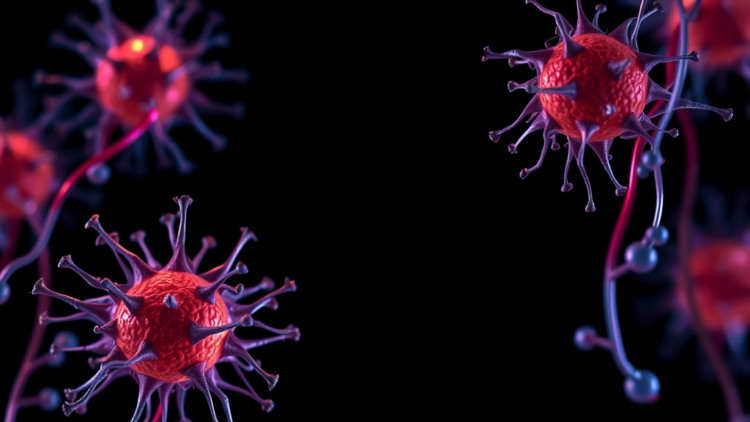
Cisplatin has long been a cornerstone of breast cancer chemotherapy, but for thousands of patients whose tumors develop resistance to this platinum-based drug, treatment options narrow dramatically. Now, a research team reporting in Materials Today Bio has engineered an ultrasound-activated nanomaterial that attacks resistant cancer cells through a fundamentally different route—one that bypasses the cellular defenses tumors use to shrug off conventional platinum therapy. The work, led by Jiahui Chen, Yu Shen, Yi Zheng, Xuehong Diao, Yu Chen and Rong Wu, demonstrates that PEGylated Pt56Mn44 nanodendrites, when energized by focused ultrasound waves, can wipe out cisplatin-resistant breast cancer cells in culture and dramatically suppress tumor growth in animal models.
The innovation centers on a class of nanoparticles called sonosensitizers, which convert ultrasound energy into destructive chemistry inside tumors. Sonodynamic therapy has attracted growing interest in oncology because ultrasound penetrates more than ten centimeters into tissue, allowing clinicians to activate the therapeutic effect non-invasively and precisely at the tumor site while sparing surrounding healthy tissue. The new material, designated PMP, consists of a dendritic platinum-manganese alloy cloaked in a polyethylene glycol shell. Its branched architecture, assembled from ultrasmall primary nanoparticles through a one-pot solvothermal synthesis, provides an abundance of catalytic active sites, while the PEG coating shifts the surface charge from positive to mildly negative and stabilizes the particles in blood-like environments.
Characterization revealed a hydrodynamic diameter of roughly 23 nanometers and a crystalline PtMn alloy structure confirmed by X-ray diffraction and high-resolution electron microscopy. Crucially, the nanodendrites proved to be environment-responsive: in the acidic, hydrogen-peroxide-rich conditions that define the tumor microenvironment, they disintegrate into sub-10-nanometer fragments, releasing divalent platinum and manganese ions. Under normal physiological conditions the particles remain stable for days, meaning their therapeutic payload is unleashed only where it is needed. Electron spin resonance spectroscopy and molecular probes confirmed that when exposed to ultrasound at clinically reasonable parameters—1 megahertz, 2.0 watts per square centimeter—the material generates two of the most cytotoxic reactive oxygen species known: singlet oxygen and hydroxyl radicals.
The narrow 2.67-electronvolt bandgap of the alloy proved central to this performance. Under ultrasound irradiation, the material achieves efficient separation of electrons and holes, driving a so-called Type I sonodynamic mechanism in which holes directly oxidize water molecules into hydroxyl radicals while electrons react with water and oxygen to form superoxide intermediates. Because this pathway depends far less on ambient oxygen than conventional sonosensitizers, it remains potent even in the hypoxic cores typical of resistant tumors—a long-standing weakness of oxygen-requiring photodynamic and sonodynamic approaches.
In experiments with MCF-7/DDP cells, a breast cancer line engineered to resist cisplatin, the researchers found that the combination of nanodendrites and ultrasound killed roughly 80 percent of tumor cells at the optimized treatment threshold. Notably, adding free cisplatin to the regimen conferred no additional benefit, indicating that the nanosystem does not simply re-sensitize tumors to the old drug but instead defeats resistance through an entirely independent mechanism. Cellular uptake studies traced this independence to a critical difference in how the nanoparticles enter cells. Rather than relying on the copper and ABC transporter pathways that platinum drugs use—pathways resistant tumors overexpress to pump the drug back out—the nanodendrites enter through clathrin-mediated and caveolae-dependent endocytosis. Blocking these endocytic routes with specific inhibitors sharply reduced intracellular metal accumulation, while blocking drug efflux pumps had no effect, confirming that the particles sidestep the canonical resistance machinery altogether.
Once inside, the released Pt(II) ions penetrate the nucleus and inflict DNA damage, restoring apoptotic signaling by conventional chemistry. The manganese ions, meanwhile, execute a second mission: they react with and deplete glutathione, the cell’s master antioxidant, and inactivate the enzyme glutathione peroxidase 4. With antioxidant defenses stripped away, iron-dependent lipid peroxides accumulate catastrophically in cellular membranes—the defining signature of ferroptosis. Electron microscopy of treated cells showed shrunken, membrane-dense mitochondria with dissolved cristae, and the ferroptosis inhibitor Ferrostatin-1 rescued cell viability from about 16 percent to nearly 73 percent, establishing ferroptosis as a primary death pathway driven directly by manganese-mediated glutathione depletion.
But the killing did not stop there. Transcriptomic sequencing of treated cells revealed more than 3,500 differentially expressed genes, with significant enrichment of apoptosis, ferroptosis, pyroptosis and necroptosis gene sets—a coordinated activation pattern the authors identify as PANoptosis, a recently described form of inflammatory programmed cell death in which multiple death-execution programs fire simultaneously. Microscopy captured membrane blebbing and nuclear fragmentation characteristic of apoptosis, membrane rupture and nuclear dissolution of necroptosis, and the swelling, bubble-like protrusions of pyroptosis. Western blots confirmed the molecular cascade: elevated cleaved caspase-3, suppressed Bcl-2, upregulated RIPK3 and phosphorylated MLKL for necroptosis, and activated NLRP3 inflammasome components including cleaved caspase-1 and the pore-forming N-GSDMD fragment for pyroptosis. Pyroptotic membrane rupture then spilled lactate dehydrogenase and the inflammatory cytokines IL-1β and IL-18 into the extracellular space, amplifying the alarm signal to neighboring immune cells.
Safety and biodistribution studies in healthy mice showed no abnormalities in blood counts, organ histology or body weight over two weeks, and ICP-MS tracking demonstrated that platinum and manganese levels in liver and spleen declined substantially by day seven, suggesting efficient clearance without long-term heavy-metal accumulation. In MCF-7/DDP tumor-bearing nude mice, fluorescence imaging showed peak tumor accumulation 12 hours after intravenous injection. When treatment began, the results were striking: all saline-treated control mice died within 22 days, and cisplatin monotherapy barely extended survival, confirming robust resistance in the model. The nanodendrite-plus-ultrasound group achieved a 66.7 percent survival rate at 60 days and a tumor-inhibition rate of 77.8 percent, reducing tumor volume to roughly a quarter of control values. Histological analysis of harvested tumors showed extensive necrosis, maximal DNA damage markers, suppressed proliferation, reduced GPX4, and elevated pyroptotic markers—mirroring the dual ferroptosis and PANoptosis activation observed in cell culture.
The authors emphasize that the ferroptotic and PANoptotic programs feed each other in a positive feedback loop: lipid peroxidation worsens mitochondrial dysfunction, which intensifies PANoptotic signaling, while the collapse of cellular homeostasis during PANoptosis further cripples antioxidant defenses, accelerating ferroptotic progression. This reciprocal crosstalk, they argue, is what allows the therapy to overcome a resistance phenotype that defeats single-mechanism drugs. By combining deep-tissue ultrasound activation, resistance-evading endocytic uptake, metal-ion-triggered redox collapse and multi-pathway cell death in one degradable nanoplatform, the study offers a blueprint for next-generation nanotherapeutics aimed at chemoresistant malignancies. The work was supported by the National Natural Science Foundation of China and Shanghai talent programs, and while clinical translation will require further pharmacological and toxicological validation, the demonstration that a single sonosensitizer can concurrently ignite two synergistic modes of programmed cell death marks a significant conceptual advance in the fight against drug-resistant cancer.
Subject of Research: Ultrasound-activated platinum-manganese nanodendrite sonosensitizers for treating cisplatin-resistant breast cancer via ferroptosis and PANoptosis
Article Title: Engineered nanodendritic sonosensitizers empower sonodynamic-elicited ferroptosis and PANoptosis against platinum-resistant breast cancer
Article References: Chen, J., Shen, Y., Zheng, Y., Kang, J., Wang, X., Diao, X., Chen, Y., & Wu, R. (2026). Engineered nanodendritic sonosensitizers empower sonodynamic-elicited ferroptosis and PANoptosis against platinum-resistant breast cancer. Materials Today Bio, 41, Article 103678. https://doi.org/10.1016/j.mtbio.2026.103678
Image Credits: AI Generated
DOI: 10.1016/j.mtbio.2026.103678
Keywords: sonodynamic therapy, cisplatin resistance, breast cancer, ferroptosis, PANoptosis, nanodendrites, platinum-manganese alloy, reactive oxygen species, ultrasound, glutathione depletion, nanomedicine, pyroptosis
Cite Scienmag News
APA MLA Chicago
Nathaniel Bowman. (September 23, 2026). Sono-Activated Platinum-Manganese Nanodendrites Trigger Ferroptosis and PANoptosis to Defeat Drug-Resistant Breast Cancer. Scienmag. https://scienmag.com/sono-activated-platinum-manganese-nanodendrites-trigger-ferroptosis-and-panoptosis-to-defeat-drug-resistant-breast-cancer/
Nathaniel Bowman. “Sono-Activated Platinum-Manganese Nanodendrites Trigger Ferroptosis and PANoptosis to Defeat Drug-Resistant Breast Cancer.” Scienmag, 23 September 2026, https://scienmag.com/sono-activated-platinum-manganese-nanodendrites-trigger-ferroptosis-and-panoptosis-to-defeat-drug-resistant-breast-cancer/. Accessed 23 September 2026.
Nathaniel Bowman. “Sono-Activated Platinum-Manganese Nanodendrites Trigger Ferroptosis and PANoptosis to Defeat Drug-Resistant Breast Cancer.” Scienmag. September 23, 2026. https://scienmag.com/sono-activated-platinum-manganese-nanodendrites-trigger-ferroptosis-and-panoptosis-to-defeat-drug-resistant-breast-cancer/
Copy citation Download RIS
Tags: breast cancerCatalytic active sites in dendritic nanostructurescisplatin resistanceferroptosisFerroptosis induction in resistant cancer cellsFocused ultrasound in non-invasive cancer treatmentglutathione depletionnanodendritesNanomedicineNanomedicine strategies for platinum-resistant tumorsNanoparticle-based sonodynamic therapy for drug-resistant breast cancerOvercoming chemotherapy resistance with nanotechnologyPANoptosisPANoptosis pathway in cancer therapyPEGylated nanomaterials for targeted drug deliveryplatinum-manganese alloyPlatinum-Manganese nanodendrites for cancer treatmentpyroptosisreactive oxygen speciessonodynamic therapyultrasoundUltrasound-activated nanomaterials in oncology