Credit: Jon Weidanz
The University of Texas at Arlington has awarded three new seed grants for interdisciplinary research projects that propose new ways to treat skin cancer, provide a new technique for more rapid and cost-effective evaluation of chemotherapy drugs, and to develop innovative programs to reduce the mental health risks of homeless youth.
"All three projects have the potential to make a real impact in our society and solve real-world problems," said Duane Dimos, UTA vice president for research. "Funding three strong interdisciplinary initiatives is also particularly strategic prior to next year's opening of the new $125 million Science, Engineering, Innovation and Research or SEIR building, which will be the signature facility for life and health science research at UTA."
The new SEIR building will feature state-of-the-art technology and will advance research at UTA by utilizing the modern concept of research lab neighborhoods to drive cross-disciplinary collaboration. Each of the 12 research lab neighborhoods will accommodate multiple teams in a wide range of fields, from biology to bioengineering to computational research to nursing and kinesiology.
The winning proposals for this year's Interdisciplinary Research Grants are:
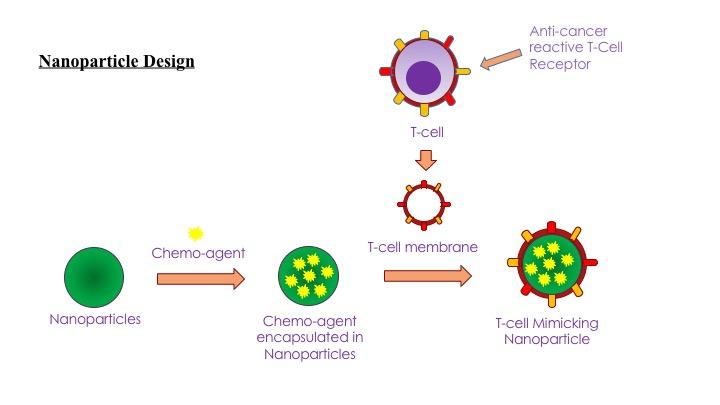
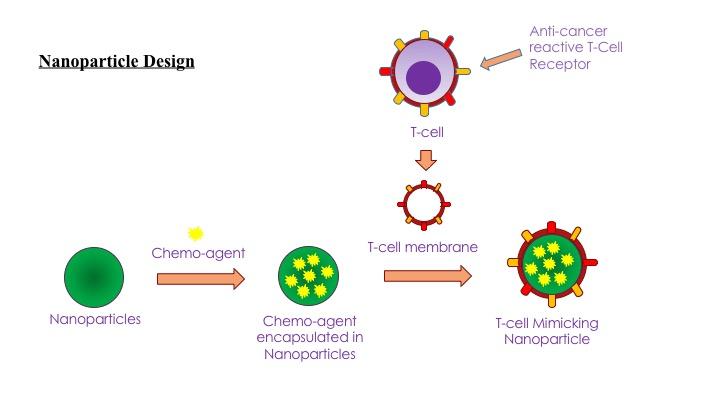
- T-Cell mimicking nanoparticles for targeted delivery of chemo-drugs to effectively treat melanoma
Kytai Nguyen in bioengineering; Jon Weidanz in biology; Vinay Abhyankar of the UTA Research Institute and Jean Gao in computer science and engineering have already developed a prototype for a new drug-loaded nanoparticle, which is cloaked with the plasma membrane of an immune or T-cell. This T-cell mimicking nanoparticle can recognize melanoma cells, bind with them to deliver drugs and kill the cell.
For this new project, the team aims to further test the treatment using a device that can replicate human melanoma on a chip.
- Mathematical modeling of dynamics of calcium codes for drugs evaluation
Benito Chen-Charpentier in mathematics; Hristo Kojouharov in mathematics and Zui Pan in nursing will develop a mathematical model to simulate dynamics of intracellular calcium signaling and apply it for a rapid and cost-effective evaluation for chemotherapy drugs.
Almost 40 percent of all modern drugs are targeted at different cell surface receptors, which reshape intracellular calcium signaling and affect cell growth and death. Pan's group already has shown that intracellular calcium oscillations affect tumor development in esophageal cancer cells.
The researchers plan to test their hypothesis that a mathematical model to simulate the dynamics of intracellular calcium signaling can predict the overall impact of one or combined chemotherapies on intracellular calcium codes. This will provide guidance to search for effective combinations to chemotherapy drugs in a much more rapid and cost-effective way. Currently available research data from Pan's group will help support the project.
- GOE! Pilot testing a community gardening and outdoor engagement intervention to reduce health disparities among homeless youth
Courtney Cronley in social work; Larry Nelson in kinesiology and David Hopman in landscape architecture plan to design and test a project called GOE!- Gardening and Outdoor Engagement – that aims to increase the physical activity and improve mental health among youth who are homeless and at high risk of negative mental, physical and behavioral health outcomes.
The long-term goal of the project is to develop a manual, evidence-based curriculum GOE! that can be replicated in similar communities nationally. The project will use advanced data collection technologies already available in the School of Social Work, the Department of Kinesiology, and use the UTA Urban Farm, sponsored by the Department of Landscape Architecture, as the test site.
"All these projects demonstrate UTA's capacity to create really innovative approaches through interdisciplinary research," Dimos said. "We fully expect these projects to be funded by federal agencies and become inventions and methodologies that reach the market."
This year marks the third year of the Interdisciplinary Research Program, which has funded a total of 12 projects.
###
Media Contact
Louisa Kellie
[email protected]
817-524-8926
@utarlington
http://www.uta.edu
Original Source
http://www.uta.edu/news/releases/2017/06/IRP%202017.php
############
Story Source: Materials provided by Scienmag