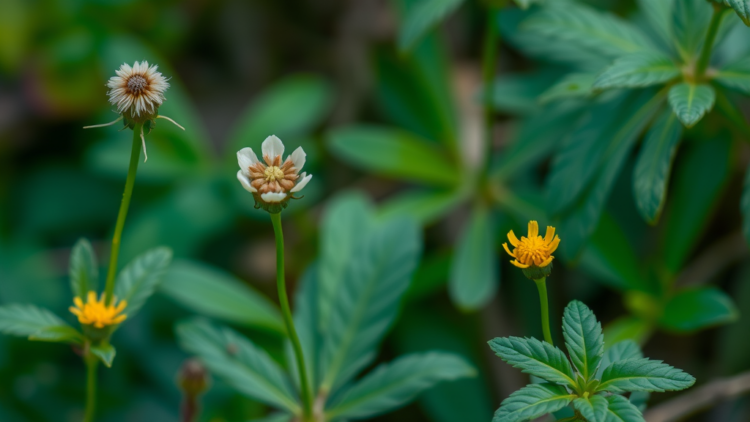
Deep in the pharmacopoeia of Tibetan medicine lies a vast library of plants whose correct identification can mean the difference between a healing remedy and a useless or even harmful preparation. For centuries, that identification has depended on the trained eyes of practitioners, but a research team in Qinghai, China, now reports a machine learning system that can classify Tibetan medicinal materials with 98.11 percent accuracy by learning to read both photographs of the plants and the written descriptions that accompany them. The study, published in Complex & Intelligent Systems, introduces a model called MHCNet, a multi-channel modal fusion hypergraph convolutional neural network designed specifically for the stubborn challenges of Tibetan herb recognition.
The problem the researchers set out to solve is deceptively simple to state and remarkably hard to solve. Many Tibetan medicinal materials appear in images as small targets that are easily occluded by soil, packaging, or neighboring objects. Field photographs are frequently degraded by strong light noise, which washes out the fine textural cues that distinguish one species from another. And unlike mainstream image recognition tasks, where millions of labeled examples exist, Tibetan medicine offers a comparatively small and specialized corpus, forcing algorithms to squeeze maximum information from every available sample.
MHCNet attacks these problems in stages. The visual pipeline begins with a modified version of DenseNet121, a convolutional architecture whose densely connected layers allow features to flow forward through the network without being diluted. The team reworked this backbone to better withstand small-target occlusion and strong light noise, producing visual features that remain robust even when the plant material occupies only a fraction of the frame. In parallel, a pre-trained Chinese BERT model digests the textual descriptions of each medicinal material, extracting contextual semantic features that capture how practitioners and pharmacists actually describe these plants in writing.
What happens next is where the architecture departs from conventional multimodal systems. Rather than simply concatenating image and text vectors, the model fuses the two modalities at the feature level and then computes Manhattan distance similarities across three representations for every sample: the image features, the text features, and the fused features. These similarity scores become the raw material for constructing three separate hypergraphs, one per modality. Unlike ordinary graphs, where an edge connects exactly two nodes, a hypergraph allows a single hyperedge to link many samples at once, which makes it a natural mathematical language for expressing the group-level structure of a dataset, where several specimens may share subtle family resemblances that pairwise connections cannot capture.
The researchers then designed a multi-channel hypergraph neural network to perform collaborative learning across these three hypergraphs simultaneously. This design choice directly addresses a well-known failure mode in multimodal learning called over-smoothing. When image and text features are fused too early and propagated through too many layers, their distinctive information tends to blur together until every node looks like every other node, and classification accuracy collapses. By keeping each modality on its own channel and letting the channels exchange information in a controlled way, MHCNet preserves the complementary strengths of vision and language instead of averaging them into mush.
A final innovation targets the fine-grained detail problem. Standard hypergraph construction, once fixed, is static: the neighborhoods defined at the start of training remain locked in place even as the network learns better representations. MHCNet inserts a feed-forward network after the first hypergraph convolution layer, which iteratively optimizes and dynamically adjusts the reconstruction of the hypergraph structure itself. In effect, the model keeps rewriting its own map of which samples belong together, refining the fine-grained relationships that a one-time construction would miss. This feedback loop between representation learning and graph structure is the mechanism the authors credit with resolving the inadequacy of fine-grained features during hypergraph construction.
The team evaluated the system on a self-built dataset of paired Tibetan medicine images and texts, a resource assembled to reflect the real conditions under which these materials are photographed and documented. On this benchmark, MHCNet achieved a recognition accuracy of 98.11 percent, a figure the authors present as evidence that the model effectively captures high-order cross-modal correlations, the intricate web of relationships that spans what a plant looks like and how it is described. For a domain where a misidentified root or flower can invalidate a traditional formulation, that margin of reliability matters.
The implications extend well beyond one dataset. Tibetan medicine is a pillar of traditional healthcare across the Qinghai-Tibet Plateau and surrounding regions, and its digital and intelligent development, the authors argue, hinges on accurate automated identification of medicinal plants. A dependable image-text classifier could support pharmacy quality control, help digitize herbarium collections, assist practitioners in remote clinics, and provide a verification layer for commercial supply chains where adulteration and mislabeling are persistent concerns. Because the model learns from text as well as images, it can leverage the descriptive knowledge embedded in centuries of written tradition, effectively allowing the literature itself to participate in the classification process.
Methodologically, the study adds to a growing body of work showing that hypergraph structures, long a niche tool in machine learning, are exceptionally well suited to fine-grained recognition problems where samples form complex higher-order clusters. The multi-channel strategy also offers a template for other multimodal tasks, from botanical surveys to medical imaging paired with clinical notes, wherever practitioners worry that naive fusion will smooth away the very distinctions that matter. The authors suggest the approach provides a reliable, generalizable solution for the intelligent identification of Tibetan medicines, and the architecture’s modularity, with separate vision, language, and fusion channels feeding a shared hypergraph learner, invites adaptation to other domains rich in paired visual and textual data.
The work was carried out by JianFu Chen, Jingru Ma, Zhaohui Zhang, and Yan Sun at the Key Laboratory of Artificial Intelligence Application Technology of the State Ethnic Affairs Commission, based at the School of Intelligent Science and Engineering of Qinghai Minzu University in Xining, together with Jiuchang Pei of Qinghai Provincial Tibetan Hospital, a collaboration that pairs computer science expertise with clinical knowledge of Tibetan pharmacology. Funding came from the Special Project of the Key Research and Development and Transformation Program of Qinghai Province, the Qinghai Provincial Natural Science Foundation, and the National Natural Science Foundation of China. Published as a peer-reviewed open access article, the study arrives at a moment when traditional medicine systems worldwide are racing to digitize their knowledge, and it demonstrates that the tools of modern artificial intelligence, thoughtfully adapted, can honor the fine distinctions on which those traditions depend.
Subject of Research: A multimodal hypergraph neural network for classifying Tibetan medicinal materials from paired image and text data.
Article Title: A multi-channel modal fusion hypergraph convolutional neural network for Tibetan medicinal material classification
Article References: Chen, J., Ma, J., Zhang, Z., Sun, Y., & Pei, J. (2026). A multi-channel modal fusion hypergraph convolutional neural network for Tibetan medicinal material classification. Complex & Intelligent Systems. https://doi.org/10.1007/s40747-026-02388-z
Image Credits: AI Generated
DOI: 10.1007/s40747-026-02388-z
Keywords: Tibetan medicine, hypergraph neural network, multimodal learning, modal fusion, medicinal plant classification, DenseNet121, BERT, fine-grained recognition, over-smoothing, image-text classification, Qinghai Minzu University, Complex & Intelligent Systems
Cite Scienmag News
APA MLA Chicago
Blake Davidson. (September 22, 2026). Hypergraph AI Reads Images and Text to Identify Tibetan Medicinal Plants With 98% Accuracy. Scienmag. https://scienmag.com/hypergraph-ai-reads-images-and-text-to-identify-tibetan-medicinal-plants-with-98-accuracy/
Blake Davidson. “Hypergraph AI Reads Images and Text to Identify Tibetan Medicinal Plants With 98% Accuracy.” Scienmag, 22 September 2026, https://scienmag.com/hypergraph-ai-reads-images-and-text-to-identify-tibetan-medicinal-plants-with-98-accuracy/. Accessed 22 September 2026.
Blake Davidson. “Hypergraph AI Reads Images and Text to Identify Tibetan Medicinal Plants With 98% Accuracy.” Scienmag. September 22, 2026. https://scienmag.com/hypergraph-ai-reads-images-and-text-to-identify-tibetan-medicinal-plants-with-98-accuracy/
Copy citation Download RIS
Tags: AI accuracy in traditional medicineBERTcombining visual and textual data for herbal identificationComplex & Intelligent Systemsdeep learning for Tibetan pharmacopoeiaDenseNet121fine-grained recognitionherbal medicine image recognition challengeshypergraph neural networkhypergraph neural networks for herbal classificationimage-text classificationmachine learning in traditional medicinemedicinal plant classificationMHCNet Tibetan herb recognitionmodal fusionmulti-modal image and text analysismultimodal learningover-smoothingplant species recognition in Tibetan medicineQinghai Minzu Universitysmall target object detection in herbal imagesTibetan herbal medicine classification systemsTibetan medicinal plants identificationTibetan medicine