Credit: IDIBELL
Researchers in the Oncobell program at the Bellvitge Biomedical Research Institute (IDIBELL) – Catalan Institute of Oncology (ICO), have unveiled a new role for free 40S ribosomes as guardians of genetic information required to synthesize themselves. This mechanism, which relies on a complex of free 40S ribosomes and the RNA binding protein LARP1, is independent from the 40S ribosomes role in protein synthesis, which can be potentially targeted as a cancer therapy. Moreover, together with researchers at the IDIBAPS, Barcelona, they also found that the 40S-LARP1 complex may be a potential point of intervention for the treatment of 5q- syndrome, a rare sporadic genetic disease, which they demonstrate is causally linked to the loss of LARP1 and free 40S ribosomes
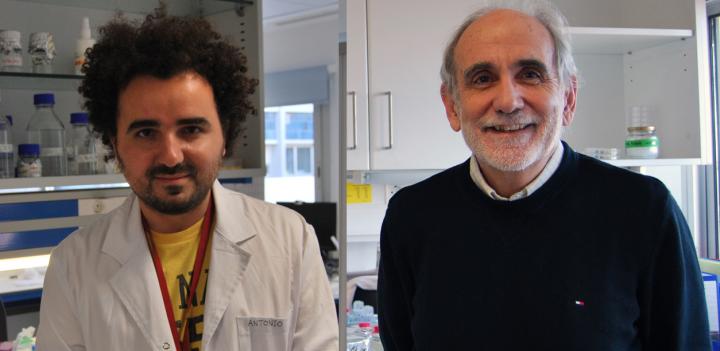
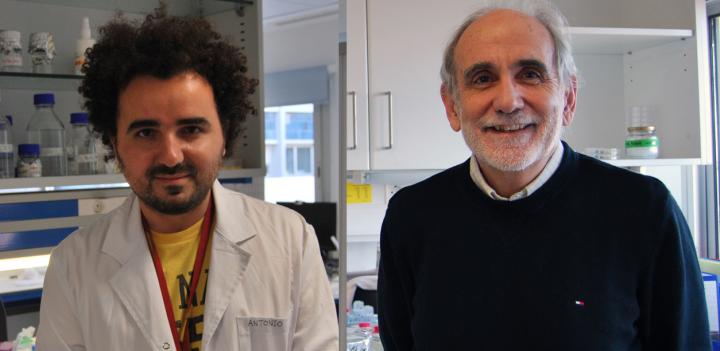
Ribosomes are the protein factories of the cell; they are responsible for translating genetic information inscribed by messenger RNAs (mRNAs) into the amino acid sequence of proteins. "We have identified a mechanism by which a subset of 40S ribosomes can preserve the genetic information in the form of mRNAs needed to rapidly produce new ribosomes and the accessory factors required in the process of translation", explains Dr. Antonio Gentilella, first author of the study and Professor at the University of Barcelona. "By protecting this information, the ribosome ensures its potential to reproduce itself and provide the required anabolic capacity upon demand."
"Just a very small portion of the 40S ribosomes is dedicated to this protective task", adds Dr. George Thomas, group leader of the Laboratory of Cancer Metabolism at ICO-IDIBELL and also a Professor at University of Barcelona. "They are set up in a way that allows them to reproduce themselves whenever the cell sends a signal – an oncogenic, or mitogenic signal – that triggers them to do so. Knowing that cancer cells have to dramatically increase the amount of ribosome machinery in order to proliferate, this new reservoir of ribosomes becomes extremely important."
All proteins in the cell are synthesized by ribosomes. This makes them central not only in the context of normal cellular physiology, but also in cancer development. Cancer cells need to grow and constantly generate biomass, so they exploit this mechanism to do so; it is a hallmark of the disease. Therefore, inhibition of ribosome biogenesis is currently targeted as a therapeutic strategy against many cancers.
The researchers have identified LARP1, as part of the complex that binds the mRNAs encoding ribosomal proteins that are protected by the 40S ribosome. "Now we have deeper understanding of this process, which may serve as an important Achilles' heel to exploit in cancer treatment", Dr. Gentilella points out; "in addition to the current therapies, attacking the 40S-LARP1 reservoir complex would ideally remove this pool of mRNAs responsible for generating new ribosomes ". Quoting Dr. Thomas, "we have drugs capable of blocking ribosome biogenesis, but many anabolic mRNAs are still preserved, protected by the 40S-LARP1 complex; when we stop treatment, they can be rapidly utilized to generate new ribosomes, reinitiating the cancer. That is why attacking the complex is such an exciting approach; if we destroy the reservoir of mRNAs, we avoid further ribosome biogenesis", says Dr. Thomas.
###
Media Contact
Gemma Fornons
[email protected]
34-638-685-074
@idibell_en
Original Source
http://www.idibell.cat/modul/news/en/1005/a-new-ribosomal-biogenesis-regulation-point-to-treat-cancer-and-5q-syndrome http://dx.doi.org/10.1016/j.molcel.2017.06.005
############
Story Source: Materials provided by Scienmag