• HOME
  • NEWS
  • EXPLORE
    • CAREER
      • Companies
      • Jobs
    • EVENTS
    • iGEM
      • News
      • Team
    • PHOTOS
    • VIDEO
    • WIKI
  • BLOG
  • COMMUNITY
    • FACEBOOK
    • INSTAGRAM
    • TWITTER
Wednesday, May 20, 2026
BIOENGINEER.ORG
No Result
View All Result
  • Login
  • HOME
  • NEWS
  • EXPLORE
    • CAREER
      • Companies
      • Jobs
        • Lecturer
        • PhD Studentship
        • Postdoc
        • Research Assistant
    • EVENTS
    • iGEM
      • News
      • Team
    • PHOTOS
    • VIDEO
    • WIKI
  • BLOG
  • COMMUNITY
    • FACEBOOK
    • INSTAGRAM
    • TWITTER
  • HOME
  • NEWS
  • EXPLORE
    • CAREER
      • Companies
      • Jobs
        • Lecturer
        • PhD Studentship
        • Postdoc
        • Research Assistant
    • EVENTS
    • iGEM
      • News
      • Team
    • PHOTOS
    • VIDEO
    • WIKI
  • BLOG
  • COMMUNITY
    • FACEBOOK
    • INSTAGRAM
    • TWITTER
No Result
View All Result
Bioengineer.org
No Result
View All Result
Home NEWS Science News Biology

UM tesearch: Slow-growing ponderosas survive mountain pine beetle outbreaks

Bioengineer by Bioengineer
June 28, 2017
in Biology
Reading Time: 2 mins read
0
Share on FacebookShare on TwitterShare on LinkedinShare on RedditShare on Telegram
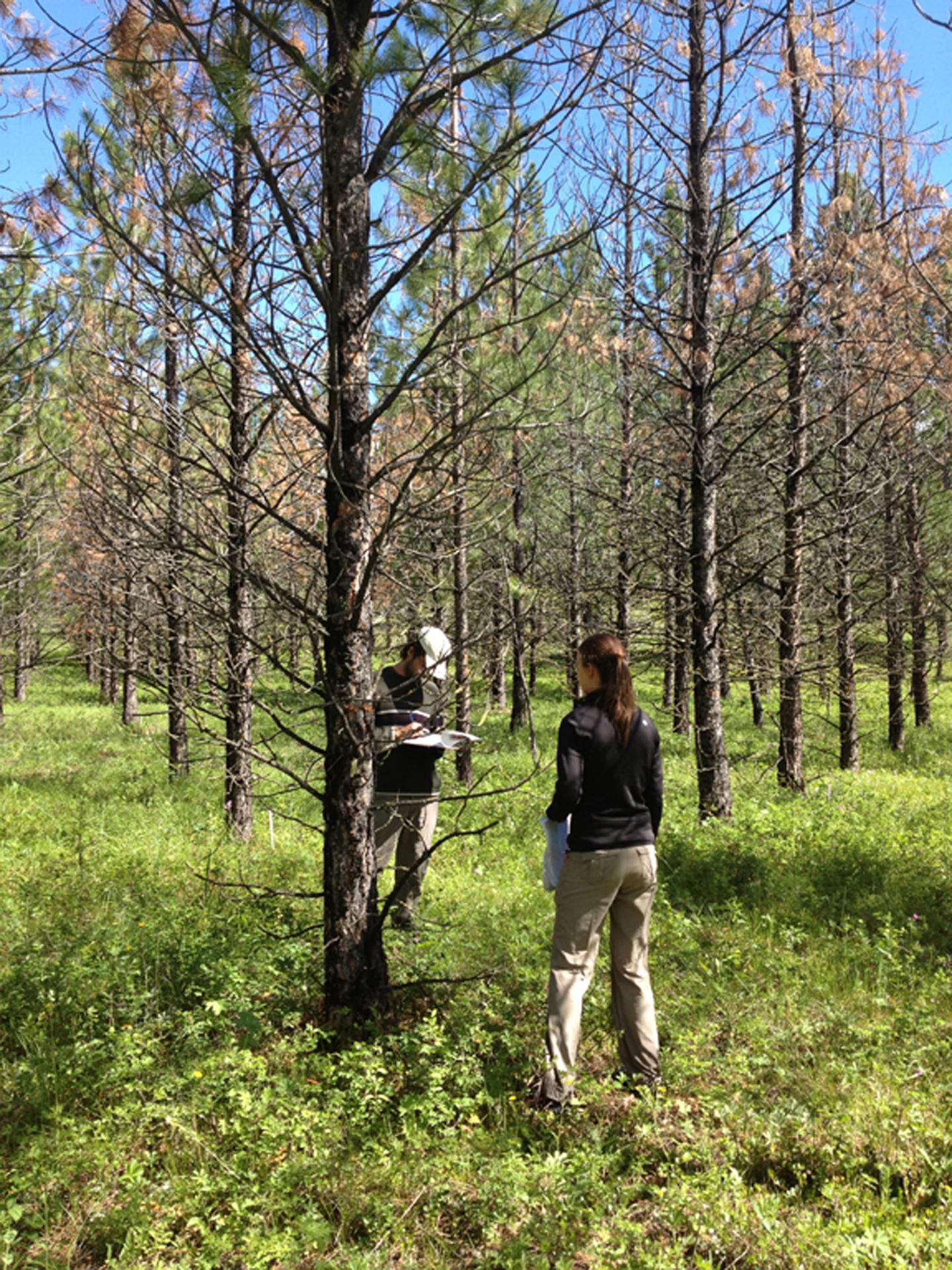
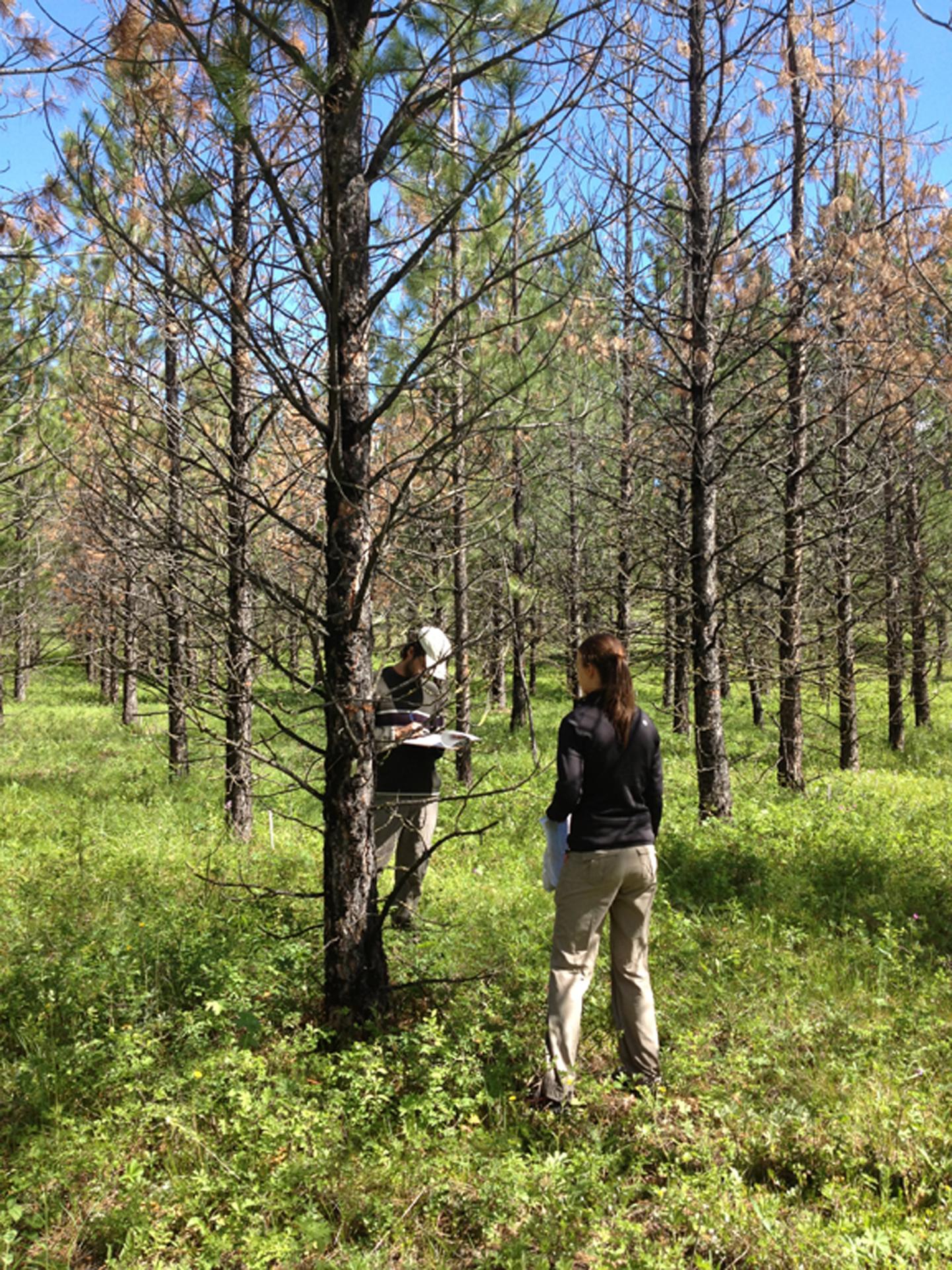
IMAGE

Credit: courtesy photo

MISSOULA – Slow-growing ponderosa pines may have a better chance of surviving mountain pine beetle outbreaks in western Montana as climate change increases the frequency of drought and insect pests, according to new research published by a team of University of Montana scientists.

The team of researchers, led by UM biological sciences Professor Anna Sala, published their findings in the journal Proceedings of the National Academy of Sciences this month. The study, based on a 38-year ponderosa pine genetic experiment at UM's Lubrecht Experimental Forest, found young families of fast-growing ponderosa pines typically survived to maturity better than slow-growing ones — but this was not the case when mature trees were affected by a mountain pine beetle outbreak. In that scenario, slow-growing families survived better.

"Our findings explain why natural tree populations maintain a mixture of genotypes with different growth rates," Sala said. "The study illustrates why the maintenance of genetic diversity is critical to cope with the varying demands as organisms grow, as environmental conditions change and with the variety of risks that organisms face during their lifespan — particularly under climate change, when the frequency of drought, insect pests such as the mountain pine beetle and extreme events are predicted to increase."

The team used a combination of data to show that fast growth in trees may be costly. They measured survival after a mountain pine beetle outbreak when trees were almost 40 years old and used a long-term dataset on survival and growth rates of over 4,000 trees planted in 1974, which was provided by the Inland Empire Tree Improvement Cooperative. With these data, the researchers were able to show in a long-lived organism that the specific genotypes that survive at any given point in time had changed over time. Their study shows that under some circumstances, such as high bark beetle densities during an outbreak, fast growth is costly.

###

The article, "An insect outbreak shifts the direction of selection from fast to slow growth rates in the long-lived conifer Pinus ponderosa" can be accessed online at http://bit.ly/2rYU9hb. For more information call Sala at 406-243-6009 or email [email protected].

Media Contact

Anna Sala, , professor, UM Division of Biological Sciences
[email protected]
406-243-6009

http://www.umt.edu

Original Source

http://bit.ly/2s2LZ7w

############

Story Source: Materials provided by Scienmag

Share12Tweet8Share2ShareShareShare2

Related Posts

Brookfield Zoo Chicago Achieves Major Milestone in Puerto Rican Crested Toad Conservation with Over 12,000 Tadpoles — Biology

Brookfield Zoo Chicago Achieves Major Milestone in Puerto Rican Crested Toad Conservation with Over 12,000 Tadpoles

May 19, 2026
Decoding p53 Vulnerability: Unraveling Why the Genome Guardian Often Fails — Biology

Decoding p53 Vulnerability: Unraveling Why the Genome Guardian Often Fails

May 19, 2026

New Imaging Technique Simultaneously Maps Brain Activity in Nine Cell Types — Over Four Times the Previous Limit

May 19, 2026

Decoding the Tumor Microenvironment Chemokine Network: From Immune Evasion to Innovative Multi-Target Therapies

May 19, 2026
Please login to join discussion

POPULAR NEWS

  • blank

    New Study Reveals Plants Can Detect the Sound of Rain

    732 shares
    Share 292 Tweet 183
  • Research Indicates Potential Connection Between Prenatal Medication Exposure and Elevated Autism Risk

    846 shares
    Share 338 Tweet 212
  • ESMO 2025: mRNA COVID Vaccines Enhance Efficacy of Cancer Immunotherapy

    281 shares
    Share 112 Tweet 70
  • Breastmilk Balances E. coli and Beneficial Bacteria in Infant Gut Microbiomes

    58 shares
    Share 23 Tweet 15

About

We bring you the latest biotechnology news from best research centers and universities around the world. Check our website.

Follow us

Recent News

Hepatic SNHG9 Connects Gut Microbiota to Liver Defense

NCCN Reinforces Global Commitment to Cancer-Related Distress Resources in Observance of Mental Health Awareness Month

Introducing AGA’s New President: Dr. Byron L. Cryer

Subscribe to Blog via Email

Enter your email address to subscribe to this blog and receive notifications of new posts by email.

Join 82 other subscribers
  • Contact Us

Bioengineer.org © Copyright 2023 All Rights Reserved.

Welcome Back!

Login to your account below

Forgotten Password?

Retrieve your password

Please enter your username or email address to reset your password.

Log In
No Result
View All Result
  • Homepages
    • Home Page 1
    • Home Page 2
  • News
  • National
  • Business
  • Health
  • Lifestyle
  • Science

Bioengineer.org © Copyright 2023 All Rights Reserved.