For decades, the central obstacle to curing HIV infection has been the viral reservoir: a small population of cells carrying transcriptionally silent proviruses that antiretroviral therapy suppresses but cannot eliminate. Because latent virus produces almost none of the proteins that immune cells normally use to recognize infected targets, the reservoir has long been regarded as effectively invisible to the host immune system. A new study published in Nature Immunology challenges that assumption, showing that the composition and persistence of the HIV-1 reservoir during long-term antiretroviral therapy are strongly shaped by the innate immune system, and in particular by natural killer cells educated through the receptor KIR2DL1.
Antiretroviral therapy transformed HIV from a nearly uniform death sentence into a manageable chronic condition by blocking new rounds of infection. Yet the therapy does nothing to the proviral DNA already stitched into the genomes of long-lived host cells. As soon as treatment lapses, the reservoir seeds rapid viral rebound. Understanding why particular infected clones persist for years, while others decay, has therefore become one of the most consequential questions in HIV research, and the new findings suggest the answer lies partly in the immune environment the reservoir cells inhabit rather than in the virus alone.
Natural killer cells are innate lymphocytes that patrol the body and kill stressed or infected cells without requiring the antigen-specific recognition that defines T and B lymphocytes. Their activity is governed by a delicate balance of activating and inhibitory receptors. KIR2DL1 is an inhibitory killer-cell immunoglobulin-like receptor that recognizes specific HLA class I molecules, the same surface proteins that HIV-exposed cells display. The education model of NK cell biology holds that a developing NK cell calibrates its functional competence through interactions between its inhibitory receptors and self-HLA; a KIR2DL1-positive NK cell in an individual carrying the corresponding HLA ligand becomes ‘educated,’ or licensed, to respond vigorously when that ligand is lost or altered, as frequently happens during viral infection.
The study demonstrates that these education states are not a fleeting influence but leave durable imprints on the reservoir. By examining cells from people who had spent years, in some cases many years, on suppressive antiretroviral regimens, the researchers found that proviruses surviving over the long term were not distributed randomly across the infected cell population. Instead, their persistence correlated with features of the innate immune landscape, indicating that some infected cells had been preferentially spared or eliminated depending on how the NK cell compartment of that individual had been trained.
This reframes the reservoir as an active participant in a prolonged evolutionary standoff with the immune system. Cells harboring intact, replication-competent proviruses that somehow avoid NK-mediated killing gain a survival advantage and expand, sometimes through clonal proliferation, over years of therapy. Cells that present vulnerabilities to educated NK cells are progressively culled. The result is a reservoir sculpted by immune pressure, analogous in some respects to how antigen escape shapes the evolution of the virus in untreated infection, but operating here through germline-encoded innate receptors rather than clonal adaptive recognition.
The technical achievement underlying these conclusions is considerable. Single-cell approaches now allow researchers to connect proviral sequence, integration site, transcriptional state, and surface phenotype in the same individual cell, converting what was once a population-level average into a high-resolution map of reservoir heterogeneity. Combined with deep characterization of NK cell receptor repertoires and their HLA ligands in each study participant, such methods make it possible to ask which immune configurations leave measurable signatures on which reservoir lineages, and the study deployed precisely this integrative strategy across cohorts on long-term therapy.
The clinical implications are potentially far-reaching. Current cure strategies aim to ‘shock and kill’ the reservoir, using latency-reversing agents to force latent proviruses into expression so that immune or pharmacological effectors can destroy the exposed cells. If KIR2DL1-educated NK cells already exert selection pressure on the reservoir, then the efficiency of such interventions may depend heavily on whether the killing arm of the strategy is matched to the individual’s NK cell education status and HLA type. A shock-and-kill regimen delivered to a person whose NK cells are poorly licensed against their own reservoir cells might flush virus into the open without achieving meaningful depletion.
This line of thinking points toward precision immunotherapies for HIV. Just as cancer immunotherapy increasingly considers the tumor microenvironment and the patient’s innate immune competence, curative interventions for HIV may need to account for innate immune imprints. Engaging NK cells deliberately, through bispecific killer-cell engagers, cytokine modulation, or engineered NK products, could in principle tip the standoff in favor of the host. Conversely, therapies that inadvertently impair NK education or function might relax selection pressure and allow reservoir clones to expand unchecked during what was assumed to be stable suppression.
The findings also resonate with a broader shift in virology: the recognition that innate immunity is not merely a rapid first response but a long-lived determinant of infection outcomes. Trained immunity, NK cell memory-like behavior, and receptor education all illustrate that innate cells carry histories. In chronic infections treated for years with suppressive drugs, those histories accumulate and leave fingerprints on the surviving pathogen population. HIV, the most intensively studied persistent human virus, now appears to bear such fingerprints in its reservoir.
Substantial questions remain. The relationship between KIR2DL1 education and reservoir persistence will need to be validated across larger and more diverse cohorts, since KIR and HLA genotype distributions vary substantially across populations, and HIV epidemiology is concentrated in regions where such genetic diversity is greatest. Whether innate selection can be therapeutically harnessed to shrink the reservoir, or only to shape it, is unresolved. But the conceptual contribution is clear: the latent HIV reservoir is not hidden from the immune system in any absolute sense. It has been living under innate immune surveillance all along, and the cells that persist during long-term antiretroviral therapy are, in part, the survivors of that surveillance. Any credible path to a cure will have to reckon with the imprints that this ancient arm of immunity has already left on the virus’s last refuge.
Subject of Research: The influence of KIR2DL1-educated natural killer cells on the persistence of latent HIV-1 reservoir cells during long-term antiretroviral therapy.
Article Title: Innate immune imprints shape HIV-1 reservoir cell persistence during long-term antiretroviral therapy
Article References: Tan, T. S., Sun, W., Gao, C., Viard, M., Walters, L. C., Lancien, M., Yuki, Y., Van, T. N., Casquero, C., Guo, X., Hoh, R., Haas, D. W., Michael, N., Kirk, G. D., Yendewa, G., Gandhi, R. T., Kassaye, S. G., Tien, P. C., Walker, B. D., … Lichterfeld, M. (2026). Innate immune imprints shape HIV-1 reservoir cell persistence during long-term antiretroviral therapy. Nature Immunology. https://doi.org/10.1038/s41590-026-02637-w
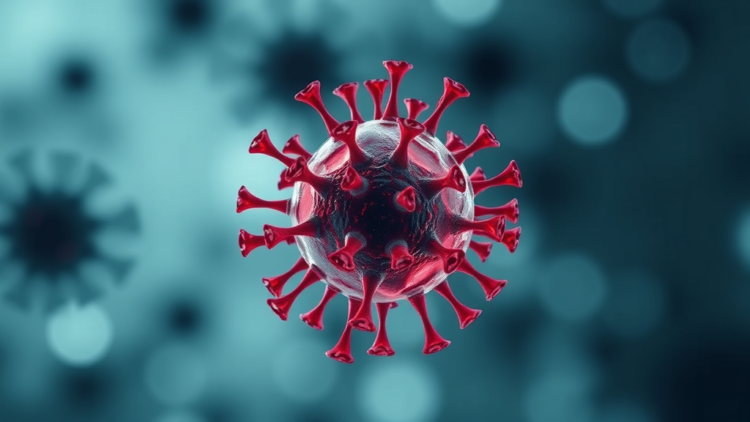
Image Credits: AI Generated
DOI: 10.1038/s41590-026-02637-w
Keywords: HIV-1, viral reservoir, natural killer cells, KIR2DL1, NK cell education, antiretroviral therapy, viral latency, innate immunity, HIV cure research, Nature Immunology, immunotherapy, proviral persistence
Cite Scienmag News
APA MLA Chicago
Kristina Jarvis. (September 13, 2026). Natural Killer Cell Education Leaves Lasting Imprints on the Persistent HIV Reservoir. Scienmag. https://scienmag.com/natural-killer-cell-education-leaves-lasting-imprints-on-the-persistent-hiv-reservoir/
Kristina Jarvis. “Natural Killer Cell Education Leaves Lasting Imprints on the Persistent HIV Reservoir.” Scienmag, 13 September 2026, https://scienmag.com/natural-killer-cell-education-leaves-lasting-imprints-on-the-persistent-hiv-reservoir/. Accessed 13 September 2026.
Kristina Jarvis. “Natural Killer Cell Education Leaves Lasting Imprints on the Persistent HIV Reservoir.” Scienmag. September 13, 2026. https://scienmag.com/natural-killer-cell-education-leaves-lasting-imprints-on-the-persistent-hiv-reservoir/
Copy citation Download RIS
Tags: antiretroviral therapyantiretroviral therapy limitationsHIV cure challengesHIV cure researchHIV reservoirHIV viral reboundHIV-1immune imprinting on HIVimmune system influence on HIV persistenceImmunotherapyinnate immunityinnate immunity in HIVKIR2DL1KIR2DL1 receptor rolelatent HIV proviruslong-term HIV infection managementnatural killer cell educationnatural killer cell memorynatural killer cellsNature ImmunologyNK cell educationproviral persistenceviral latencyviral reservoir