• HOME
  • NEWS
  • EXPLORE
    • CAREER
      • Companies
      • Jobs
    • EVENTS
    • iGEM
      • News
      • Team
    • PHOTOS
    • VIDEO
    • WIKI
  • BLOG
  • COMMUNITY
    • FACEBOOK
    • INSTAGRAM
    • TWITTER
Wednesday, October 7, 2026
BIOENGINEER.ORG
No Result
View All Result
  • Login
  • HOME
  • NEWS
  • EXPLORE
    • CAREER
      • Companies
      • Jobs
        • Lecturer
        • PhD Studentship
        • Postdoc
        • Research Assistant
    • EVENTS
    • iGEM
      • News
      • Team
    • PHOTOS
    • VIDEO
    • WIKI
  • BLOG
  • COMMUNITY
    • FACEBOOK
    • INSTAGRAM
    • TWITTER
No Result
View All Result
Bioengineer.org
No Result
View All Result
Home NEWS Science News Biology

Bristol’s Dr Gorochowski awarded Royal Society University Research Fellowship

Bioengineer by Bioengineer
June 28, 2017
in Biology
Reading Time: 2 mins read
0
Share on FacebookShare on TwitterShare on LinkedinShare on RedditShare on Telegram
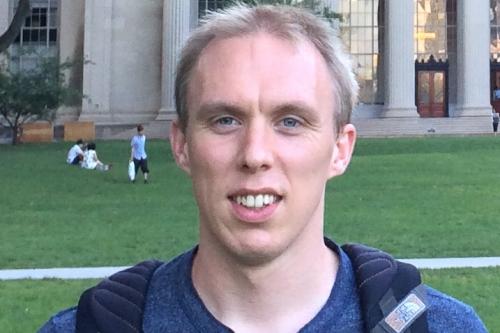
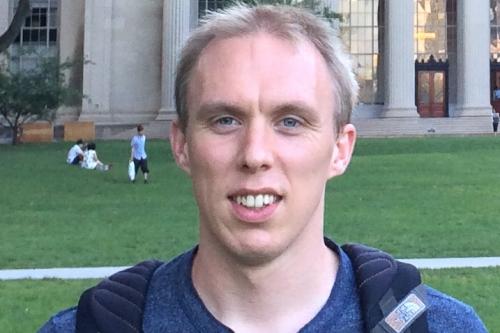
IMAGE

Credit: University of Bristol

Dr Thomas Gorochowski, from the University of Bristol's Bristol BioDesign Institute, has been awarded a prestigious five-year University Research Fellowship by the Royal Society.

Dr Gorochowski joined the University of Bristol in 2016 as the first of two Fellows in Synthetic Biology to be appointed to BrisSynBio, a UK Synthetic Biology Research Centre that forms part of the Bristol BioDesign Insititute.

The Royal Society's University Research Fellowship scheme aims to provide outstanding early career scientists, who have potential to become leaders in their field, with the opportunity to build an independent research career.

Dr Gorochowski will use his Fellowship to establish his own independent research group at the University of Bristol that will focus on developing a greater understanding of synthetic genetic circuits.

Dr Gorochowski explains: "Genetic circuits are encoded into the DNA of living cells and are key to regulating their behaviours.

"While the DNA encoding such circuits can now be easily synthesised, predicting how these circuits will function when placed in living cells is less straightforward. Currently it can take months, or even years, to construct a fully working system.

"With this Fellowship, I will lead a research team that aims to overcome these challenges and make major advances towards developing synthetic genetic circuits with functions we can easily control.

"To do so, we will develop novel sequencing technologies combined with mathematical models to provide the most detailed view of synthetic genetic circuits to date. This will form a valuable toolbox for bioengineers and enable the rapid design of genetic systems with our own desired behaviours.

"Ultimately this research will help unlock the significant potential of synthetic genetic circuits to harness the power of biology and could offer solutions to many pressing global issues, from the sustainable production of valuable chemicals and materials, to completely new forms of medicine."

###

Media Contact

Shona East
[email protected]
117-928-8086
@BristolUni

http://www.bristol.ac.uk

############

Story Source: Materials provided by Scienmag

Share13Tweet8Share2ShareShareShare2

Related Posts

New Tick Species Hidden in Ecuador's Cloud Forests Named After the Reserve Where It Was Found

New Tick Species Hidden in Ecuador’s Cloud Forests Named After the Reserve Where It Was Found

October 7, 2026
One Spiking Neural Network Learns What Happens, When, and How Likely

One Spiking Neural Network Learns What Happens, When, and How Likely

October 7, 2026

Engineered Flavonoid Cousins of Fisetin Clear Senescent Cells and Boost Healthspan in Mice

October 7, 2026

New AI Tool miRDrug Maps the Shared Genes Behind MicroRNAs, Drugs and Resistance

October 7, 2026
Please login to join discussion

POPULAR NEWS

  • Alloys That Shrink Their Own Grains: New PIX Mechanism Refines Metals With Heat Alone

    Alloys That Shrink Their Own Grains: New PIX Mechanism Refines Metals With Heat Alone

    29 shares
    Share 12 Tweet 7
  • Endurance Exercise Reshapes the Liver in Males and Females Through Distinct Molecular Routes

    29 shares
    Share 12 Tweet 7
  • Single Transcription Factor PU.1 Rapidly Converts Fibroblasts into Macrophage-Lineage Cells

    29 shares
    Share 12 Tweet 7
  • New Scale Measures How Ready Nurse Educators Really Are for the AI Era

    29 shares
    Share 12 Tweet 7

About

We bring you the latest biotechnology news from best research centers and universities around the world. Check our website.

Follow us

Recent News

Alloys That Shrink Their Own Grains: New PIX Mechanism Refines Metals With Heat Alone

Endurance Exercise Reshapes the Liver in Males and Females Through Distinct Molecular Routes

Single Transcription Factor PU.1 Rapidly Converts Fibroblasts into Macrophage-Lineage Cells

Subscribe to Blog via Email

Success! An email was just sent to confirm your subscription. Please find the email now and click 'Confirm' to start subscribing.

Join 85 other subscribers
  • Contact Us

Bioengineer.org © Copyright 2023 All Rights Reserved.

Welcome Back!

Login to your account below

Forgotten Password?

Retrieve your password

Please enter your username or email address to reset your password.

Log In
No Result
View All Result
  • Homepages
    • Home Page 1
    • Home Page 2
  • News
  • National
  • Business
  • Health
  • Lifestyle
  • Science

Bioengineer.org © Copyright 2023 All Rights Reserved.