Chemists at Shihezi University in China have shown that the shape of a catalyst can matter as much as its chemistry, reporting that hollow spherical alumina particles outperform conventional forms of the same material in a key industrial reaction. In a study published in Catalysis Letters, the team compared hollow spherical alumina with needle-like alumina and a commercial reference material in the transesterification of dimethyl oxalate with ethanol to produce diethyl oxalate, an important chemical intermediate. The hollow spheres did not merely edge ahead of their rivals; they delivered complete conversion of the starting material under relatively mild conditions, a result that could reshape how catalysts for this process are designed.
Diethyl oxalate sits at the heart of several industrially significant value chains. It is traditionally produced through the catalytic coupling of carbon monoxide, a route that typically relies on palladium-based catalysts and demanding reaction conditions. An alternative pathway starts from dimethyl oxalate, itself accessible from coal or biomass-derived syngas, and swaps its methyl groups for ethyl groups through transesterification with ethanol. This exchange reaction is attractive because it uses abundant ethanol and avoids precious metals, but it requires a catalyst that can activate both the ester and the alcohol efficiently. Solid catalysts with a careful balance of acidic and basic surface sites have long been recognized as the key to making that happen without corrosive liquid reagents.
The Shihezi researchers, led by corresponding author Chuancai Zhang, prepared two distinct alumina morphologies and benchmarked them against a commercial alumina sample in a fixed-bed reactor. Needle-like alumina, designated N-Al2O3, and hollow spherical alumina, designated B-Al2O3, were synthesized and then characterized with an extensive battery of techniques, including X-ray diffraction, scanning and transmission electron microscopy, X-ray photoelectron spectroscopy, electron paramagnetic resonance, photoluminescence spectroscopy, temperature-programmed desorption, pyridine adsorption infrared spectroscopy, and Brunauer-Emmett-Teller surface area analysis. This combination allowed the team to link what they could see under the microscope with what they could measure on the surface and, ultimately, with what happened in the reactor.
The performance ranking was unambiguous. Catalytic activity followed the order of hollow spherical alumina, then needle-like alumina, then commercial alumina. At a reaction temperature of 140 degrees Celsius and a space velocity of 0.2 per hour, the hollow spherical catalyst achieved complete conversion of dimethyl oxalate, with diethyl oxalate selectivity of 84.9 percent and ethyl methyl oxalate, the single-swap intermediate, accounting for the remaining 15.1 percent. Because the reaction proceeds stepwise, with dimethyl oxalate first converting to ethyl methyl oxalate and then to diethyl oxalate, the high selectivity to the fully exchanged product indicates that the second substitution step also proceeds readily on the hollow sphere surface.
Why did the hollow spheres win? The authors attribute the advantage to three intertwined structural features. First, the hollow spherical material possessed the largest specific surface area of the three catalysts, measured at 202.52 square meters per gram, providing more exposed surface on which reactant molecules can adsorb and react. Second, it carried an abundance of weak acid-base sites, the moderate-strength pairs of Lewis acid and basic centers that transesterification chemistry demands; sites that are too strong tend to promote side reactions, while sites that are too weak fail to activate the ester carbonyl. Third, the hollow spheres were rich in oxygen vacancies, defects in the alumina lattice that expose under-coordinated aluminum centers and act as Lewis acid sites, further expanding the pool of accessible active sites and promoting the activation of both reactants.
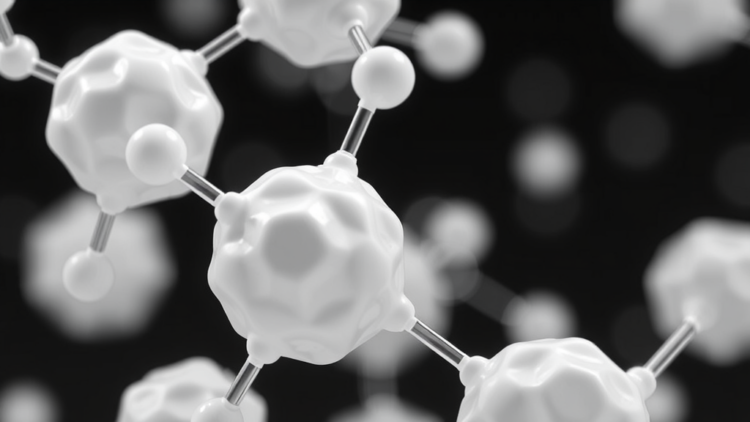
The hollow architecture itself adds a further dimension to this advantage. Unlike dense particles, hollow spheres present a thin, highly curved shell with an internal cavity, shortening diffusion pathways and giving molecules from the gas or liquid phase access to both the outer and inner surfaces of the shell. In a fixed-bed reactor, where contact time between reactants and catalyst is limited, this geometry means that a larger fraction of the catalytic surface is actually used. The study’s findings align with a broader trend in catalysis research in which morphology control, rather than compositional change alone, is exploited to tune activity and selectivity in oxide catalysts.
Beyond performance metrics, the team probed how the reaction actually unfolds on the surface. Using in situ diffuse reflectance infrared Fourier transform spectroscopy, they monitored the species present on the catalyst while the reactants were flowing over it. The spectra suggested a nucleophilic substitution pathway: ethanol, activated at the catalyst surface, generates ethoxy species that attack the ester, replacing the methoxy group of dimethyl oxalate with an ethoxy group to form diethyl oxalate. This mechanistic picture is consistent with the acid-base cooperation expected for transesterification, in which a Lewis acid site polarizes the carbonyl bond of the ester while a neighboring basic site deprotonates the alcohol, boosting its nucleophilicity.
Practical catalysts must also survive the rigors of continuous operation, and the researchers addressed this directly with deactivation and regeneration experiments. Over time, the catalysts lost activity, and thermogravimetric and Fourier transform infrared analyses pointed to coke deposition, the accumulation of carbonaceous residues on the surface, as the primary cause of deactivation rather than any permanent structural collapse of the alumina. Encouragingly, the catalytic activity could be fully restored after regeneration, meaning the spent catalyst could be revived rather than discarded. For an industrial process, this recyclability is as consequential as the initial activity, since it determines long-term operating costs and waste generation.
The broader significance of the work lies in its demonstration of a structure-activity relationship for a deceptively simple material. Alumina is one of the most widely used supports and catalysts in the chemical industry, yet its performance is highly sensitive to crystal phase, surface defect density, and particle geometry. By systematically varying morphology while holding composition constant, the Shihezi team isolated the contribution of shape and defect structure to catalytic behavior, offering a design strategy that others can apply to related reactions, including biodiesel production and other esterification processes that rely on solid acid-base catalysts.
There is also an environmental dimension to the advance. Diethyl oxalate is a precursor in the synthesis of ethylene glycol and pharmaceuticals, and greener routes to it reduce reliance on energy-intensive conditions and precious metal catalysts. A metal-free alumina catalyst that achieves complete dimethyl oxalate conversion at 140 degrees Celsius, with high selectivity to the desired diester and full regenerability after coking, represents a meaningful step toward cleaner, more sustainable oxalate manufacture. As the authors note, the morphological advantages of hollow spherical alumina highlighted in this study provide a template for developing efficient catalysts for the green synthesis of diethyl oxalate and, by extension, for the wider family of transesterification reactions that underpin modern chemical production.
Subject of Research: Hollow spherical alumina catalysts for the transesterification of dimethyl oxalate with ethanol to produce diethyl oxalate.
Article Title: Hollow Spherical Al2O3 for Enhanced Transesterification of Dimethyl Oxalate to Diethyl Oxalate
Article References: Hu, Z., Li, J., Zhang, C., Guo, W., Dai, B., & Zhang, C. (2026). Hollow Spherical Al2O3 for Enhanced Transesterification of Dimethyl Oxalate to Diethyl Oxalate. Catalysis Letters, 156(10), Article 275. https://doi.org/10.1007/s10562-026-05525-y
Image Credits: AI Generated
DOI: 10.1007/s10562-026-05525-y
Keywords: diethyl oxalate, hollow spherical alumina, transesterification, dimethyl oxalate, Lewis acid sites, oxygen vacancies, fixed-bed reactor, catalyst morphology, acid-base catalysis, DRIFTS, catalyst regeneration, green chemistry
Cite Scienmag News
APA MLA Chicago
Bethany Barker. (September 12, 2026). Hollow Alumina Spheres Deliver Complete Conversion in Greener Diethyl Oxalate Synthesis. Scienmag. https://scienmag.com/hollow-alumina-spheres-deliver-complete-conversion-in-greener-diethyl-oxalate-synthesis/
Bethany Barker. “Hollow Alumina Spheres Deliver Complete Conversion in Greener Diethyl Oxalate Synthesis.” Scienmag, 12 September 2026, https://scienmag.com/hollow-alumina-spheres-deliver-complete-conversion-in-greener-diethyl-oxalate-synthesis/. Accessed 12 September 2026.
Bethany Barker. “Hollow Alumina Spheres Deliver Complete Conversion in Greener Diethyl Oxalate Synthesis.” Scienmag. September 12, 2026. https://scienmag.com/hollow-alumina-spheres-deliver-complete-conversion-in-greener-diethyl-oxalate-synthesis/
Copy citation Download RIS
Tags: acid-base catalysisalternative pathways for diethyl oxalate productionalumina catalyst performancebiomass-derived chemicalscatalyst morphologycatalyst morphology effectscatalyst regenerationcatalyst shape influence in chemical reactionsdiethyl oxalatediethyl oxalate synthesisdimethyl oxalateDRIFTSfixed-bed reactorgreen chemistrygreener chemical manufacturinghollow alumina sphereshollow spherical aluminaindustrial catalyst designLewis acid sitesoxygen vacanciesrenewable chemical intermediatessustainable catalysis methodstransesterificationtransesterification reaction