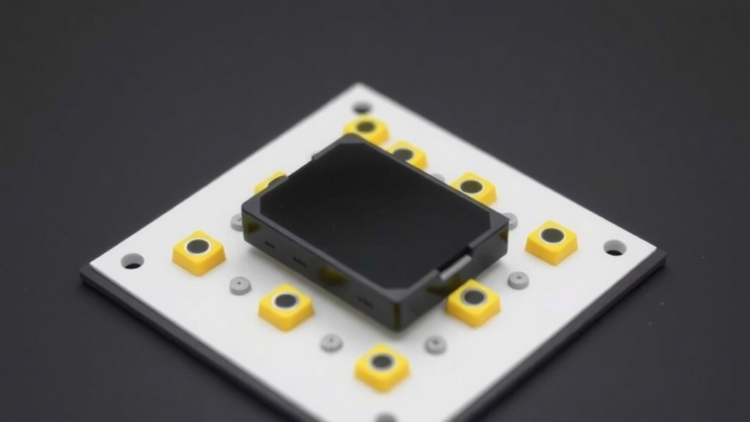
Three-dimensional printing has rapidly become one of the most versatile fabrication strategies for advanced energy storage devices, offering unprecedented control over geometry, porosity and material distribution. Compared with conventional slurry-based manufacturing, which relies on coating, calendaring and layer-by-layer stacking, additive manufacturing can construct thick electrodes, complex three-dimensional architectures and integrated battery components in ways that traditional routes cannot match. A comprehensive new review published in the journal Advanced Materials Joining argues, however, that the electrochemical functionality of 3D-printed structures is not determined by their macroscopic design alone. As-printed green bodies typically suffer from high porosity, weak interparticle bonding and substantial organic content, making post-processing, especially sintering, an indispensable step for realizing practical energy storage performance.
The review systematically summarizes recent progress across the major 3D printing technologies used for energy storage applications, including direct ink writing, electrohydrodynamic printing, fused deposition modeling, stereolithography and binder jet printing. Particular emphasis is placed on the critical role of post-processing in regulating microstructural evolution, phase stability, interfacial bonding and electron and ion transport pathways. The authors, led by Xiaowen Zheng and Qing Sun, critically discuss how key sintering parameters such as temperature, dwell time and heating rate govern densification behavior and, ultimately, electrochemical performance. They also highlight emerging strategies involving rapid sintering, high-throughput experimentation and machine-learning-assisted optimization as promising approaches to accelerate process development and improve reproducibility.
The field traces its origins to 2013, when researchers used direct ink writing to fabricate the first interdigitated lithium-ion microbattery. Since then, battery components made with fused deposition modeling, electrohydrodynamic printing, stereolithography and binder jetting have been reported in rapid succession, spanning electrodes, electrolytes, separators and current collectors. The appeal of these approaches lies in the architectural freedom they provide. Hierarchical porosity can be engineered so that macropores facilitate electrolyte infiltration, mesopores enhance ion diffusion and micropores increase accessible surface area, collectively reducing transport resistance and improving rate performance. Complex geometries such as interdigitated, lattice and honeycomb structures can shorten ion transport pathways, while multi-material printing allows electrodes, electrolytes and current collectors to be integrated monolithically, minimizing interfacial contact resistance.
Yet the review stresses a fundamental mismatch: 3D printing primarily addresses spatial shaping rather than imparting electrochemical functionality. Electrochemical reactions and charge carrier transport occur at the nanoscale to microscale, far below the manufacturing resolution of most printing techniques. Printed green bodies generally exhibit high porosity, low density, substantial organic binders or photocurable resins, and insufficient interlayer bonding. Consequently, their electronic conductivity, ionic transport capability and mechanical strength often fail to meet the demands of battery applications. Among post-processing techniques, sintering is singled out as the most critical step, determining not only final densification and grain morphology but also the quality of interlayer adhesion, the evolution of porosity and the continuity of electronic and ionic transport pathways.
Each printing technique imposes its own post-processing requirements. Direct ink writing, the most widely applied and material-versatile method, relies on viscoelastic inks extruded through nozzles, with successful printing demanding carefully tuned rheological properties such as yield stress, shear thinning and thixotropic behavior. Electrohydrodynamic printing applies high voltage between nozzle and substrate, forming a Taylor cone that emits filaments one to two orders of magnitude finer than the nozzle itself, enabling micrometer and sub-micrometer deposition ideal for high-resolution electrode patterns and flexible substrates. Fused deposition modeling compounds active materials with thermoplastic binders into printable filaments, while stereolithography uses ultraviolet light to crosslink photosensitive resins loaded with active particles. Binder jetting selectively deposits liquid binders onto powder beds, accommodating ceramics, metals and multiphase composites without high temperatures or energy beams.
In every case, the printed structure must be transformed through curing, debinding and sintering. Pre-curing steps such as ultraviolet curing, freeze drying and solvent evaporation provide preliminary shape fixation before high-temperature treatment. Debinding, typically conducted between 200 and 600 degrees Celsius, thermally decomposes organic binders and releases them as gases, exposing functional particles and establishing initial interparticle contacts. Solvent debinding can complement this by selectively dissolving soluble binder fractions and creating interconnected pore channels that vent gaseous decomposition products, preventing blistering, cracking or large voids. Only after these stages can high-temperature sintering promote solid-state diffusion and particle necking, forming a densified skeleton with interconnected porosity and continuous transport networks.
The review devotes detailed attention to the four core dimensions of the sintering profile. Temperature governs atomic diffusion kinetics, crystal-phase transformation, grain growth, pore elimination and grain-boundary quality. Moderate elevation improves lattice ordering in intercalation-type oxide cathodes, while solid electrolytes such as LLZO and LATP require high temperatures to eliminate secondary phases, though overheating induces lithium volatilization and secondary phases that degrade ionic conductivity. Dwell time controls how far diffusion-driven processes progress, with insufficient holding leaving carbonaceous residues and trapped gases, and excessive holding causing abnormal grain coarsening. Heating rate determines how organic decomposition and gas release unfold, with rapid heating risking blistering and delamination, and the sintering atmosphere regulates defect chemistry, oxygen vacancy concentration and phase stability, with oxygen-rich conditions shown to suppress lithium oxide loss and stabilize the fast-ion-conducting cubic garnet phase.
Rapid sintering techniques are presented as a way to balance energy consumption, dimensional stability and compatibility with thermally sensitive materials. Field-assisted sintering applies pulsed direct current to generate intense Joule heating at particle microcontacts, enabling near-theoretical densities at lower furnace temperatures and shorter dwell times while suppressing excessive grain growth. Microwave sintering converts electromagnetic energy directly into heat within the material, achieving volumetric heating with rapid temperature rise and reduced thermal stress. Laser-assisted sintering uses focused beams for localized densification with a small heat-affected zone, making it compatible with polymer substrates and flexible current collectors. Emerging ultrafast high-temperature sintering and blacklight sintering, which achieve heating in milliseconds to seconds, have so far been limited to structural ceramics but could eventually accelerate the debinding-densification of battery electrodes and electrolytes.
Looking forward, the authors argue that no universal processing window exists because temperature, dwell time and heating rate are strongly interdependent and different printing techniques and material systems exhibit markedly different sintering tolerances. They advocate a shift from empirical optimization toward mechanism-guided design, coupled with high-throughput experimentation and machine learning. Machine-learning approaches, including Bayesian optimization workflows, can extract hidden relationships between sintering parameters, material structure and performance, capturing nonlinear interactions that conventional one-factor-at-a-time analyses miss. By coupling the parallel manufacturing capability of 3D printing with data-driven modeling in a closed loop of data, model and experiment, researchers can rapidly identify optimal sintering windows that balance densification, conductivity and structural stability. The review concludes that while 3D printing provides unprecedented structural design freedom, post-processing ultimately determines whether printed architectures become stable, high-performance electrochemical devices, and that continued advances in mechanistic understanding, rapid processing and data-driven optimization will position 3D printing as a viable manufacturing paradigm for next-generation energy storage.
Subject of Research: The role of printing technologies, post-processing and sintering in fabricating functional 3D-printed energy storage devices
Article Title: From printed architectures to functional batteries: printing technologies, post-processing, and sintering
Article References: Zheng, X., Mejia-Centeno, K. V., Khan, M. D., Cabot, A., & Sun, Q. (2026). From printed architectures to functional batteries: printing technologies, post-processing, and sintering. Advanced Materials Joining, 1(1), Article 2. https://doi.org/10.1007/s44500-026-00002-3
Image Credits: AI Generated
DOI: 10.1007/s44500-026-00002-3
Keywords: 3D printing, batteries, sintering, direct ink writing, solid-state electrolytes, electrodes, additive manufacturing, debinding, machine learning, energy storage, post-processing, lithium-ion batteries
Cite Scienmag News
APA MLA Chicago
Denise Maddox. (September 12, 2026). Sintering Turns 3D-Printed Battery Structures Into Working Power Sources. Scienmag. https://scienmag.com/sintering-turns-3d-printed-battery-structures-into-working-power-sources/
Denise Maddox. “Sintering Turns 3D-Printed Battery Structures Into Working Power Sources.” Scienmag, 12 September 2026, https://scienmag.com/sintering-turns-3d-printed-battery-structures-into-working-power-sources/. Accessed 12 September 2026.
Denise Maddox. “Sintering Turns 3D-Printed Battery Structures Into Working Power Sources.” Scienmag. September 12, 2026. https://scienmag.com/sintering-turns-3d-printed-battery-structures-into-working-power-sources/
Copy citation Download RIS
Tags: 3D printing3D-printed battery electrode fabricationadditive manufacturingadditive manufacturing for energy storageadvanced 3D printing techniques for batteriesbatteriescomplex 3D architectures in battery designcontrolling porosity and interparticle bonding in 3D-printed electrodesdebindingdirect ink writingelectrodesenergy storageenergy storage device performanceinfluence of sintering parameters on electrochemical performancelithium-ion batteriesMachine learningmicrostructural evolution in 3D-printed batteriesmicrostructure regulation through sinteringphase stability in 3D-printed energy storage devicespost-processingpost-processing sintering in battery manufacturingsinteringsolid-state electrolytes