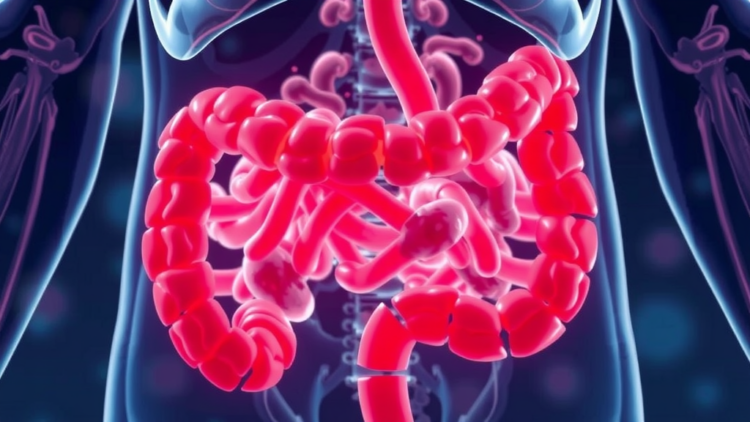
People with Down syndrome face a markedly elevated risk of obesity and its metabolic complications compared with the general population, yet the biological reasons behind this vulnerability have remained frustratingly opaque. Now, a team of French researchers has traced part of the answer to an unexpected place: the dialogue between an extra dose of chromosome 21 genes, a fatty diet, and the trillions of microbes that inhabit the gut. Working with a mouse model of Down syndrome, the scientists combined untargeted metabolomics with microbiome sequencing to map how genetic background and diet jointly reshape the body’s chemistry, and their results point to a single microbiota-derived molecule as a potential linchpin of metabolic health in the condition.
The study, led by Pinku Halder and Marie-Claude Potier of Sorbonne Université’s Paris Brain Institute together with Yann Hérault’s team at the PHENOMIN-Institut Clinique de la Souris in Strasbourg, employed the Dp(16)1Yey mouse, a well-established model of Down syndrome that carries an extra segment of mouse chromosome 16 homologous to human chromosome 21. This segmental trisomy recapitulates the gene overdosage that defines the human condition, allowing researchers to probe how an extra copy of dozens of genes perturbs metabolism when the animals are challenged with an obesogenic high-fat diet. The work, conducted as part of the European GO-DS21 consortium, was published in Cellular and Molecular Life Sciences.
The experimental design was elegantly systematic. The team compared trisomic Dp(16)1Yey mice with wild-type littermates, split each genotype between a standard control diet and a high-fat diet, and analyzed both sexes separately. Plasma samples from a cohort of 91 mice underwent untargeted metabolomics, in which thousands of small-molecule features were detected, annotated, and statistically interrogated using linear models that accounted for genotype, diet, sex, and body weight. Pathway analyses performed with MetaboAnalyst then revealed which biochemical networks were most affected by each factor, while fecal samples from a parallel cohort were profiled by 16S rRNA amplicon sequencing to chart the composition of the gut bacterial community.
The results delivered a clear hierarchy of influence. Diet was by far the dominant shaper of the plasma metabolome, followed by sex and then genotype. Seventy-five metabolites responded to dietary fat, and these were disproportionately involved in amino acid and nucleotide metabolism, suggesting that a high-fat intake rewires nitrogen handling and cellular building-block synthesis well beyond simple lipid accumulation. Sex emerged as a striking modifier too: fifty-six metabolites differed between males and females, with disruptions concentrated in aromatic amino acid biosynthesis and pyrimidine metabolism, underscoring that metabolic responses in Down syndrome cannot be meaningfully understood without dissecting sex-specific biology.
Genotype, however, left its own unmistakable fingerprint. Segmental trisomy altered thirty-four metabolites independently of diet, with pronounced effects on amino acid metabolism and the taurine and hypotaurine pathways, hinting that gene overdosage from the triplicated region intrinsically shifts cellular biochemistry even under normal feeding conditions. More revealing still was the search for interactions. Five metabolites showed a statistically significant diet-by-genotype interaction, meaning their response to dietary fat depended on whether the animals carried the trisomic segment. Among them, one molecule stood out dramatically: 3-indolepropionic acid, or IPA.
IPA is not produced by the mouse or human body directly. Instead, it is synthesized by certain gut bacteria from the essential amino acid tryptophan, and it has attracted growing attention in metabolic research because higher circulating levels are associated with improved insulin sensitivity, reduced inflammation, and protection against obesity in population studies. In the trisomic mice fed the high-fat diet, plasma IPA plummeted to levels far below every other group in the study. A three-way analysis of variance revealed a powerful main effect of genotype on IPA, explaining more than two-thirds of the variance in circulating levels, alongside significant genotype-by-diet and genotype-by-sex interactions. Post-hoc comparisons confirmed that trisomic males on the high-fat diet showed the steepest depletion, and IPA levels correlated negatively with body weight in several sex and genotype strata.
The metabolomic signal prompted the team to look upstream, into the gut itself. Sequencing of fecal communities revealed that both genotype and diet reshaped the microbiome, but the most consequential finding was selective: one particular clostridial operational taxonomic unit, OTU_160, an unknown member of the Lachnospiraceae family, was selectively depleted in trisomic mice under high-fat feeding. Lachnospiraceae are among the gut’s most prolific producers of indole derivatives, the chemical family that includes IPA. Critically, the abundance of this depleted bacterial group tracked with peripheral IPA levels across animals, forging a mechanistic chain: the trisomic genetic background rendered the gut community vulnerable to dietary fat, the vulnerable community lost key tryptophan-metabolizing bacteria, and the loss translated into a collapse of a circulating metabolite with known protective metabolic roles.
The implications extend well beyond the mouse cage. Down syndrome affects roughly one in several hundred live births worldwide, and individuals with the condition not only gain weight more readily but also show altered body composition, differences in resting energy expenditure, and heightened rates of diabetes-like metabolic dysfunction. Clinical guidelines for obesity in Down syndrome are largely borrowed from the general population, partly because the underlying biology has been so poorly characterized. By demonstrating that the triplicated chromosome 21 segment modulates how the host responds metabolically to dietary fat, partly through microbiota-derived signaling molecules, the study supplies a concrete biological framework for why standard dietary advice may need adaptation in this population. It also elevates the gut microbiome from an incidental bystander to a plausible therapeutic target.
The researchers emphasize that their findings point toward microbiota-targeted dietary interventions as a promising avenue. If IPA-producing bacteria or their metabolic products can be restored, whether through tailored prebiotics, probiotics, or direct supplementation strategies, some of the obesogenic burden faced by people with trisomy 21 might be blunted. Considerable caution remains warranted: the work was conducted in mice, the causal role of IPA in weight gain was not tested directly, and the specific bacterial species responsible for IPA production in humans may differ from those in mice. But the convergence of genetic, dietary, microbial, and metabolic evidence in a single coherent pathway is rare, and it transforms a longstanding clinical observation into a testable mechanistic hypothesis. For a community that has long seen metabolic disease treated as an afterthought in Down syndrome care, the message is clear: the answer to obesity risk in trisomy 21 may live, at least in part, in the gut.
Subject of Research: Metabolomic and gut microbiota changes underlying obesity risk in a Down syndrome mouse model
Article Title: Obesity-related alterations in plasma metabolomics and fecal microbiota in Down syndrome Dp(16)1Yey mice
Article References: Halder, P., Selloum, M., Ichou, F., Lindner, L., Desnouveaux, L., Lejeune, F.-X., Pavlovic, G., Hérault, Y., Potier, M.-C., & Go-Ds21 consortium (2026). Obesity-related alterations in plasma metabolomics and fecal microbiota in Down syndrome Dp(16)1Yey mice. Cellular and Molecular Life Sciences. https://doi.org/10.1007/s00018-026-06403-x
Image Credits: AI Generated
DOI: 10.1007/s00018-026-06403-x
Keywords: Down syndrome, trisomy 21, obesity, metabolomics, gut microbiome, 3-indolepropionic acid, tryptophan metabolism, high-fat diet, 16S rRNA sequencing, Lachnospiraceae, Dp(16)1Yey mice, metabolic disease
Cite Scienmag News
APA
MLA
Chicago
Daisy Hatcher. (September 12, 2026). Gut Microbe Link Revealed in Down Syndrome Obesity Risk. Scienmag. https://scienmag.com/gut-microbe-link-revealed-in-down-syndrome-obesity-risk/
Daisy Hatcher. “Gut Microbe Link Revealed in Down Syndrome Obesity Risk.” Scienmag, 12 September 2026, https://scienmag.com/gut-microbe-link-revealed-in-down-syndrome-obesity-risk/. Accessed 12 September 2026.
Daisy Hatcher. “Gut Microbe Link Revealed in Down Syndrome Obesity Risk.” Scienmag. September 12, 2026. https://scienmag.com/gut-microbe-link-revealed-in-down-syndrome-obesity-risk/
Copy citation
Download RIS
Tags: 16S rRNA sequencing3-indolepropionic acidchromosome 21 gene overexpressiondiet and genetics interactionDown syndromeDown syndrome mouse modelDp(16)1Yey miceGut microbiomegut-brain axishigh-fat dietLachnospiraceaemetabolic diseasemetabolic healthMetabolomicsmetabolomics and microbiome sequencingmicrobiota-derived moleculesobesityobesity and metabolic complicationsobesity riskpersonalized nutrition in Down syndrometrisomy 21tryptophan metabolism