The future of two of humanity’s oldest crops may depend on secrets buried in their deepest genetic past. In a study published in Molecular Plant, researchers led by teams at INRAE (the French National Research Institute for Agriculture, Food and Environment) reconstructed ancestral ‘founder’ genomes that are more than 200 million years old, and then used them to trace which genes modern wheat and barley have held onto across ten millennia of domestication. Their central premise is elegant: if two related crop species, bred by farmers under the same climatic pressures, have independently retained and selected the same gene variants, those variants are likely to matter for adaptation—and they could be prime targets for breeding varieties that can withstand the climate of the coming decades.
The scientific foundation of the work is paleogenomics, the reconstruction of genomes that no longer exist. Rather than extracting DNA from fossils, the researchers used computational comparisons of living species to infer the gene content and organization of their long-extinct common ancestors. They analyzed and compared 84 genomes from modern flowering plants chosen to represent cultivated plants around the world. From this comparative dataset, the team reconstructed ten ancestral paleogenomes, effectively a set of founder gene catalogues from which today’s species descend. Because these reconstructions capture the ancestral genomic context of each gene, they allow scientists to identify genes that have kept both their shared ancestral position and their biological function over hundreds of millions of years of evolution.
That combination—conserved genomic context plus conserved function—is what makes the approach so powerful for plant breeding. A gene that has persisted with the same role across multiple species is more likely to drive traits of real agronomic importance, such as tolerance to drought or the timing of flowering, both of which are central to how crops respond to shifting climates. Instead of studying each crop species in isolation, breeders can use these conserved genes as a translational bridge: knowledge of what a gene does in one well-characterized species can be applied to a related crop where the same gene has been detected in its ancestral context.
Beyond its practical implications, the reconstruction of the paleogenomes delivered fundamental insights into the evolutionary history of the plant kingdom. By dating the ancestral genomes, the team was able to establish when the major botanical families emerged, and to retrace key evolutionary trajectories that shaped the diversity of plants we see today. These include the divergences between aquatic and terrestrial plants, between herbaceous and woody species, between C3 and C4 photosynthetic types, and between species that form symbiotic nitrogen-modulating associations and those that do not. Each of these transitions represents a major innovation in plant evolution, and anchoring them in time provides a framework for understanding how plants have repeatedly adapted to new environments.
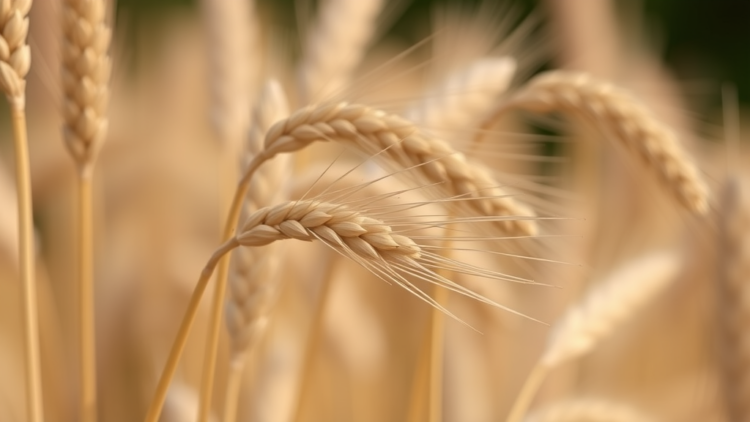
With this evolutionary map in hand, the researchers turned to wheat and barley, two cereals of exceptional agronomic significance. Both were among the first crops domesticated more than 10,000 years ago in the Fertile Crescent, and both supported the very emergence of agriculture. Their histories run in parallel: similar timelines of domestication, similar environmental conditions, and similar pressures exerted by human selection. That parallel history makes them an ideal natural experiment. If both species, evolving under the same climatic constraints, retained the same adaptive genetic variants, then those variants are strong candidates for genes that confer resilience in Mediterranean and semi-arid environments—the kinds of conditions that climate change is expected to make more common.
To carry out this comparison at scale, the team studied 1,420 modern varieties representing the global genetic diversity of wheat and barley, alongside the remains of ancient wheat dating back 5,000 years. By scanning this vast panel for variants present in conserved ancestral genes, they could identify which genetic variants had been retained by both species through their historical evolution, and which had been actively selected during domestication and improvement. The analysis effectively separates the noise of random genetic drift from the signal of convergent adaptation, spotlighting the variants that two independent crop lineages converged upon under shared environmental pressures.
In wheat, the team validated the role of three genes already characterized in other species, confirming that their ancestral context translates into real function in this staple crop. Two of these genes affect yield and flowering date respectively—traits that breeders manipulate constantly—while the third is implicated in epigenetic regulation, potentially modulating how genes are switched on and off. The validation demonstrates that the paleogenomic workflow is not merely a descriptive exercise: it delivers concrete, testable gene targets whose functions carry over across species boundaries. It also suggests that regulatory genes, not just structural ones, may have been under selection as crops adapted to their environments.
Recognizing that such a resource is most valuable when it is widely accessible, the researchers developed two free, open-access computational tools. The first, named AGR (Ancestral Genome Reconstruction), allows users to compare the genomes of modern plants and reconstruct the vanished founder paleogenomes, producing an expert-validated repertoire of genes conserved between species. The second, OrthoViewer, is a database providing access to these conserved genes across all 84 species of agronomic interest in the study. It integrates 1,142 genes described in the scientific literature with documented biological functions and agronomic relevance. Together, the tools let scientists and private breeders compare global genetic diversity data across species and pinpoint adaptive genetic variants that have been selected jointly in multiple crops—a shortlist of candidates for the next generation of breeding programs.
The implications for climate change adaptation are direct. As temperatures rise and rainfall patterns become less predictable, breeders urgently need sources of tolerance to heat, drought, and new disease pressures. The conserved adaptive variants identified in wheat and barley offer a genetically grounded starting point: variants already proven by evolutionary history to function under stressful conditions. Rather than waiting decades for random recombination to surface useful traits, breeders can deliberately introduce or select these variants in their crossing programs, accelerating the development of varieties suited to the agro-ecological conditions of the future.
Crucially, the method is not confined to cereals. Because it rests on founder paleogenomes built from 84 species spanning many botanical families, including crops currently in cultivation, the workflow can in principle be applied to any plant of agronomic interest. The teams are already extending the approach, hunting for retained adaptive variants in rice, maize, and sorghum as well as in wheat and barley. As Jérome Salse, Research Director at INRAE, summarized the vision: understanding how genetic variants evolved during the domestication and selection of agricultural species allows researchers to identify those selected across species under the same climate constraints—variants of interest for selecting genotypes adapted to the current challenges of climate change and the agro-ecological transition. In short, the answers to tomorrow’s breeding problems may already be written in the deep evolutionary memory of crop genomes, waiting to be read.
Subject of Research: Reconstruction of ancestral plant genomes to identify conserved genes for climate-adaptive crop breeding in wheat and barley.
Article Title: Varietal selection in response to climate change: possible solutions could lie in the history of wheat and barley genes
Article References: Varietal selection in response to climate change: possible solutions could lie in the history of wheat and barley genes. (n.d.). Original publication
Image Credits: AI Generated
DOI: Not provided
Keywords: paleogenomics, wheat, barley, climate change adaptation, crop breeding, ancestral genome reconstruction, genetic variants, domestication, AGR tool, OrthoViewer, drought tolerance, agronomy
Cite Scienmag News
APA MLA Chicago
Alan Morgan. (September 12, 2026). Ancient wheat and barley genes may hold the key to climate-proof crops. Scienmag. https://scienmag.com/ancient-wheat-and-barley-genes-may-hold-the-key-to-climate-proof-crops/
Alan Morgan. “Ancient wheat and barley genes may hold the key to climate-proof crops.” Scienmag, 12 September 2026, https://scienmag.com/ancient-wheat-and-barley-genes-may-hold-the-key-to-climate-proof-crops/. Accessed 12 September 2026.
Alan Morgan. “Ancient wheat and barley genes may hold the key to climate-proof crops.” Scienmag. September 12, 2026. https://scienmag.com/ancient-wheat-and-barley-genes-may-hold-the-key-to-climate-proof-crops/
Copy citation Download RIS
Tags: AGR toolagronomyancestral gene variants for future food securityancestral genome reconstructionancestral plant genome reconstructionAncient wheat and barley geneticsbarleyClimate change adaptationclimate change impact on staple cropsclimate-resilient crop breedingcrop breedingDomesticationdomestication gene retentiondrought and heat tolerance genes in wheat and barleydrought toleranceevolutionary genetics of cerealsgenetic basis of crop resilienceGenetic variantsgenomic comparison of modern and ancient grainslong-term crop adaptationOrthoViewerpaleogenomicspaleogenomics in agriculturewheat