Every drop of natural water, every handful of soil, and even the interiors of our own bodies teem with protozoa, the single-celled predators that spend their lives hunting and consuming bacteria. For more than a century, microbiologists have treated this grazing as a simple ecological service: protozoa eat bacteria, digest them, and excrete the unusable remains as waste. A new review published in the journal Microbial Ecology argues that this tidy picture conceals a far more consequential process, one that may shape how deadly pathogens survive in the environment and find their way into human hosts. The authors, Shah N. Faruque, Imogen A. Ponton, Jonah M. Moon and Gustavo Espinoza-Vergara of the Australian Institute for Microbiology and Infection at the University of Technology Sydney, synthesise evidence that some bacteria do not merely escape protozoan digestion. Instead, they are packaged, protected and launched back into the world inside small membrane-bound sacs expelled by the predator itself.
These sacs are called expelled food vacuoles, or EFVs. When a protozoan such as the ciliate Tetrahymena feeds, it engulfs bacteria into food vacuoles, compartments that normally mature into digestive vacuoles filled with the acidic enzymes and molecular machinery needed to dismantle their cargo. In many cases, that is exactly what happens, and the bacterium is destroyed. But a growing list of bacterial species has evolved the ability to resist this digestive programme. Rather than being killed, the survivors remain inside the vacuole, which the protozoan then expels intact. Earlier studies referred to these expelled structures by a variety of names, including expelled vesicles, faecal pellets and multilamellar bodies, and often regarded them as little more than the discarded refuse of protozoan digestion. The new review contends that this interpretation has understated their importance.
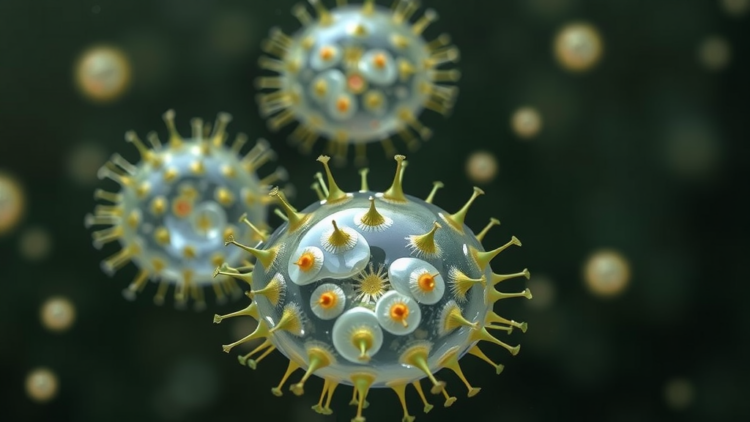
The central claim of the review is that EFVs should be understood as biologically generated reservoirs: protective containers that package viable pathogenic bacteria and release them into the environment already primed for persistence, dissemination and host colonisation. Far from being waste, these structures behave like miniature transport capsules, each one shielding its bacterial passengers from a hostile outside world. The authors describe this as a distinct environmental transmission state, a phase of a pathogen’s life in which it is neither free-swimming in water nor established inside a host, but travelling in a self-contained vehicle manufactured by another organism.
The evidence for this concept comes from a strikingly diverse set of pathogens. The review gathers findings from studies of Vibrio cholerae, the agent of cholera; Salmonella enterica, a leading cause of food poisoning; Legionella pneumophila, the cause of Legionnaires’ disease; Campylobacter jejuni, a common cause of gastroenteritis; Listeria monocytogenes, which can cause severe disease in pregnant people and the immunocompromised; Escherichia coli; the opportunistic pathogen Burkholderia cenocepacia; and the soil bacterium Mycobacterium smegmatis, a widely used model for tuberculosis research. Across these very different organisms, a common pattern emerges: bacteria that have passed through protozoa and emerged inside EFVs display measurable increases in resistance to stresses that would normally kill them.
The protective effects documented in the literature are broad. EFV-associated bacteria withstand acid exposure better than their free-living counterparts, an advantage that matters enormously when a waterborne pathogen confronts the acidic environment of the human stomach. They also survive starvation for longer periods, tolerate disinfectants and biocides, resist oxidative stress, and endure desiccation. In practical terms, a cholera bacterium packaged inside an expelled vacuole can persist in a drying pond, in treated drinking water, or on a contaminated surface for far longer than one floating alone, and it arrives at the next host in a hardier condition. The review also highlights reports of enhanced infectivity among EFV-associated pathogens, suggesting that the vacuolar packaging does not merely prolong survival but may actively prime the bacteria for subsequent colonisation of new hosts.
One of the most consequential findings relates to horizontal gene transfer, the process by which bacteria exchange genetic material. Because multiple bacteria can be concentrated inside a single small vesicle, EFVs create crowded micro-environments in which cells sit close together in fluid enclosed by a membrane. This physical intimacy facilitates the exchange of plasmids and other genetic elements, potentially accelerating the spread of antibiotic resistance genes through environmental microbial communities. In an era when antimicrobial resistance is recognised as one of the greatest threats to global public health, the possibility that protozoan predators inadvertently act as genetic mixing vessels for pathogens is a finding with far-reaching implications.
The review’s authors frame their synthesis around a conceptual shift. If EFVs are merely waste, then monitoring programmes that count free bacteria in water may be missing a hidden reservoir of infectious agents entirely. But if EFVs are vehicles of transmission, as the accumulated evidence suggests, then they represent a measurable and potentially targetable stage in the life cycle of environmental pathogens. The authors propose that EFV-associated pathogens could serve as useful targets for water surveillance and outbreak prediction. Detecting these vesicles in reservoirs, drinking water systems, or recreational waters could provide an early warning that a pathogen population has entered a particularly durable and transmissible state, before cases begin to appear in clinics.
This perspective also reframes the ecological relationship between protozoa and bacteria. The traditional view holds that protozoan grazing suppresses bacterial populations, acting as a check on microbial growth. The EFV concept reveals a paradox at the heart of that relationship: the predator that kills most bacteria may simultaneously serve as an incubator and distributor for the few that can resist digestion. In effect, protozoa may function as accidental selective agents, culling susceptible cells while packaging the resistant ones for wider dispersal. Over evolutionary time, this could help explain why so many environmental pathogens, including Legionella and various non-tuberculous mycobacteria, show an inherent ability to survive inside protozoa and, later, inside human cells. The machinery that lets a bacterium resist digestion in a Tetrahymena vacuole may be the same machinery that lets it resist killing by macrophages, the immune cells that patrol human tissue.
The authors are careful to present their synthesis as a framework rather than a settled conclusion, and they call for the field to move past the fragmented terminology of earlier decades and treat expelled food vacuoles as a unified object of study. Doing so, they argue, will allow researchers to connect environmental persistence with infection biology in a single mechanistic story: a pathogen that survives protozoan digestion exits the predator inside a protective vesicle, persists longer in the environment, resists treatment more effectively, exchanges genes more readily, and colonises new hosts more successfully. For public health authorities, the message is that the journey of a waterborne pathogen between hosts may be far more sophisticated than previously appreciated, and that the humble vacuole, long dismissed as refuse, may hold keys to predicting and preventing outbreaks. For microbiologists, the review opens a research agenda in which the ecology of single-celled predators and the epidemiology of human disease are inseparable parts of the same system.
Subject of Research: Expelled food vacuoles produced by protozoa as protective vehicles that promote bacterial persistence, stress resistance, gene transfer and transmission of pathogens
Article Title: Expelled Food Vacuoles as Protozoan-Derived Vehicles for Bacterial Persistence and Transmission
Article References: Faruque, S. N., Ponton, I. A., Moon, J. M., & Espinoza-Vergara, G. (2026). Expelled Food Vacuoles as Protozoan-Derived Vehicles for Bacterial Persistence and Transmission. Microbial Ecology. https://doi.org/10.1007/s00248-026-02880-6
Image Credits: AI Generated
DOI: 10.1007/s00248-026-02880-6
Keywords: protozoa, expelled food vacuoles, bacteria, Vibrio cholerae, Legionella pneumophila, Tetrahymena, water surveillance, antibiotic resistance, horizontal gene transfer, pathogen transmission, microbial ecology, environmental persistence
Cite Scienmag News
APA MLA Chicago
Morgan Morrow. (September 12, 2026). Protozoan Waste Packets Turn Out to Be Shields for Dangerous Bacteria. Scienmag. https://scienmag.com/protozoan-waste-packets-turn-out-to-be-shields-for-dangerous-bacteria/
Morgan Morrow. “Protozoan Waste Packets Turn Out to Be Shields for Dangerous Bacteria.” Scienmag, 12 September 2026, https://scienmag.com/protozoan-waste-packets-turn-out-to-be-shields-for-dangerous-bacteria/. Accessed 12 September 2026.
Morgan Morrow. “Protozoan Waste Packets Turn Out to Be Shields for Dangerous Bacteria.” Scienmag. September 12, 2026. https://scienmag.com/protozoan-waste-packets-turn-out-to-be-shields-for-dangerous-bacteria/
Copy citation Download RIS
Tags: Antibiotic resistancebacteriabacteria survival in environmental reservoirsbacterial protection mechanismsenvironmental microbiology and pathogen persistenceenvironmental persistenceexpelled food vacuolesexpelled food vacuoles in protozoahorizontal gene transferimplications for infectious disease controlLegionella pneumophilamicrobial ecologymicrobial ecology and pathogen transmissionmicrobial food vacuolespathogen transmissionprotozoaprotozoa as bacterial shieldsprotozoa-bacteria interactionsprotozoa-mediated bacterial defense strategiesProtozoan waste packetsrole of EFVs in disease spreadTetrahymenaVibrio choleraewater surveillance